
Publications

INSIGHT REPORT

Pioneering the Future: Space

Technologies Poised to Revolutionize

Exploration and Economy by 2035

September 2026

FACTSHEETS

Pioneering the Future: Space

Technologies Poised to Revolutionize Exploration and Economy by 2035

June 2026

WHITE PAPER

Future of Space Law:

Operationalizing Space Governance

March 2026

REPORT

Clear Orbit, Secure Future:

 A Call to Action on Space Debris

Jan 2026

WHITE PAPER

The Future of Space Law

Insights from the ATS, UNCLOS, and ITU Frameworks

December 2025

WHITE PAPER

The Future of Space Law: 

The Evolving Dynamics of Air and Space Regulation

 September  2025

The Future Of Space Law

News

Centre for Space Futures, Novaspace and SpaceTech Gulf  Sign Agreement to Develop Global Space Capability Mapping Dashboard

Riyadh, Saudi Arabia , 23 Jun 2026|  Press Release

Clear Orbit, Secure Future: A Call to Action on Space Debris

Riyadh, Saudi Arabia, 26 Jan 2026 | Press Release

Centre for Space Futures Holds Workshop with Participation of 40 Global Experts

Riyadh, Saudi Arabia, 05 Dec 2025 | Press Release

Centre for Space Futures Releases White Paper on 'The Future of Space Law'

Riyadh, Saudi Arabia, 12 Sep 2025 | Press Release

The Board of Directors of the Centre for Space Futures Endorses Its Strategic Direction

Riyadh, Saudi Arabia, 26 May 2025 | Press Release

Saudi Space Agency to Launch the Centre for Space Futures with the World Economic Forum

Riyadh, Saudi Arabia, 29 April | Press Release

5 ways we can tackle growing risks from rocket bodies in orbit

Dec 09, 2025 | Economic Growth, Stories

Read More

Forum Agenda

Forum Videos

VIDEO

Press Conference: Centre for Space Futures in Riyadh

The World Economic Forum's Special Meeting, April 29, 2024

VIDEO

The Purpose of Astronauts at Davos 2024

World Economic Forum , March 9, 2024

VIDEO

PortWatch: Monitoring Trade Disruptions from Space

World Economic Forum , Dec 18, 2023

VIDEO

India's Moon Mission Triumph: Ambassador Ruchira Kamboj's Insights

World Economic Forum , Aug 23, 2023

VIDEO

Space Exploration is Back at Davos 2023

World Economic Forum , Feb 16, 2023

Forum Publications

Strategic Intelligence Insights

Cyber threats targeting the space sector surged in 2025, with 407 identified cyber operations affecting ground-based IT environments of space companies, ground stations, and user modems, but no documented attacks on satellites in orbit. The majority involved hacktivist groups and took the form of DDoS attacks, ransomware, data leaks, and credential theft linked to geopolitical tensions. The lack of detected satellite cyberattacks stems from insufficient onboard detection capabilities, creating a blind spot in threat intelligence. The industry's historical reliance on security by obscurity has eroded due to commercialization and transparency, increasing vulnerability. Moving forward, adopting security by transparency and enhancing satellite-specific cyber threat intelligence are essential to improve detection and defense against space cyber threats.
ICT
Space cybersecurity: Why there is a hidden threat to satellites and global infrastructure

Global investment in computing infrastructure reached $459 billion in 2025 and is projected to increase tenfold by 2027. Advances in artificial intelligence, quantum computing, and other technologies present challenges in securing computing power while managing energy consumption, geopolitical dependencies, and cyber threats. The Next-Generation Computing Framework, developed by the World Economic Forum and its Global Future Council, offers a practical tool for governments and organizations. It focuses on three pillars—sovereignty and interdependence, cybersecurity and resilience, and sustainability—across seven dimensions, providing a scorecard to assess capabilities, set priorities, and guide investment and policy decisions toward secure, sustainable, and inclusive computing.
ICT
The Next-Generation Computing Framework
Citizen science is expanding worldwide due to advancements in technology and increased public involvement in research. Volunteers assist scientists by collecting vital data over large geographic areas and extended periods. In tourism, participants engage in activities like coral planting, wildlife tracking, and environmental DNA collection. Crowdsourced data helps monitor climate change, watersheds, and disaster preparedness. Despite challenges such as data quality, reliability, bias, and institutional hesitation, combining volunteer efforts with professional expertise effectively bridges data gaps in environmental research.
ICT, Health
Why Citizen Science Is On The Rise

The ocean economy generates over $3 trillion annually and is vital for global economic resilience and prosperity. However, deteriorating ocean health and climate change risk up to $4 trillion in coastal infrastructure and could cause over $8 trillion in economic losses by 2050. The report "Catalytic Blue Finance," developed with UBS Optimus Foundation, analyzes 220+ transactions from 2021 to 2026 using the Ocean Investment Matrix to reveal financing trends, barriers, and opportunities in ocean sectors. It identifies four emerging financing models and emphasizes the role of catalytic actors in improving data, aggregating opportunities, validating investment approaches, and addressing market failures to mobilize commercial capital for a sustainable ocean economy.
Financial services
Catalytic Blue Finance: Building the Financial Architecture for Scaling Ocean Investment

By 2040, the global population aged 65+ will increase by 53%, outpacing the 13% growth of the working-age group, posing major economic and societal challenges. Ageism and caregiving career gaps threaten retirement security and cost the economy billions, while housing issues limit younger generations' future planning. Addressing longevity requires shifting from reactive to preventive strategies, focusing on health and wealth intersections. Simple interventions like home modifications, increased physical activity, and hearing aids could unlock trillions in healthcare savings and productivity gains, reducing strain on systems and improving well-being worldwide.
Africa | Health
In a world of exponential change, long-term thinking is crucial for sustainable longevity
The expiration of New START has left the two largest nuclear powers without legally binding limits on their strategic arsenals, exposing the decline of nuclear arms control. Rising geopolitical tensions, eroding trust, and disruptive technologies in AI, cyber, and space increase nuclear escalation risks. Traditional arms control forums and methods are ineffective in the current multipolar security environment. In the absence of immediate formal negotiations, emphasis should shift to understanding and mitigating multi-domain nuclear risks. Developing a new generation of arms control experts through Track 2 dialogues among nuclear states can build common ground and support future official talks, fostering strategic stability and enabling a renewed era of nuclear arms control.
Nuclear Arms Control Needs a New Start
The methodology uses spatial machine learning to downscale aggregated national and subnational macroeconomic data into high-resolution grids, revealing detailed local economic patterns. By integrating official economic accounts with Earth observation data—such as nighttime lights, built-up areas, land cover, and population—the approach produces gridded estimates consistent with official totals. Applied to Canada and the U.S., it generates experimental GDP data by ten industry sectors, enhancing spatial granularity in economic statistics and enabling more precise assessment of local economic activity, physical risks, and infrastructure needs.
Africa | Health, ICT
Earth Observations and Machine Learning for Gridded Macroeconomic Data
Sovereign and trustworthy data sharing is essential for tackling local and regional challenges and promoting economic development in European communities. Federated data sharing, supported by the emerging technical, business, and governance frameworks of Common European Data Spaces, enables collaboration among diverse stakeholders. The willingness to participate depends on clear value propositions aligned with stakeholders’ objectives, with private sector orchestration proving effective in well-defined initiatives. Progress requires translating principles like sovereignty into practice, addressing incentives and barriers, and balancing market demand and supply for successful data cooperation.
ICT, Health
Exploring Federated Data Sharing in Smart Communities
Armed conflicts are reaching historic highs with increasing civilian attacks, necessitating improved conflict research methods. Traditional conflict research relies largely on text-based data and fatalities as proxies for violence intensity, but these suffer from biased human reporting. Satellite-derived war damage data offer complementary insights with different limitations. Integrating these data sources through improvement, enrichment, and fusion bridges their gaps, enabling richer analysis of conflict dynamics beyond fatalities. Case studies from Ukraine and Myanmar demonstrate how this integrated approach reveals the complexity of violence and advances understanding of modern conflicts.
Africa | Health, ICT
Advancing conflict research and response through satellite-derived data

Space travel reveals the critical role of circadian rhythms and environmental cues in regulating sleep. Astronauts experience about 16 sunrises and sunsets every 24 hours, disrupting normal light-based signals and circadian alignment. Despite 8.5 hours of sleep opportunity, astronauts often get only 6 to 6.5 hours, leading to chronic sleep restriction and reduced attention, jeopardizing mission safety. Controlled lighting, tailored schedules, exercise, and strategic caffeine use help mitigate disruption, though trade-offs exist, such as lighting that aids melatonin production but impairs color perception. Space missions underscore that sleep quality depends not just on duration but on timing and environmental synchronization.
What space travel teaches us about sleep and circadian rhythms
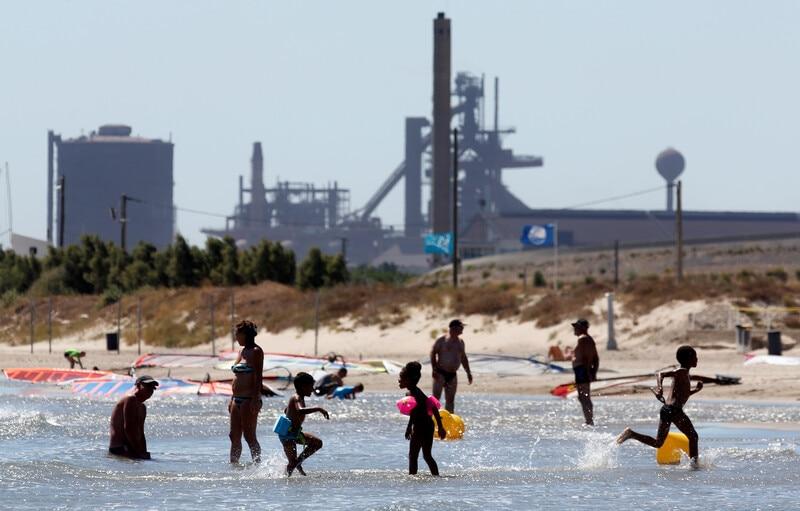
The Fos-Berre industrial cluster near Marseille exemplifies how collaboration drives green reindustrialization by integrating decarbonization, job creation, and competitiveness. Supporting 126,000 jobs and a quarter of French industrial CO₂ emissions, Fos-Berre unites sectors like refining, steelmaking, and energy production. Initiatives such as the SYRIUS program and the PIICTO association coordinate shared low-carbon infrastructure and foster regional industrial ecology through cooperation among industry and authorities. Major projects like GravitHy’s green hydrogen-based steel production and others in biofuels, carbon capture, and electrification highlight the cluster’s role in developing sustainable industrial value chains while enhancing Europe's strategic industrial capabilities.
This French industrial cluster shows how collaboration can drive green reindustrialization

The Arctic is warming rapidly, with permafrost thaw severely impacting infrastructure, ecosystems, and communities across the circumpolar North. The Arctic Council, approaching its 30th anniversary amid geopolitical tensions, can rebuild cooperation by focusing on climate challenges such as permafrost thaw and its associated risks. Key priorities include addressing the climate-human security nexus—highlighting climate impacts on livelihoods and state relations—and improving infrastructure resilience. Additionally, permafrost thaw contributes to escalating greenhouse gas emissions, creating self-reinforcing climate feedbacks. Coordinated scientific assessment, enhanced risk monitoring, and dialogue on shared risks offer pragmatic avenues to reaffirm the Council’s mandate and foster renewed Arctic cooperation.
Antarctica
Revitalising Arctic Council Cooperation: Permafrost Thaw and the Wider Climate Challenge

The EU’s pursuit of strategic autonomy in space policy reveals significant limitations, particularly its continued dependency on the United States. While aiming to reduce reliance on Russian and Chinese suppliers, the EU remains constrained by US export controls like ITAR, which govern critical components regardless of European design or funding. Current EU measures, such as the draft EU Space Act, focus on supply chain mapping and reporting but lack enforcement powers to ensure true independence. In contrast, the European Defence Industry Programme and proposed Cybersecurity Act 2 offer stronger regulatory tools to control supplier risks and component origin. However, these powers are not yet applied to space policy, underscoring the challenge of achieving genuine strategic autonomy in the aerospace sector.
EU space policy shows the limits of strategic autonomy
Data sovereignty has emerged as a key governance issue in the digital era, with diverse definitions from governments, individuals, indigenous groups, tech companies, and regional blocs. True sovereignty involves aligning legal authority with technical control over data storage, computation, models, and identity, rather than relying solely on data localization. Achieving credible data sovereignty requires balancing legitimate control with the need for trusted, equitable cross-border collaboration among multiple stakeholders.
Africa | ICT, Health
Data Sovereignty in Practice

At least 20% of the ocean still requires conservation by 2030 to meet the 30x30 goal of protecting 30% of marine areas. Currently, only about 3.5% of the ocean is adequately protected, with many marine protected areas unimplemented or ineffective. Effective ocean conservation depends on strong local leadership, governance, sustained financing, scientific expertise, and technology use tailored to regional contexts. Capacity development—enhancing skills, knowledge, and institutional support—is critical for turning designations into durable protection. Challenges include ensuring long-term funding beyond initial designation and improving access to finance and technology for local managers. Integrating these elements is essential to close the implementation gap and deliver lasting ocean conservation outcomes by 2030.
Africa | Health, ICT
From ocean ambition to action: Closing the 30x30 implementation gap
Governments, researchers, and communities increasingly rely on climate data for critical decisions like early-warning systems, urban planning, and agricultural insurance. However, maintaining the platforms that provide this data poses significant challenges, often overlooked compared to data collection. This report by the Digital Impact Alliance explores the funding, governance, and sustainability of climate data-sharing platforms, addressing what enables these platforms to remain accessible and usable over time to support ongoing climate resilience efforts.
Health, ICT
Sustaining the climate-data ecosystem: How data-sharing platforms are funded, governed, and maintained
The satellite communication sector is rapidly expanding, with over 18,000 active satellites orbiting Earth due to lower launch costs and growing low-Earth-orbit (LEO) constellations. Services like Starlink are enhancing connectivity in underserved areas, driving the market from $14.56 billion in 2025 to an expected $33.44 billion by 2030. However, this growth introduces significant cybersecurity risks across the user, space, and ground segments of satellite networks. Concentration of satellites under a few providers raises risks of service disruption from cyberattacks or policy changes. Direct-to-device (D2D) connectivity extends coverage and resilience but also enlarges the attack surface, complicating security management. The integration of satellite links into industries like automotive further underscores the critical need for stronger cyber resilience in the satellite communications boom.
Health, ICT
Why the satellite communications boom needs stronger cyber resilience
The ocean and freshwater are components of a single interconnected hydrological cycle, yet they are often managed separately, causing environmental and economic harm. Both water sources are vital for ecosystems, human communities, and the global economy, with freshwater valued at around $58 trillion annually and water-dependent sectors dominating global trade volume. Climate change and poor management disrupt this cycle, leading to floods, droughts, pollution, and increasing water-related risks that cost the global economy $301 billion if unaddressed. Transboundary water cooperation among nations and basin-level collaboration in business are essential for managing shared resources, reducing risks, and improving resilience. Upcoming UN conferences offer opportunities to integrate ocean and freshwater policies to safeguard water security and support sustainable development.
Africa | Health
One water cycle: Why connecting the ocean and freshwater will allow the economic benefits to flow
Government collaboration in sovereign data spaces is essential for ensuring data sovereignty in a data-driven era. Initiatives like Gaia-X highlight the growing need for controlled data-sharing environments. Key factors for successful public-sector data spaces include organizational capabilities, innovation, participation, trust, transparency, standardization, and governance. Addressing legal and institutional barriers is critical to enhancing data collaboration. These insights offer practical recommendations for advancing digital government and managing data sovereignty effectively.
ICT, Health
Data Spaces: Public Sector Implementation of Sovereign Data Collaboration
Global investment in data centre infrastructure, driven by AI growth, could reach $7 trillion by 2030, but sustainability and resilience are critical for long-term viability. Addressing local resource constraints such as electricity, water, and community acceptance, alongside regulatory complexities, is essential. The World Economic Forum's report outlines a framework focused on life-cycle impacts, adaptability, and broader system dependencies beyond operational efficiency metrics like PUE. Coordinated efforts across developers, operators, enterprise customers, financiers, and policymakers are necessary to embed sustainable practices, unlocking $700 billion to $1 trillion in investment by improving project viability and reducing delays.
ICT
The data centre boom won't succeed without sustainability. Here's how to build it in