Publications

INSIGHT REPORT

Pioneering the Future: Space

Technologies Poised to Revolutionize

Exploration and Economy by 2035

September 2026

FACTSHEETS

Pioneering the Future: Space

Technologies Poised to Revolutionize Exploration and Economy by 2035

June 2026

WHITE PAPER

Future of Space Law:

Operationalizing Space Governance

March 2026

REPORT

Clear Orbit, Secure Future:

 A Call to Action on Space Debris

Jan 2026

WHITE PAPER

The Future of Space Law

Insights from the ATS, UNCLOS, and ITU Frameworks

December 2025

WHITE PAPER

The Future of Space Law: 

The Evolving Dynamics of Air and Space Regulation

 September  2025

The Future Of Space Law

News

Centre for Space Futures, Novaspace and SpaceTech Gulf  Sign Agreement to Develop Global Space Capability Mapping Dashboard

Riyadh, Saudi Arabia , 23 Jun 2026|  Press Release

Clear Orbit, Secure Future: A Call to Action on Space Debris

Riyadh, Saudi Arabia, 26 Jan 2026 | Press Release

Centre for Space Futures Holds Workshop with Participation of 40 Global Experts

Riyadh, Saudi Arabia, 05 Dec 2025 | Press Release

Centre for Space Futures Releases White Paper on 'The Future of Space Law'

Riyadh, Saudi Arabia, 12 Sep 2025 | Press Release

The Board of Directors of the Centre for Space Futures Endorses Its Strategic Direction

Riyadh, Saudi Arabia, 26 May 2025 | Press Release

Saudi Space Agency to Launch the Centre for Space Futures with the World Economic Forum

Riyadh, Saudi Arabia, 29 April | Press Release

5 ways we can tackle growing risks from rocket bodies in orbit

Dec 09, 2025 | Economic Growth, Stories

Read More

Forum Agenda

Forum Videos

VIDEO

Press Conference: Centre for Space Futures in Riyadh

The World Economic Forum's Special Meeting, April 29, 2024

VIDEO

The Purpose of Astronauts at Davos 2024

World Economic Forum , March 9, 2024

VIDEO

PortWatch: Monitoring Trade Disruptions from Space

World Economic Forum , Dec 18, 2023

VIDEO

India's Moon Mission Triumph: Ambassador Ruchira Kamboj's Insights

World Economic Forum , Aug 23, 2023

VIDEO

Space Exploration is Back at Davos 2023

World Economic Forum , Feb 16, 2023

Forum Publications

Strategic Intelligence Insights

NASA has named the Artemis III crew—astronauts Randy Bresnik, Frank Rubio, Andre Douglas, and ESA astronaut Luca Parmitano—for a mission in late 2027 that will remain in lunar orbit to dock with separate lunar landers. Artemis III will not land on the Moon; instead, landings are planned for Artemis IV. Two potential landers, SpaceX's Starship and Blue Origin's Blue Moon, are in development. However, a recent explosion during a Blue Origin New Glenn rocket test at Cape Canaveral has damaged its only launchpad, threatening delays to Artemis missions and potentially ceding lunar precedence to China by 2030. While Blue Origin aims to resume launches possibly this year, the extent of damage and repair time remain uncertain, potentially pushing Artemis lunar surface missions past 2028. NASA is encouraging Blue Origin to consider alternative rockets to meet timelines.
Nasa names Artemis III crew, but a rocket explosion has thrown US Moon plans into turmoil
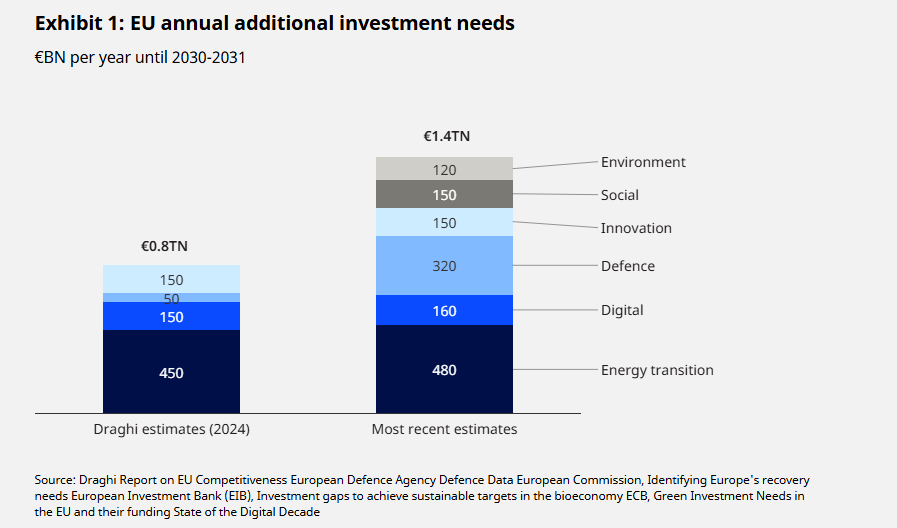
The EU faces an urgent need for €1.4 trillion in annual investment by 2030 across sectors like energy, defense, digital infrastructure, and climate resilience to reverse weak growth and enhance competitiveness. However, its underdeveloped capital markets and fragmented financial system limit efficient capital mobilization, leaving banks—already constrained by stringent regulations—to shoulder much of the investment burden. To bridge the investment gap, Europe needs a balanced regulatory framework that supports long-term corporate lending without compromising financial stability, alongside accelerated development of the Savings and Investment Union, deeper capital markets, and reduced cross-border barriers. Strengthening this financing continuum is critical for unlocking Europe’s investment potential and economic resilience.
Africa, Latin America | Education, Financial services
How banks can help solve Europe's corporate investment gap
Technology decentralisation is increasingly advocated to create more trustworthy, accessible, and innovative digital public infrastructure, but empirical evidence of its public sector benefits remains limited. This study uses an assemblage thinking approach and a public values framework to analyze Hamburg’s Urban Data Platform, revealing that public value stems not solely from technical decentralisation but from specific combinations of architecture and governance. Decentralised and centralised practices coexist within the platform, with a leading orchestrator playing a crucial role in driving public value creation.
Financial services, ICT, Education
Decentralisation in public sector data platforms: A pathway to enhancing public value?
Earth observation (EO) contributes approximately $440 billion annually to global GDP by providing critical intelligence for addressing climate risks, geopolitical changes, and supply chain challenges. An additional $263 billion in value is untapped, primarily across data acquisition, processing, and deployment. Advancing these areas is essential for EO to evolve from a promising technology into a system-level impact driving broader economic and strategic benefits.
Georgia
Earth Observation: Unlocking the $700 Billion Opportunity
The European Commission’s Technological Sovereignty Package represents a significant shift in viewing digital infrastructure as a strategic asset critical to security, competitiveness, and geopolitical influence. It includes initiatives like Chips Act 2.0, Cloud and AI Development Act, and the Open Source Strategy aimed at strengthening Europe’s digital value chain by boosting semiconductor production, data center capacity, AI deployment, and promoting open-source technologies. However, technological sovereignty should focus not just on infrastructure but on ensuring meaningful agency for individuals and institutions over digital systems, emphasizing digital self-determination. This involves addressing three dimensions: dependency on foreign infrastructure, risks in digital openness, and systemic imbalances in agency, highlighting that power distribution and accountability in digital systems are essential.
Belgium, Estonia, Georgia, Germany, Switzerland, United Kingdom | Financial services, Education, ICT
The Triad of Tech Sovereignty: Dependency, Openness, and Agency
ASEAN has evolved from a low-cost manufacturing base to a key player in the global semiconductor supply chain, with exports rising from 20% to nearly 30% between 2015 and 2024. Singapore leads in innovation and high-value activities like IC design and advanced materials, supported by strong R&D initiatives. Malaysia, a major semiconductor exporter, focuses on advanced packaging and manufacturing improvements. Vietnam is rapidly growing as a manufacturing hub, leveraging foreign investment and developing domestic champions linked to AI ambitions. Thailand specializes in PCBs and EV-related semiconductors with significant Chinese investment. ASEAN countries increasingly pursue targeted industrial, trade, and innovation policies to move up the semiconductor value chain amid geopolitical tensions and reshoring strategies.
Australia, Cambodia, Chile, Egypt, Estonia, Germany, Hungary, India, Indonesia, Japan, Jordan, Kenya, Malaysia, Myanmar, Philippines, Republic of Korea, Senegal, Seychelles, Singapore, South Africa, Taiwan, China, Tanzania, Thailand, United Arab Emirates, United Kingdom, Viet Nam | Financial services, Education, ICT
Three Questions to Angela Tritto - ASEAN’s Rise in Semiconductors
First contact with extraterrestrials is expected to be a gradual, rigorous process rather than a dramatic revelation. The International Academy of Astronautics' Search for Extraterrestrial Intelligence (Seti) Committee has updated the 2010 post-detection protocols to reflect advances in technology and information dissemination. New guidelines emphasize careful verification of signals by multiple institutions, preventing premature announcements and misinformation. Once confirmed, data must be fully transparent and open. The protocols also address researcher protection from harassment, call for safeguarding radio frequencies from interference, and mandate that any response to aliens requires broad international consultation through global bodies like the UN.
Alien first contact: how the new rules differ from science fiction
Geopolitical disruptions are threatening Europe's critical clean energy supply chains, prompting a shift from open markets to strategic interventions that enhance energy resilience, national security, and economic growth. The EU and UK have introduced policies to build more robust, diversified supply chains and bilateral partnerships with trusted allies. The Clean Technology Partnership Initiative identifies key vulnerable sectors—such as batteries, offshore wind, grid equipment, nuclear, geothermal, heat pumps, green steel, and green ammonia—where targeted international partnerships, combined with public-private finance, can reduce risks effectively. Coordinated, prioritized action is urgently needed to address these chokepoints and secure Europe's energy transition.
Austria, Belgium, Bolivia, Bulgaria, Canada, Chile, Colombia, Cyprus, Czech Republic, Denmark, Egypt, Estonia, Finland, France, Georgia, Germany, Ghana, Greece, Hungary, Iceland, India, Indonesia, Israel, Jamaica, Japan, Jordan, Kenya, Kyrgyz Republic, Latvia, Lithuania, Malaysia, Moldova, Mozambique, Netherlands, Norway, Pakistan, Paraguay, Peru, Philippines, Poland, Portugal, Republic of Korea, Romania, Russian Federation, Rwanda, Senegal, Seychelles, Singapore, Slovakia, South Africa, Spain, Sweden, Switzerland, Taiwan, China, Tanzania, Thailand, Tunisia, Türkiye, Uganda, Ukraine, United Arab Emirates, United Kingdom, Venezuela, Zambia | Financial services, Health, ICT
Managing the geopolitics of Europe’s energy transition
British astronaut John McFall, a leg amputee and former Paralympic sprinter, may become the first person with a physical disability to live and work in space as early as 2027. His mission challenges current understanding of how bodies adapted to gravity—and with altered physiology—respond to microgravity. Key physiological concerns include fluid shifts affecting vision, temperature regulation changes, spinal lengthening risks, and prosthetic fitting issues during spaceflight. Studying McFall's experience will expand knowledge of human space adaptation and could improve prosthetic care on Earth.
The extraordinary physiological challenges facing amputee John McFall in space

Marine ecosystems are rapidly degrading due to warming seas, rising tides, pollution, and overuse, threatening the communities and economies reliant on them. Approximately 40% of the global population lives near the coast, an area producing 30-50% of global GDP and hosting critical industries like ports, energy, aquaculture, desalination, and tourism. Transitioning to a regenerative blue economy involves leveraging integrated ocean governance, equitable finance, human capacity building, and technological advances to restore ecosystems and enhance resilience. This approach prioritizes long-term ecological health and equitable prosperity over short-term economic gains, promoting sustainability and well-being for current and future generations.
The Regenerative Blue Economy: Pathways to Prosperity
Marine ecosystems are degrading due to climate change, pollution, and overuse, threatening coastal communities and economies. About 40% of the global population lives near coasts, areas that generate 30-50% of global GDP and host key industries like ports, energy, aquaculture, and tourism. Transitioning to a regenerative blue economy involves integrated ocean governance, innovative finance, human capacity building, and technological advancements to restore ecosystems, enhance resilience, and promote equitable prosperity within planetary limits. Success is measured by ecological restoration, fairness, and long-term well-being, not just economic gains.
Financial services, Health
The Regenerative Blue Economy: Pathways to Prosperity
Four Futures for Powering Growth in the New Economy: Energy and Competitiveness in 2035 analyzes how the interaction between traditional and emerging energy systems will influence economic growth, business competitiveness, and the global distribution of economic advantages. Amid growing geoeconomic fragmentation, technological advances, and evolving security and energy challenges, it outlines four possible scenarios for 2035. Success in these futures hinges on access to critical resources and technologies, as well as the capacity to integrate, scale, and deploy them within complex and interconnected economic systems. The report, part of the World Economic Forum’s Scenarios for the Global Economy Dialogue Series, offers strategic insights and risk assessments to help leaders future-proof strategies, tap new growth, and enhance resilience.
Belgium, Bolivia, Bulgaria, Chile, Colombia, Denmark, Ecuador, Egypt, Estonia, Finland, Georgia, Germany, Ghana, Greece, Hungary, India, Indonesia, Jamaica, Japan, Jordan, Kenya, Kuwait, Kyrgyz Republic, Malaysia, Mozambique, Namibia, Netherlands, Paraguay, Peru, Philippines, Poland, Qatar, Republic of Korea, Russian Federation, Rwanda, Senegal, Seychelles, Singapore, Sweden, Switzerland, Taiwan, China, Tanzania, Thailand, Tunisia, Uganda, Ukraine, United Arab Emirates, United Kingdom, Uruguay, Venezuela, Yemen, Zimbabwe | Health, ICT, Education
Four Futures for Powering Growth in the New Economy: Energy and Competitiveness in 2035
Economic growth without increasing raw material consumption, or "decoupling," remains largely unachieved despite some positive examples. A 50-year study of over 100 countries, plus 150 years of UK data, shows three key issues: (1) Resource use declines in some rich countries are insufficient, with per capita usage still well above sustainable levels. (2) There is no global turning point; material use generally rises with income, and reported "successes" often result from economic crises or unique circumstances rather than systemic green growth. (3) Longer-term historical data reveal recent reductions are temporary blips, not lasting trends. Genuine progress requires absolute reductions in material consumption, especially in high-consuming nations.
Barbados, Belgium, Democratic Republic of the Congo, Denmark, Ecuador, Egypt, Estonia, Georgia, Ghana, Greece, Hungary, Jamaica, Malaysia, Morocco, Namibia, Netherlands, Norway, Poland, Singapore, Sweden, Tunisia, United Arab Emirates, United Kingdom, Venezuela, Yemen
Green growth claims are overstated – our study shows three reasons why
Scientific assessments of possible extraterrestrial life on exoplanet K2-18b and Mars' Cheyava Falls rock reflect cautious expert opinion rather than consensus. After announcements in 2025 suggesting biosignatures, only a small minority of surveyed astrobiologists believed life had likely been found—6.6% for K2-18b and 15.1% for Mars—while many remained neutral or disagreed. The shift from strong disagreement toward neutrality in the Mars case suggests growing openness without firm endorsement. Differences in evidence type and recognition of possible non-biological explanations contribute to this caution. This highlights the complexity of scientific opinion, which often spans agreement, neutrality, and disagreement, rather than binary stances, emphasizing the need for systematic measurement of expert views across scientific domains.
Could it be aliens? From Cheyava Falls on Mars to exoplanet K2‑18b – here’s what scientists really think
India aims to expand its space program to enhance national security, economic growth, and global stature, seeking strategic autonomy in civilian space activities and technological sovereignty in the military realm. The rivalry with China accelerates India’s pursuit of sovereign capabilities in space. Despite improved investment and regulation, India’s space economy remains underdeveloped. The US is India’s key strategic partner in space for trade, security, and intelligence, while collaboration with European actors is increasing to attract investment, close technology gaps, and diversify partnerships. India's Chandrayaan-3 lunar mission and upcoming crewed missions underscore its ambitions as a rising space power amid shifting global space dynamics.
Bangladesh, Bolivia, Georgia, India, Indonesia, Pakistan, Russian Federation, Seychelles, Singapore, South Africa, Spain, Thailand, United Kingdom | Education
India’s Space Policy
Between 2025 and early 2026, global trade and financial systems experienced unprecedented economic statecraft that accelerated fragmentation, threatening core principles like payment system interoperability and fiscal policy independence. New quantitative analysis quantifies the economic drag from current policies and potential worst-case scenarios. These shifts pose significant risks and opportunities for emerging and developing economies, exemplified by a case study on major African economies. The findings underscore the urgent need to maintain foundational elements of the global financial system to support sustained economic growth and prosperity.
Barbados, Bulgaria, Denmark, Egypt, Estonia, Finland, Georgia, Germany, Ghana, Hungary, Indonesia, Jamaica, Japan, Jordan, Kenya, Madagascar, Malta, Namibia, Paraguay, Poland, Russian Federation, Senegal, Seychelles, Singapore, South Africa, Sweden, Switzerland, Taiwan, China, Tajikistan, Tanzania, Tunisia, Uganda, Ukraine, United Kingdom, Zambia, Zimbabwe | Health, ICT, Financial services
Deepening Divides: The Cost of a More Fragmented Financial System
National security encompasses the protection of a nation's fundamental interests—including integrity, independence, and prosperity—through coordinated state action spanning military, diplomatic, law enforcement, economic, and other resources. It is a continuous, complex function requiring upstream prevention and integration across sectors, distinguishing it from related fields like national defense or foreign affairs. Despite its centrality to public policies, national security often lacks prominence in public discourse except after crises. Enhancing public understanding and political prioritization is crucial for more effective state action, reflecting a global trend to anchor national security at the highest levels of decision-making.
Financial services
[National Security: The Reality Test] - The Keystone of Public Policy
The European Commission unveiled the European Technological Sovereignty Package to boost Europe’s capabilities in semiconductors, AI, cloud computing, and open source technologies. Key initiatives include the Chips Act 2.0, the Cloud and AI Development Act, an Open Source Strategy, and a Strategic Roadmap for Digitalisation and AI in Energy. These measures aim to reduce Europe’s reliance on external technology providers, enhance digital autonomy, and support sustainable development, positioning Europe as a leading AI continent with stronger control over critical digital infrastructure.
ICT
Commission proposes tech sovereignty package to strengthen Europe’s digital autonomy and resilience
Fraunhofer-Gesellschaft is driving aerospace innovation towards climate-friendly, cost-effective, and scalable solutions. At ILA Berlin 2026, they will showcase electric and hybrid propulsion systems featuring high-efficiency power electronics, fuel cell integration, and the HYTANK, the first automated production line for CFRP hydrogen tanks. Sustainable materials like recyclable thermoplastic composites and advanced manufacturing processes aim to enable serial production and circular economy practices. In space technologies, Fraunhofer will present sensor, communication, and materials solutions supporting Earth observation, climate monitoring, and crisis prevention, highlighting aerospace’s role in global resilience.
Sustainable Lift-Off: Fraunhofer is Shaping the Future of Aerospace
Antarctica is experiencing more extreme warm weather and precipitation changes due to climate change, leading to surface ice melting and disrupted marine ecosystems. These conditions are making traditional scientific research increasingly difficult and dangerous, with melting ice affecting airstrips, shipping routes, and safety at research stations. However, advancements in autonomous technologies such as underwater gliders, drones, and digital twin ocean models offer safer, more efficient, and lower-carbon methods for gathering crucial data. International collaboration remains essential to improve understanding of Antarctica's changing environment and its global impacts.
Antarctica
Extreme weather is making Antarctic research harder, but new technology is providing some answers – new study