
Publications

INSIGHT REPORT

Pioneering the Future: Space

Technologies Poised to Revolutionize

Exploration and Economy by 2035

September 2026

FACTSHEETS

Pioneering the Future: Space

Technologies Poised to Revolutionize Exploration and Economy by 2035

June 2026

WHITE PAPER

Future of Space Law:

Operationalizing Space Governance

March 2026

REPORT

Clear Orbit, Secure Future:

 A Call to Action on Space Debris

Jan 2026

WHITE PAPER

The Future of Space Law

Insights from the ATS, UNCLOS, and ITU Frameworks

December 2025

WHITE PAPER

The Future of Space Law: 

The Evolving Dynamics of Air and Space Regulation

 September  2025

The Future Of Space Law

News

Centre for Space Futures, Novaspace and SpaceTech Gulf  Sign Agreement to Develop Global Space Capability Mapping Dashboard

Riyadh, Saudi Arabia , 23 Jun 2026|  Press Release

Clear Orbit, Secure Future: A Call to Action on Space Debris

Riyadh, Saudi Arabia, 26 Jan 2026 | Press Release

Centre for Space Futures Holds Workshop with Participation of 40 Global Experts

Riyadh, Saudi Arabia, 05 Dec 2025 | Press Release

Centre for Space Futures Releases White Paper on 'The Future of Space Law'

Riyadh, Saudi Arabia, 12 Sep 2025 | Press Release

The Board of Directors of the Centre for Space Futures Endorses Its Strategic Direction

Riyadh, Saudi Arabia, 26 May 2025 | Press Release

Saudi Space Agency to Launch the Centre for Space Futures with the World Economic Forum

Riyadh, Saudi Arabia, 29 April | Press Release

5 ways we can tackle growing risks from rocket bodies in orbit

Dec 09, 2025 | Economic Growth, Stories

Read More

Forum Agenda

Forum Videos

VIDEO

Press Conference: Centre for Space Futures in Riyadh

The World Economic Forum's Special Meeting, April 29, 2024

VIDEO

The Purpose of Astronauts at Davos 2024

World Economic Forum , March 9, 2024

VIDEO

PortWatch: Monitoring Trade Disruptions from Space

World Economic Forum , Dec 18, 2023

VIDEO

India's Moon Mission Triumph: Ambassador Ruchira Kamboj's Insights

World Economic Forum , Aug 23, 2023

VIDEO

Space Exploration is Back at Davos 2023

World Economic Forum , Feb 16, 2023

Forum Publications

Strategic Intelligence Insights

China's financial institutions lead Asia in liquefied natural gas (LNG) investments, contributing approximately US$5.47 billion, primarily for cleaner maritime fuel. Despite promoting LNG as a transitional energy source due to its lower greenhouse gas emissions compared to coal and oil, experts caution it remains a significant emitter of methane. South Korea and Japan follow as the second and third highest investors in maritime LNG. A study highlighted that over US$21.9 billion has been directed globally into LNG through public finance, with many deals ambiguously categorized as sustainable, underlining the need for improved transparency in financing high-emission projects.
China emerges as Asia’s biggest investor in LNG: study

Japan is drafting stricter recycling regulations for end-of-life solar panels in anticipation of a potential surge in waste, projected to reach 500,000 metric tonnes annually by the late 2030s. The proposed framework shifts from a voluntary to a mandatory recycling system, initially focusing on large-scale operators who must submit waste disposal and recycling plans for review. Manufacturers, importers, and sellers will also face new obligations regarding environmentally conscious design and material transparency. The government aims to cut recycling costs significantly by 2029 and improve the capacity for solar panel recycling, currently at 150,000 tonnes per year.
Japan drafts stricter solar panel recycling rules ahead of waste surge

In 2025, Chinese companies significantly expanded their engagement in the Belt and Road Initiative (BRI), with construction deals reaching $128 billion (up 81% from 2024) and investments totaling $85 billion (up 62%). This shift marks a departure from the earlier focus on "small and beautiful" projects, with average investment values rising substantially. Energy remained the dominant sector, accounting for 43% of total engagement, though fossil fuel projects outnumbered renewables significantly. Notably, Africa emerged as the top destination for Chinese overseas projects, indicating an evolution in BRI strategy towards larger scale and diversified investments.
Benin | Financial services
The Belt and Road boomed in 2025

The Gulf monarchies of Saudi Arabia, the UAE, and Qatar leverage their significant sovereign wealth funds—PIF, QIA, ADIA, Mubadala, and ADQ—not only for economic diversification but also to enhance their foreign policy capabilities. These funds facilitate investments in strategic sectors, including armaments, media, and technology, enabling the states to exert hard, soft, and sharp power while maintaining a narrative of apolitical profit orientation. Germany and the EU are interested in these funds for their investment potential, but must be cautious of risks such as compromised infrastructure and technology transfer, which may conflict with European interests.
Bahrain, Israel, Jordan, Kuwait, Oman, Qatar, Saudi Arabia, United Arab Emirates | Financial services
Sovereign Wealth Funds and Foreign Policy
Spain is seen as a protective environment for foreign multinationals, with 89% expecting to sustain or increase turnover by 2026, aided by favorable access to European, African, and Latin American markets. Despite a global economic slowdown, investment outlook remains robust, with 85% planning to maintain or increase investments. However, challenges persist, including high taxation and regulatory issues, with bureaucratic hurdles rated as the most significant concern. Spain leads European green investments, attracting substantial renewable projects while addressing sustainability issues, with 42% of firms adopting specific strategies in this area.
Belgium, Bolivia, Chile, Costa Rica, Ecuador, Estonia, Eswatini, Finland, Greece, Hungary, Israel, Luxembourg, Mexico, Morocco, Netherlands, Panama, Peru, Poland, Portugal, Slovakia, Spain, Sweden, Switzerland
Spain circumvents U.S. tariffs and boosts the revenue forecasts of foreign multinationals

A UK government report warned that climate-driven ecosystem collapse could lead to severe consequences, including food shortages, mass migration, and potential nuclear conflict. Despite being informed by intelligence agencies, its launch was blocked, resulting in only a limited release after public pressure. The report highlighted risks such as water insecurity and crop failures, exacerbated by environmental degradation. An unredacted version indicated that failures in ecosystems could lead to increased political extremism and geopolitical tensions, particularly between China, India, and Pakistan. The government's lack of formal commentary reflects a historical pattern of downplaying climate-related security warnings.
Financial services
A UK climate security report backed by the intelligence services was quietly buried – a pattern we’ve seen many times before
Artificial intelligence (A.I.) is positioned to be the most significant technological advancement in history, akin to the transformations brought by electricity, semiconductors, and the internet. A.I. is categorized as a general-purpose technology that may further accelerate ongoing economic changes. It has the potential to automate cognitive and physical tasks more cost-effectively than humans, raising critical questions about future economic dynamics and the implications of such capabilities.
Education, ICT
A.I. and Our Economic Future

The Lunar Gateway, a planned space station orbiting the Moon as part of NASA's Artemis program, aims to enable sustainable lunar presence for science and commercial purposes while paving the way for missions to Mars. Despite facing delays, cost concerns, and debates over its necessity, it remains vital for fostering international cooperation, particularly amidst growing competition with nations like China and Russia. Gateway will support testing technology for deep space and help establish a long-term human presence on the Moon. Critics question its operational viability, while supporters emphasize its critical role in future exploration.
What’s the point of a space station around the Moon?

Global environmental governance faces challenges due to geopolitical tensions and the U.S. withdrawal from the Paris Agreement. China, as a leading economy and clean technology producer, is stepping into a more prominent role, though its stance remains ambiguous. Its participation in global frameworks like the Kunming-Montreal Biodiversity Framework is essential, and it is increasingly funded climate initiatives in the Global South. To harness China's influence effectively, international cooperation should enhance engagement strategies, encouraging transparency and collaboration on sustainability goals while maximizing benefits for developing countries through access to clean technologies and investments from China.
Health
How can the world engage with China to strengthen global environmental governance?
Greenland's potential for mining critical minerals is complicated by environmental, social, and political challenges. Although these minerals are essential for decarbonizing technologies like electric vehicles and wind turbines, mining processes are environmentally disruptive and require significant resources. Increased global demand puts pressure on local ecosystems and governance, as seen with Greenland's restrictions on uranium mining amid geopolitical interests in mineral supply. The conflict between sustainable practices and the urgent need for minerals highlights the complexities of balancing economic goals with environmental protections, raising questions about the effectiveness of current ESG standards.
Financial services
Greenland’s ‘green mining’ row highlights the key tensions in the energy transition
Researchers at Fraunhofer FKIE have developed a highly automated drone system capable of quickly and precisely localizing radioactive sources. The drone uses a gamma detector alongside electro-optical and infrared cameras to detect radiation deviations and adapts its flight path dynamically during a search phase to pinpoint the source within meters in minutes. This technology surpasses traditional handheld detector methods used in lengthy searches. The system generates spatial heat and probability maps of radiation levels and has been tested successfully in field trials. Ongoing projects aim to increase drone speed and enable the localization of multiple or moving radioactive nuclides.
Quickly and Precisely Localizing Radioactive Material
Technological advances are transforming decision-making in the public sector by aligning it with citizens' needs and community challenges. A proposed sandbox solution enables public administration to address community issues in real time, enhance effective allocation of resources, and evaluate administrative performance. By analyzing social media feedback from 95 municipalities, the research identifies prevalent community problems and categorizes them by population and geographical factors. The sandbox aims to improve responsiveness at local and central government levels, ensuring public spending aligns with community needs.
Financial services, Health, Education
Using Sandboxes for Testing Decisions in the Public Sector
China's economy faces significant challenges, including high youth unemployment, low consumption, deflation, and a real estate crisis, with GDP growth dropping to around 5%. Despite concerns following Evergrande's bankruptcy, the expected financial crisis has not yet materialized due to state control preventing bank runs. The underdeveloped financial markets compound the issues, raising anxiety about potential impacts. Trade tensions with the U.S. have also escalated, with tariffs affecting economic dynamics but not leading to immediate crises. The evolving geopolitical landscape suggests a shift towards three major spheres of influence: the U.S., China, and Russia.
Australia, Cambodia, India, Kazakhstan, Republic of Korea, Switzerland, Taiwan, China, Viet Nam | Financial services, Education
4 Trends to Watch in China’s Economy

More than one-third of shark and ray species are threatened with extinction primarily due to overfishing for their fins, meat, and other parts, alongside bycatch in other fisheries. Despite new international trade limits imposed on many species at a 2025 global conference, these regulations alone will not suffice to mitigate overfishing. Local fishing practices often sustain shark mortality regardless of international trade policies. Effective conservation requires comprehensive reforms addressing both local fishing practices and demand management for shark products. Without these changes, the current regulations may have minimal impact on shark populations.
Financial services
New limits on global trade of sharks won’t be enough to save them from overfishing – new research
The Observatory of Public Sector AI, a research initiative by InnovateUS and The Governance Lab, analyzes data from over 150,000 public servants to enhance understanding of AI's awareness, attitudes, and adoption in government. The initiative seeks to identify effective investments in upskilling that improve services, policies, and government performance. Key research will assess public servants' AI competencies, training impacts, barriers to adoption, and variations in role and geography. The first research report is expected in spring, focusing on the translation of insights into actionable improvements in public sector capabilities.
Education
Launching the Observatory of Public Sector AI: An Invitation to Build the Evidence Base Together

Time is traditionally considered a fundamental aspect of reality, yet physics has long struggled to define it. Theories like general relativity and quantum mechanics treat time inconsistently, leading to confounding results when trying to unify them. This issue, known as the problem of time, complicates the search for a unified theory of physics. While entropy and the second law of thermodynamics provide an explanation for the arrow of time, they do not fully account for its fundamental nature. New insights from information theory are reshaping this discussion, suggesting that information may play a critical role in understanding time's behavior in the universe.
Is time a fundamental part of reality? A quiet revolution in physics suggests not
Regulatory sandboxes facilitate controlled testing of AI technologies, reducing compliance burdens while allowing regulators to learn from real-world applications. Initially developed in the Fintech sector, their success has led to expansion into other areas, including AI, as governments seek adaptive governance tools amid rapid tech advancements. These sandboxes promote innovation by easing market access, fostering regulator-firm interaction, implementing strict consumer protections, and signaling support for new entrants. Initiatives across the EU, Japan, Singapore, and South Korea illustrate the varied approaches to AI oversight, though challenges such as regulatory inconsistencies remain.
ASEAN | Education
Let AI Developers Play in the Regulatory Sandbox

Artificial intelligence (AI) presents both opportunities and risks for the Global South, with the potential to enhance public services, empower women, and support social justice. However, the effective use of AI depends on high-quality, inclusive data governance. Without representation from marginalized groups, AI systems can exacerbate inequalities. Key elements for fostering inclusive AI include ensuring data is representative, safe, interoperable, and action-oriented. Examples like Tunisia's Observatoire Tunisien des Politiques Publiques illustrate how local data can enhance civic engagement and accountability, highlighting the necessity for strong governance to bridge data with democracy.
Africa | Education
Governing Data for Inclusive AI in the Global South
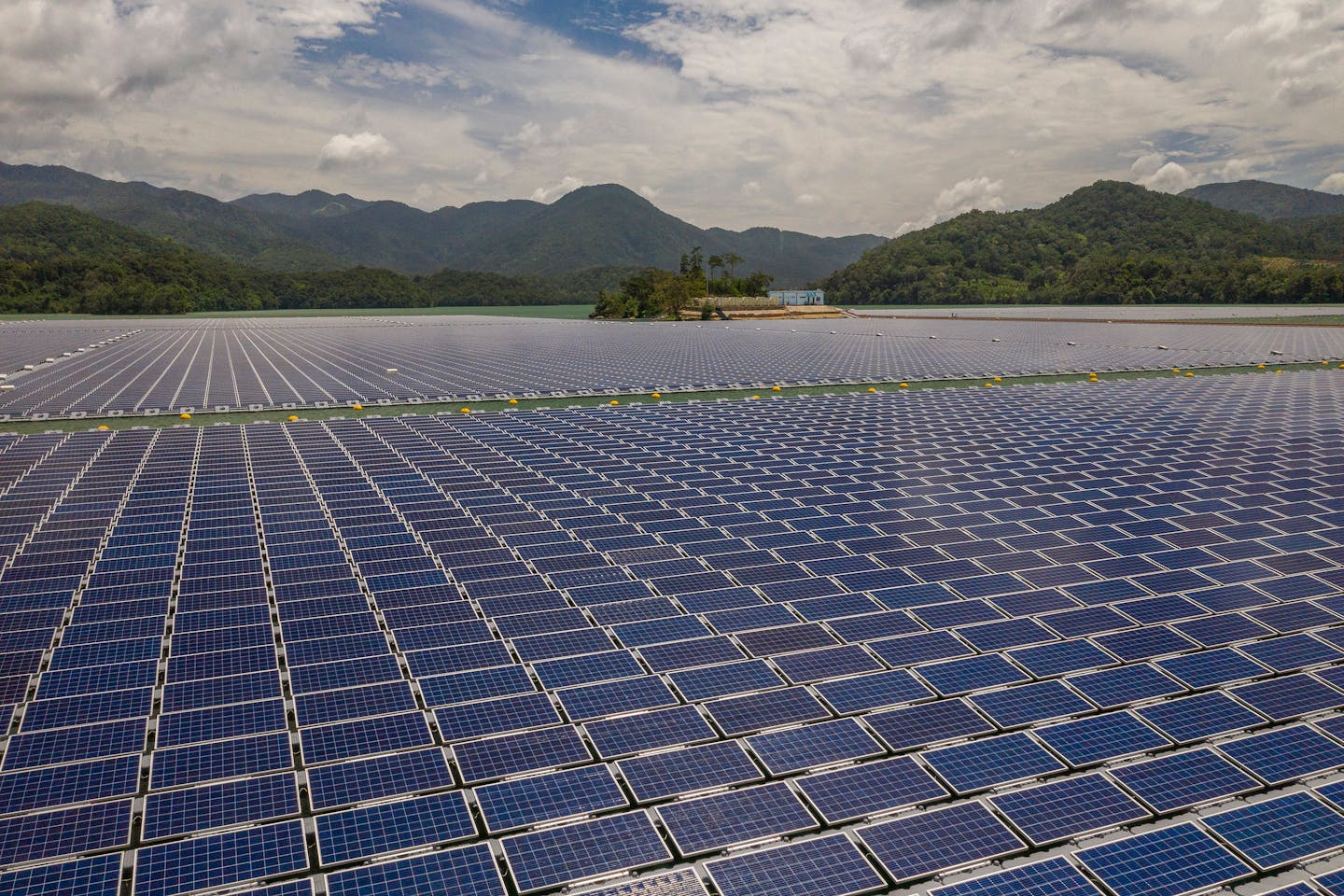
Malaysia, Thailand, and Indonesia have initiated new climate action plans under the Paris Agreement, aiming for significant emissions reductions and cleaner futures. Malaysia set its first absolute-emissions reduction goal, Thailand advanced its net-zero target to 2050, and Indonesia confirmed its ambition for net zero by 2060. However, robust implementation is essential, particularly in the power sector, requiring grid upgrades, market reforms, and decarbonisation of heavy industry. The urgency for action is compounded by economic pressures and potential climate delayism, risking stagnation in the transition to clean energy. Southeast Asia must commit to necessary reforms to avoid merely supplementing fossil fuels with renewables.
Bolivia, Cambodia, Denmark, Egypt, Estonia, Ethiopia, Ghana, Hungary, India, Indonesia, Japan, Malaysia, Peru, Philippines, Poland, Republic of Korea, Romania, Thailand, Tunisia, United Kingdom, Viet Nam | Financial services
Climate action can unlock Southeast Asia’s future competitiveness
The study explores the complex interplay between collaborative and data governance in inter-organizational data ecosystems, emphasizing the limitations of treating these dimensions separately. By analyzing five data ecosystems through a multiple case study approach, a conceptual framework for Integrated Governance is developed. This framework identifies 24 core relationships between the two governance dimensions and categorizes them into causal, explanatory, concurrent, chronological, and overlapping types. The findings provide a holistic perspective aimed at enhancing the design and management of data ecosystems.
ICT, Health
Integrated governance in data ecosystems: A conceptual framework consolidating collaborative and data governance