
Publications

INSIGHT REPORT

Pioneering the Future: Space

Technologies Poised to Revolutionize

Exploration and Economy by 2035

September 2026

FACTSHEETS

Pioneering the Future: Space

Technologies Poised to Revolutionize Exploration and Economy by 2035

June 2026

WHITE PAPER

Future of Space Law:

Operationalizing Space Governance

March 2026

REPORT

Clear Orbit, Secure Future:

 A Call to Action on Space Debris

Jan 2026

WHITE PAPER

The Future of Space Law

Insights from the ATS, UNCLOS, and ITU Frameworks

December 2025

WHITE PAPER

The Future of Space Law: 

The Evolving Dynamics of Air and Space Regulation

 September  2025

The Future Of Space Law

News

Centre for Space Futures, Novaspace and SpaceTech Gulf  Sign Agreement to Develop Global Space Capability Mapping Dashboard

Riyadh, Saudi Arabia , 23 Jun 2026|  Press Release

Clear Orbit, Secure Future: A Call to Action on Space Debris

Riyadh, Saudi Arabia, 26 Jan 2026 | Press Release

Centre for Space Futures Holds Workshop with Participation of 40 Global Experts

Riyadh, Saudi Arabia, 05 Dec 2025 | Press Release

Centre for Space Futures Releases White Paper on 'The Future of Space Law'

Riyadh, Saudi Arabia, 12 Sep 2025 | Press Release

The Board of Directors of the Centre for Space Futures Endorses Its Strategic Direction

Riyadh, Saudi Arabia, 26 May 2025 | Press Release

Saudi Space Agency to Launch the Centre for Space Futures with the World Economic Forum

Riyadh, Saudi Arabia, 29 April | Press Release

5 ways we can tackle growing risks from rocket bodies in orbit

Dec 09, 2025 | Economic Growth, Stories

Read More

Forum Agenda

Forum Videos

VIDEO

Press Conference: Centre for Space Futures in Riyadh

The World Economic Forum's Special Meeting, April 29, 2024

VIDEO

The Purpose of Astronauts at Davos 2024

World Economic Forum , March 9, 2024

VIDEO

PortWatch: Monitoring Trade Disruptions from Space

World Economic Forum , Dec 18, 2023

VIDEO

India's Moon Mission Triumph: Ambassador Ruchira Kamboj's Insights

World Economic Forum , Aug 23, 2023

VIDEO

Space Exploration is Back at Davos 2023

World Economic Forum , Feb 16, 2023

Forum Publications

Strategic Intelligence Insights

The January 2026 Chief Economists’ Outlook indicates an improved yet cautious economic outlook compared to 2025, based on insights from the World Economic Forum’s Community of Chief Economists. While negative sentiment persists, particular regions exhibit varied growth trajectories. The US sees improved growth driven by artificial intelligence investments, whereas Europe faces weak growth and geoeconomic challenges. China deals with deflationary pressures and trade rebalancing, while South Asia emerges with the strongest growth prospects. The report also addresses debt issues in various economies and the uneven impact of AI on productivity and employment, signaling significant transformations in the global economy.
Australia, Austria, Barbados, Belgium, Bolivia, Bulgaria, Burkina Faso, Cambodia, Chad, Chile, Colombia, Czech Republic, Denmark, Ecuador, Egypt, Estonia, Ethiopia, Georgia, Germany, Ghana, Hungary, India, Indonesia, Japan, Jordan, Kenya, Lesotho, Luxembourg, Malaysia, Namibia, New Zealand, Pakistan, Peru, Philippines, Poland, Republic of Korea, Russian Federation, Senegal, Singapore, South Africa, Sweden, Switzerland, Taiwan, China, Tanzania, Thailand, Uganda, Ukraine, United Arab Emirates, United Kingdom, Venezuela, Viet Nam, Zimbabwe | Financial services, ICT
Chief Economists' Outlook: January 2026

Sustainable growth necessitates reconciling economic, social, political, and ecological interests through collective action via public-private partnerships and regional coalitions. The World Economic Forum's upcoming Davos meeting aims to enhance collaboration under the theme “A Spirit of Dialogue.” Current global forums struggle with vague pledges and insufficient action in addressing climate challenges. To foster long-term value creation, businesses must adopt frameworks that measure natural, social, and human capital, supported by transparent regulations. Innovation and strategic government policies are essential for driving sustainability, with successful examples from Denmark, China, and Texas highlighting the potential for collaboration and investment in sustainable practices.
Ethiopia, Ghana, Indonesia, Sweden, United Kingdom | Financial services, ICT, Education, Health
Coming together: Sustainable growth means rethinking value
The resurgence of geoeconomics signifies a major shift in how countries utilize economic tools to enhance national power, particularly evident in the U.S.-China rivalry. This transition marks a move from absolute to relative welfare, emphasizing zero-sum competition where countries measure their wealth against rivals. Smaller nations face increased vulnerability to coercion as hegemonic powers leverage economic networks. State intervention is on the rise, with developed countries adopting industrial policies alongside emerging markets. Companies and investors are urged to adopt stakeholderism, aligning business strategies with broader societal goals amidst this changing landscape.
Chile, Egypt, Eswatini, Ethiopia, Georgia, Germany, Ghana, Hungary, Iceland, Indonesia, Japan, Jordan, Poland, Republic of Korea, Russian Federation, Singapore, Sweden, Switzerland, Tanzania, Ukraine, United Arab Emirates, United Kingdom, Zimbabwe | Financial services, Health
The rise – or return – of geoeconomics and the implications for growth

Global warming has surpassed the critical 1.5°C threshold, highlighting the urgent need for immediate action on climate policy. A proposed Science Panel on the Global Energy Transition could offer evidence-based frameworks to assist decision-makers. Addressing climate change hinges on four key factors: rapid net-zero emissions, transforming agriculture, scaling carbon dioxide removal, and protecting natural carbon sinks. Current national commitments are insufficient, projecting over 2.5°C of warming. COP30 aimed to pivot from promises to actionable strategies, focusing on fossil fuel phase-out and halting deforestation, with scientists ready to support this necessary transition.
Financial services
Why it’s time to put scientific guidance at the heart of climate policy

Global economic uncertainty is driven by climate change, geopolitical tensions, and rapid technological advancement, necessitating collaboration for meaningful progress. Experts from the Global Future Councils emphasize the importance of dialogue to foster innovation and resilience. Key takeaways include the growing commitment to ethical AI, reskilling initiatives, and the evolving role of higher education in addressing societal challenges. Collaboration across sectors is essential to align technological and human progress, with a focus on shared purpose and sustainable solutions. Overall, progress is being made, especially when empathy and ethical considerations guide technological development.
Singapore | Financial services, ICT, Health, Education
Amid global uncertainty, Global Future Council experts explore where progress is possible

Financial hubs must evolve to thrive amid uncertainty, focusing on three interdependent areas: enhanced connectivity, responsive infrastructure, and robust governance. Their ability to forge connections is crucial for maintaining relevance and leadership in a fragmented global economy. Financial hubs facilitate capital flow, help companies scale, and adapt to changing market conditions amid geopolitical and technological disruptions. Investment in advanced infrastructure is essential for meeting evolving investor behaviors. Strong governance fosters trust and market integrity, making hubs attractive for global business. Collaborations and innovative structures will shape future global prosperity.
Ghana, Hungary, Singapore, Ukraine | ICT, Health, Education, Financial services
Financial hubs are bridges to prosperity. Here's why

Tourism is positioned as a vital sector for global stability, growth, and shared prosperity, especially amid slow economic growth and rising fiscal pressures. It provides immediate stimulus, with 80% of its economic value benefiting small and medium-sized enterprises and local communities. With a projected labor shortfall in tourism, it offers substantial job creation opportunities, enhancing social cohesion and cultural understanding. Technology is crucial for improving productivity and customer experiences in the sector, though investment in infrastructure remains essential. Saudi Arabia exemplifies successful tourism development, surpassing visitation goals and committing billions toward sustainable tourism investments, illustrating the sector's potential as key economic infrastructure.
Bahrain, Egypt, Eswatini, Ethiopia, Germany, Ghana, Indonesia, Jordan, Lesotho, Malaysia, Oman, Pakistan, Republic of Korea, Saudi Arabia, Senegal, Singapore, South Africa, Sweden, Tajikistan, Tanzania, Thailand, Tunisia, Uganda, United Arab Emirates, United Kingdom, Yemen | Financial services, ICT, Health, Education
How tourism can be a strategic asset for global stability, growth and trust

Social innovation is becoming a key strategy for businesses seeking competitive advantages in a complex global environment marked by supply chain disruptions and changing consumer expectations. Analyzing over 180,000 supply chain events, it was found that social issues account for 18% of disruptions. Companies that adopt social innovation can align their commercial goals with societal benefits, fostering trust and resilience. Initiatives like the Rise Ahead Pledge and examples from Tencent and Belterra Agroflorestas illustrate successful models embedding social positives into operations. More firms are recognizing this need, with new signatories emphasizing commitments to social innovation.
Education
Companies are starting to cash in the social innovation dividend

AI digital infrastructure is projected to significantly increase energy and water consumption, with data centers expected to double their electricity use by 2030 and quadruple their water consumption by 2028. This poses a challenge to resource sustainability, highlighted by 2.1 billion people facing water scarcity. Key priorities for enhancing digital infrastructure include waste heat recovery, independent power and water systems, circular design principles, advanced cooling technologies, and using AI to optimize water resources. Successful Nordic examples demonstrate the potential of these strategies, showcasing how data centers can contribute to community resilience and reduce environmental impact.
Education
Enhancing AI digital infrastructure within planetary boundaries
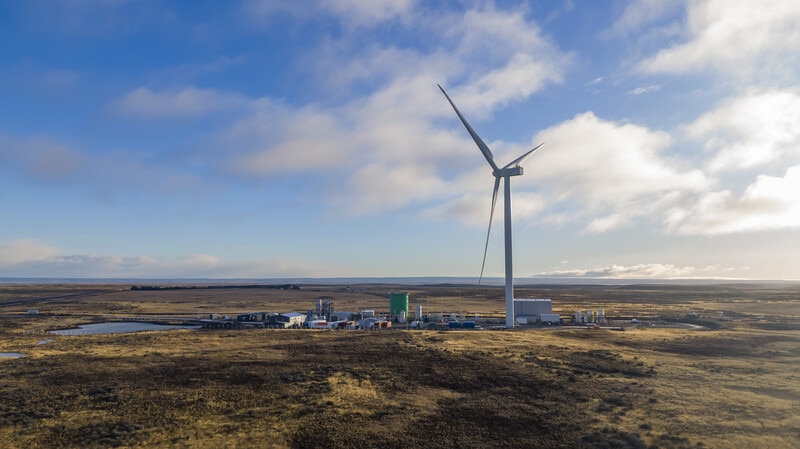
E-fuels are clean fuels that can significantly lower emissions compared to fossil fuels and can be utilized in existing infrastructure. Critical factors for scaling e-fuel production include location, cost reductions, and supportive policies. The COP30 conference saw over 20 countries pledge to quadruple sustainable fuel usage by 2035. E-fuels, produced by combining green hydrogen with recycled CO₂, can serve markets unsuitable for direct electrification. Despite their potential, current production costs are high, necessitating innovations in electrolyzer technology and infrastructure efficiencies. Successful early projects, like the HIF Haru Oni facility in Chile, demonstrate e-fuels' viability and encourage wider adoption.
How location, cost cuts and policy can help clean fuels compete with fossil fuels

Social dialogue is essential for addressing contemporary challenges, emphasizing the importance of including the voices of working people and labor. The AFL-CIO, representing 15 million workers, advocates for active participation in global decision-making to counter unchecked greed and promote fair compensation. Historical lessons indicate that social dialogue has been crucial in overcoming crises. Despite rising authoritarianism and inequality, there is optimism that cooperation can lead to a transition to a low-carbon economy and a focus on ensuring AI benefits all workers. The upcoming World Economic Forum must confront the dangers of deregulation and prioritize worker protections.
Africa, Latin America | ICT, Financial services, Education, Health
Social dialogue cannot happen without working people being heard

The World Economic Forum's 2026 Annual Meeting in Davos, themed "A Spirit of Dialogue," aims to unite leaders from various sectors to foster cooperation in addressing global challenges. Amid rapid geopolitical, climate, and technological changes, the Forum's Strategic Intelligence platform helps combat information overload by providing shared, factual insights. This facilitates constructive dialogue, allowing decision-makers to navigate complex issues such as energy transition, food security, and public health. The platform evolves continuously, extending year-round collaboration and supporting the development of informed, cooperative solutions.
ICT, Education
How strategic intelligence powers the spirit of dialogue

Brain capital, encompassing brain health and skills, is anticipated to be a major topic at Davos this year amidst geopolitical and technological shifts. A January 15 report emphasizes the importance of enhancing cognitive performance and resilience in the face of AI and misinformation. The Global Brain Economy Initiative aims to encourage investments in brain health as critical infrastructure, with potential to contribute $6.2 trillion to global GDP. Businesses are urged to integrate brain health into their models to combat challenges like talent shortages and burnout, aligning with five key strategies for activating brain capital.
Africa | Financial services, ICT, Education, Health
Building Brain Capital: The 21st Century’s Critical Infrastructure
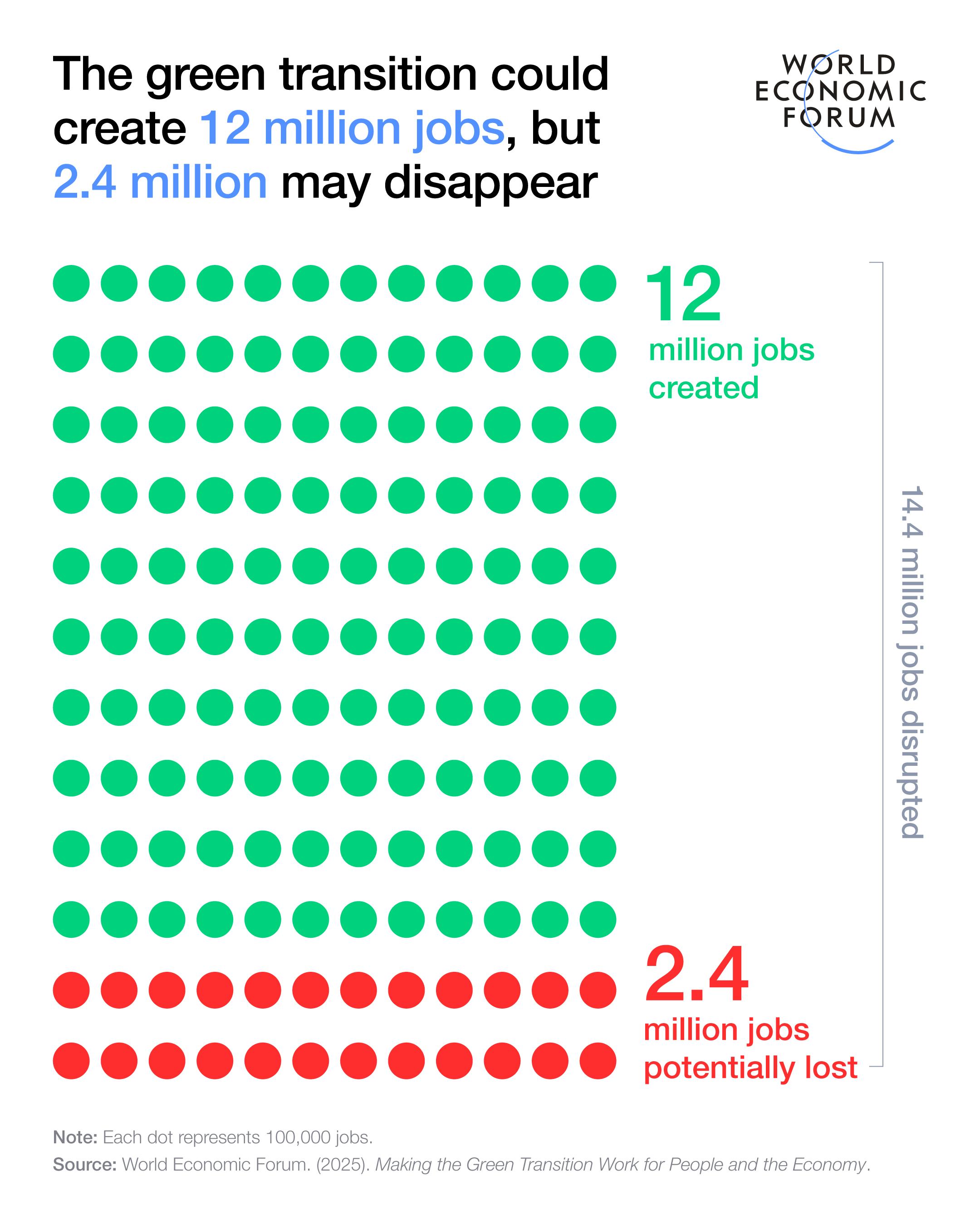
The green transition is projected to disrupt over 14 million jobs worldwide by 2030, with net job creation but also a potential loss of about 2.4 million roles. Different countries will experience varying impacts, categorized into four scenarios: optimistic disruption, talent shortage concerns, high disruption without economic benefits, and stability masking decline. Effective social protection can mitigate displacement risks, enabling smoother transitions. The report emphasizes the need for tailored support mechanisms and workforce reskilling to maintain competitiveness amidst these shifts, highlighting the significant role of labour institutions in managing the transition.
Algeria, Angola, Argentina, Armenia, Australia, Austria, Bahrain, Barbados, Belgium, Benin, Bolivia, Bosnia and Herzegovina, Botswana, Brazil, Bulgaria, Burkina Faso, Cambodia, Cameroon, Canada, Chad, Chile, Colombia, Costa Rica, Croatia, Czech Republic, Democratic Republic of the Congo, Denmark, Dominican Republic, Ecuador, Egypt, El Salvador, Estonia, Eswatini, Ethiopia, Finland, Gabon, Georgia, Germany, Ghana, Greece, Guatemala, Guinea, Honduras, Hungary, Iceland, India, Indonesia, Ireland, Israel, Italy, Jamaica, Japan, Jordan, Kazakhstan, Kenya, Kyrgyz Republic, Latvia, Lebanon, Lesotho, Lithuania, Luxembourg, Madagascar, Malawi, Malaysia, Mali, Malta, Mauritania, Mauritius, Moldova, Mongolia, Morocco, Mozambique, Namibia, Nepal, Netherlands, New Zealand, Nicaragua, Nigeria, Norway, Oman, Pakistan, Panama, Paraguay, Peru, Philippines, Poland, Portugal, Republic of Korea, Romania, Russian Federation, Rwanda, Saudi Arabia, Senegal, Singapore, Slovakia, Slovenia, South Africa, Spain, Sri Lanka, Sweden, Switzerland, Taiwan, China, Tajikistan, Tanzania, Thailand, Trinidad and Tobago, Tunisia, Uganda, Ukraine, United Arab Emirates, United Kingdom, Uruguay, Venezuela, Viet Nam, Yemen, Zambia, Zimbabwe | Financial services, ICT, Education, Health
How the green transition will affect labour markets around the world

Digital transformation drastically reshaped the global labor market by 2025, presenting both challenges and opportunities for workers and employers. Unemployment rates remained low, yet regional wage disparities emerged, with some countries seeing wage increases and others experiencing declines. The World Economic Forum projected 78 million new roles by 2030, although many existing jobs faced structural changes due to AI. Entry-level job postings dropped 29%, with youth unemployment particularly high in various regions. As AI agents rapidly integrate into workplaces, organizations must navigate their deployment effectively while addressing skill gaps.
Africa, Latin America | ICT, Education
The top jobs and labour market stories of 2025
Clean fuels are essential for addressing the energy trilemma by ensuring secure, affordable, and cleaner energy sources. Current projects are transitioning from pilot phases to industrial scales, but progress is insufficient. Clean fuels can significantly reduce emissions in hard-to-abate sectors, create jobs, and diminish dependence on fossil fuel imports. Investment of $100 billion annually by 2030 is crucial for scaling up supply to meet 40-55% of global energy demand by 2050. Collaboration among industry, policy, and finance is vital, leveraging existing infrastructure to accelerate clean fuel adoption and reduce costs.
These leaders are shaping the transition to clean fuels
Europe's energy transition is progressing rapidly despite economic concerns. The region has developed significant renewable energy infrastructure, ranking second globally in capacity. However, rising energy costs and volatility, exacerbated by the loss of Russian gas supplies due to the Ukraine conflict, challenge its economy. While Europe has reduced emissions, it faces pressure to balance ambitious green policies with economic stability. Key leaders advocate for integrating energy markets and predictable demand signals to ensure a clean, competitive, and secure energy future, highlighting the complexities of measuring productivity and economic health across diverse European nations.
Armenia, Austria, Barbados, Belarus, Belgium, Benin, Bolivia, Bulgaria, Burkina Faso, Cameroon, Croatia, Cyprus, Czech Republic, Denmark, Ecuador, Egypt, Estonia, Ethiopia, Finland, France, Gabon, Georgia, Germany, Ghana, Greece, Guatemala, Hungary, Iceland, India, Indonesia, Ireland, Israel, Italy, Jamaica, Japan, Jordan, Kazakhstan, Kenya, Latvia, Lithuania, Luxembourg, Malaysia, Malta, Moldova, Namibia, Netherlands, New Zealand, Norway, Pakistan, Paraguay, Peru, Poland, Portugal, Republic of Korea, Romania, Russian Federation, Senegal, Singapore, Slovakia, Slovenia, South Africa, Spain, Sweden, Switzerland, Taiwan, China, Thailand, Tunisia, Uganda, Ukraine, United Arab Emirates, United Kingdom, Venezuela, Yemen, Zambia | Financial services
Europe’s economies are too slow, right? Not when it comes to energy

The advancement of artificial intelligence (AI) relies heavily on robust connectivity provided by 5G and future 6G networks. As AI applications expand into robotics, autonomous systems, and extended reality, the effectiveness of these technologies will depend on high-performance and programmable networks. Cooperation between nations and industries is essential to establish shared standards and secure supply chains, preventing fragmentation. 5G is expected to become the dominant mobile technology by 2027, fostering innovation through enhanced connectivity capabilities. Looking ahead, 6G will offer even faster speeds and energy efficiency, paving the way for transformative applications across various sectors.
Education, ICT
Why our AI future depends on the 5G networks we build today
AI and digital technologies are transforming the workplace, creating new job opportunities while also posing challenges such as worker displacement and widening socio-economic gaps. The World Economic Forum's initiative includes 25 technology companies committing to support over 120 million workers by 2030 through access to digital tools and skills development. The Future of Jobs Report 2025 predicts a net gain of 78 million jobs from AI advancements. Successful adaptation requires inclusive strategies ensuring workers, especially those lacking formal credentials, can thrive in the evolving economy. Key insights highlight the importance of organizational redesign, cultural benefits, and the uneven adoption of AI across sectors.
Education, ICT
Creating Opportunities For All In The Intelligent Age

AI technology is projected to perform tasks worth $4.5 trillion in the U.S., contradicting claims of an AI bubble. Research indicates that AI's influence on jobs and economic value is progressing faster than expected, with a 30% increase in the projected impact over three years. Companies are encouraged to invest in skills development and contextual understanding to effectively harness AI's potential. This includes fostering digital fluency and critical thinking among workers to complement AI capabilities and address hyper-specialized tasks efficiently, ultimately closing the AI value gap and enhancing productivity.
Education
Talk of an AI bubble is overblown. AI can already perform tasks worth $4.5 trillion