
Publications

INSIGHT REPORT

Pioneering the Future: Space

Technologies Poised to Revolutionize

Exploration and Economy by 2035

September 2026

FACTSHEETS

Pioneering the Future: Space

Technologies Poised to Revolutionize Exploration and Economy by 2035

June 2026

WHITE PAPER

Future of Space Law:

Operationalizing Space Governance

March 2026

REPORT

Clear Orbit, Secure Future:

 A Call to Action on Space Debris

Jan 2026

WHITE PAPER

The Future of Space Law

Insights from the ATS, UNCLOS, and ITU Frameworks

December 2025

WHITE PAPER

The Future of Space Law: 

The Evolving Dynamics of Air and Space Regulation

 September  2025

The Future Of Space Law

News

Centre for Space Futures, Novaspace and SpaceTech Gulf  Sign Agreement to Develop Global Space Capability Mapping Dashboard

Riyadh, Saudi Arabia , 23 Jun 2026|  Press Release

Clear Orbit, Secure Future: A Call to Action on Space Debris

Riyadh, Saudi Arabia, 26 Jan 2026 | Press Release

Centre for Space Futures Holds Workshop with Participation of 40 Global Experts

Riyadh, Saudi Arabia, 05 Dec 2025 | Press Release

Centre for Space Futures Releases White Paper on 'The Future of Space Law'

Riyadh, Saudi Arabia, 12 Sep 2025 | Press Release

The Board of Directors of the Centre for Space Futures Endorses Its Strategic Direction

Riyadh, Saudi Arabia, 26 May 2025 | Press Release

Saudi Space Agency to Launch the Centre for Space Futures with the World Economic Forum

Riyadh, Saudi Arabia, 29 April | Press Release

5 ways we can tackle growing risks from rocket bodies in orbit

Dec 09, 2025 | Economic Growth, Stories

Read More

Forum Agenda

Forum Videos

VIDEO

Press Conference: Centre for Space Futures in Riyadh

The World Economic Forum's Special Meeting, April 29, 2024

VIDEO

The Purpose of Astronauts at Davos 2024

World Economic Forum , March 9, 2024

VIDEO

PortWatch: Monitoring Trade Disruptions from Space

World Economic Forum , Dec 18, 2023

VIDEO

India's Moon Mission Triumph: Ambassador Ruchira Kamboj's Insights

World Economic Forum , Aug 23, 2023

VIDEO

Space Exploration is Back at Davos 2023

World Economic Forum , Feb 16, 2023

Forum Publications

Strategic Intelligence Insights

Bermuda has developed a pioneering "Bermuda Triangle" approach to innovation that integrates government policy, independent regulation, and private-sector execution. This model facilitates agile innovation balanced with risk assessment and has established Bermuda as a leading hub for insurance and digital assets. The island pioneered captive insurance in the 1960s and 1970s to address global risk management challenges and recently introduced the Digital Asset Business Act, the world's first regulatory framework for digital assets. This proactive collaboration among stakeholders has fostered a conducive environment for technological advancement and economic growth.
Barbados, Bermuda, Malta | Financial services, Education, ICT
The ‘Bermuda Triangle’ approach: How the small but mighty island innovates at scale
The global geopolitical and geo-economic landscape is increasingly characterized by contradictions and paradoxes, shaping the outlook for 2026. Experts highlight tensions such as Europe’s shift from a peace to a war project due to security concerns stemming from the Ukraine conflict, the transition from economic liberalization to de-risking in response to weaponized interdependence, and the rise of post-liberal populism. Meanwhile, tightening immigration policies threaten economic growth in wealthy nations facing skill shortages, despite the need for vibrant young populations to drive innovation. Demographic shifts and technological changes further complicate governance and economic strategies, demanding new approaches to manage these interconnected challenges.
Australia, Denmark, Egypt, Georgia, Japan, Jordan, Luxembourg, Morocco, Pakistan, Paraguay, Peru, Philippines, Poland, Russian Federation, Singapore, South Africa, Sweden, Switzerland, Tanzania, Ukraine, United Arab Emirates, United Kingdom | ICT, Financial services, Education, Health
A world in tension: 6 experts on the economic and geopolitical paradoxes to watch in 2026
AI is set to contribute nearly $20 trillion to global GDP by 2030, transforming industries through its integration into critical workflows. However, a new risk emerges from AI's flawed understanding of human language, creating vulnerabilities that cybercriminals can exploit. These threats manipulate AI's interpretation of language rather than exploiting traditional software flaws, making detection challenging. Organizations must shift their focus from data protection to safeguarding knowledge, ensuring the integrity of datasets that inform AI systems. Adopting a zero trust approach—verifying all inputs and continuously monitoring AI systems—is essential for building trust and resilience in AI deployment.
Financial services, ICT, Education
AI and the next innovation frontier: why trust will define the $20 trillion opportunity
Clean fuels are essential for achieving a secure, affordable, and sustainable energy system amidst rising global energy demand. They include biofuels, e-fuels, hydrogen derivatives, and lower-carbon fossil fuels, offering significant economic and societal benefits. Clean fuels can decrease fossil fuel import dependence by 5-15% and provide two to three times the job intensity compared to conventional fuels while reducing lifecycle greenhouse gas emissions. The report outlines strategies for businesses and policymakers to enhance investments in this sector, supported by expert consultations and a digital playbook of successful case studies.
Fuelling the Future: How Business, Finance and Policy can Accelerate the Clean Fuels Market
Half of global GDP is threatened by nature loss, while the annual finance gap for biodiversity actions has reached $942 billion. Europe can play a pivotal role in mitigating this crisis by establishing global standards and fostering innovation. The Pará cattle traceability initiative in Brazil illustrates potential economic benefits and showcases the need for financial support, with an estimated $1 billion opportunity at stake. Norway's $20 million investment in the Catalytic Capital for the Agriculture Transition (CCAT) fund aims to address this finance gap and mobilize public-private partnerships for sustainable practices.
Financial services
How Europe can drive action in closing the nature finance gap
Africa is undertaking a significant effort to integrate 54 economies into a single market, aiming to drive industrialization, job creation, and inclusive growth through the African Continental Free Trade Area (AfCFTA). This initiative addresses fragmented markets and barriers that have historically hindered prosperity. The AfCFTA seeks to establish a comprehensive framework for trade, investment, and competition policy, projecting a potential regional income increase of 7%. Success depends on overcoming infrastructure deficits through coordinated investments, with examples like the Lobito Corridor demonstrating collaborative efforts among African nations and international partners to enhance connectivity and facilitate cross-border trade.
Belgium, Benin, Bolivia, Burkina Faso, Burundi, Cameroon, Colombia, Democratic Republic of the Congo, Egypt, Eswatini, Ethiopia, Gabon, Georgia, Germany, Ghana, Kenya, Lesotho, Liberia, Madagascar, Malawi, Mauritania, Mauritius, Morocco, Mozambique, Namibia, Nigeria, Peru, Rwanda, Senegal, South Africa, Tanzania, Tunisia, Uganda, United Kingdom, Zambia, Zimbabwe | Financial services, Health
Is Africa a global testbed for 21st century economic multilateralism?

The global sports economy, valued at $2.3 trillion, is set to grow to $8.8 trillion by 2050. However, it faces significant risks from increased physical inactivity and environmental issues, which could lead to a loss of up to $1.6 trillion in annual revenue by mid-century. The World Economic Forum, with Oliver Wyman, emphasizes the need for coordinated public-private efforts to enhance long-term sustainability. The report outlines pathways and case studies demonstrating how sports can foster healthier societies and ecosystems, ensuring a competitive, inspiring, and inclusive future.
Health
Sports for People and Planet
The sports economy, valued at $2.3 trillion annually, is vital for fostering health and driving economic growth but faces significant challenges from climate change and rising physical inactivity. Projected to reach $8.8 trillion by 2050, it includes a range of sectors such as global events and sports tourism. Key challenges include declining physical activity—only one-third of adults meet exercise recommendations—and climate disruptions affecting events and infrastructure. The World Economic Forum report outlines three pathways for resilience through collaboration, promoting health, and sustainable practices to ensure the sector's long-term viability and impact.
Financial services, Education, Health
The sports economy: What is it and how could it improve the health of both people and planet?
Wind power is essential for enhancing energy security by reducing dependence on fossil fuels. It is a sustainable and affordable energy source that can stabilize electricity prices and improve energy independence. Collaboration between governments and industry is crucial for scaling wind energy, which entails cutting bureaucratic red tape, streamlining permitting processes, and investing in infrastructure. The energy crisis following geopolitical events has highlighted the need for diversification in energy sources. Europe has seen significant progress in wind energy's contribution to electricity generation, emphasizing the need for supportive industrial policies and modernization of energy infrastructure to ensure a reliable energy future.
Ukraine | Financial services, ICT
From renewable to reliable: How to unlock wind power for a secure energy future
Global trade is facing significant challenges, with discriminatory trade policies increasing from 55 in 2019 to over 2,700 in 2024 and a predicted growth slowdown to only 0.5% by 2026. Geopolitical tensions are disrupting supply chains and altering trade relationships, leading to heightened uncertainty and risk. Despite this fragmentation, digital technologies are fostering unprecedented connectivity. The report introduces the "tradetech stack," highlighting how digital tools can connect institutions and businesses through collaborative governance and partnerships. Real-world case studies illustrate how technology, aligned with cooperation, can enhance the resilience and inclusivity of global trade.
Afghanistan, Argentina, Australia, Austria, Bahrain, Barbados, Belgium, Benin, Bolivia, Bulgaria, Burkina Faso, Burundi, Cambodia, Canada, Chile, Colombia, Cyprus, Czech Republic, Democratic Republic of the Congo, Denmark, Djibouti, Dominican Republic, Ecuador, Egypt, El Salvador, Estonia, Ethiopia, Finland, France, Gabon, Georgia, Germany, Ghana, Greece, Guatemala, Hungary, India, Indonesia, Ireland, Israel, Italy, Jamaica, Japan, Jordan, Kenya, Kyrgyz Republic, Lebanon, Lesotho, Luxembourg, Madagascar, Malawi, Malaysia, Malta, Mauritania, Mauritius, Moldova, Morocco, Mozambique, Namibia, Nepal, Netherlands, New Zealand, Oman, Pakistan, Panama, Paraguay, Peru, Philippines, Poland, Portugal, Republic of Korea, Romania, Russian Federation, Saudi Arabia, Senegal, Singapore, South Africa, Spain, Sweden, Switzerland, Taiwan, China, Tajikistan, Tanzania, Thailand, Togo, Trinidad and Tobago, Tunisia, Türkiye, Uganda, Ukraine, United Arab Emirates, United Kingdom, Viet Nam, Yemen, Zambia, Zimbabwe | Financial services, Health, Education, ICT
The TradeTech Paradox: Connectivity Amid Fragmentation
Access to data for public interest use is increasingly restricted, driven by concerns over misuse, regulatory uncertainties, and concentrated data access due to AI competition. Traditional data governance models, while necessary, fall short as they create barriers that render data practically inaccessible and socially illegitimate. The paper proposes strategic data stewardship as a solution, advocating for a focus on enabling cross-sector data reuse, reducing missed opportunities, and fostering collaboration. It introduces core principles and a Data Stewardship Canvas to facilitate the responsible mobilization of data for societal benefit, particularly in the context of AI advancements.
Health
The Case for Strategic Data Stewardship: Re-imagining Data Governance to Make Responsible Data Re-use Possible
Basic scientific research is essential for transformative discoveries and long-term societal progress, yet it faces increasing funding pressures and demands for short-term outcomes. Nobel Laureates emphasize that fundamental research is crucial for scientific advancement, economic growth, and human well-being. Breakthroughs often arise from curiosity-driven inquiry, as seen in historic figures who made significant discoveries while addressing practical problems. The value of basic research lies in its unforeseen applications, making university support vital for fostering innovation. Cutting funding for academic institutions jeopardizes the potential for future advancements.
Education
Why basic scientific research matters: 6 Nobel Laureates explain
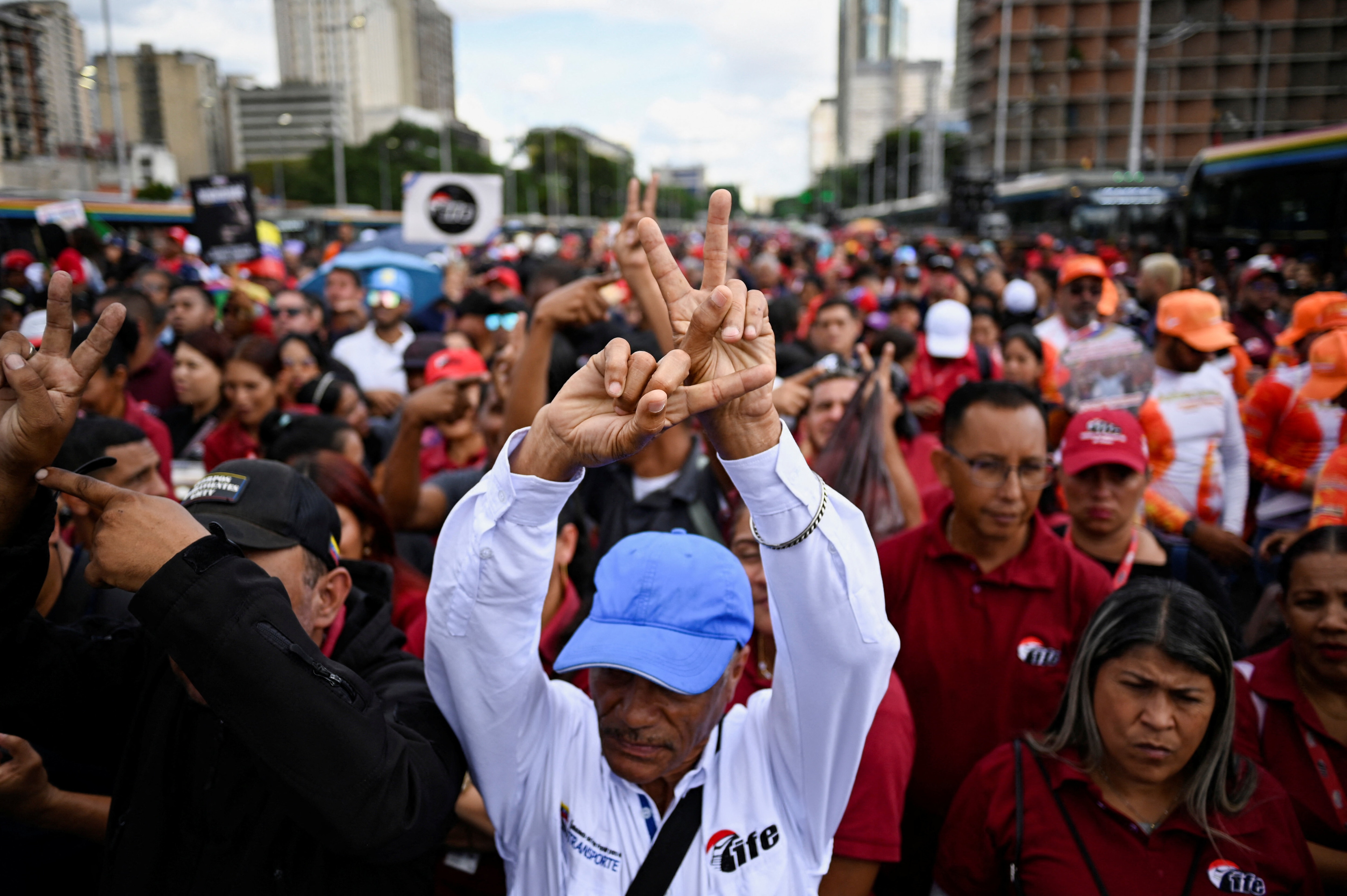
The era of globalization is transitioning from a positive-sum game to a competitive landscape marked by geopolitical fragmentation and economic rivalry. The decline of US unipolarity, without a stable multipolar order, has resulted in a weaponization of trade, finance, and digital ecosystems. Governments face difficulties in governance due to rising domestic volatility, weakening democratic structures, and economic pressures. The World Economic Forum's 2026 Global Risks Report highlights increased geopolitical confrontations and economic vulnerabilities, driven by technological disruption and climate stress. The need to restructure globalization is essential to manage risks and enhance resilience in this tumultuous environment.
Australia, Bahrain, Bolivia, Bulgaria, Burkina Faso, Cambodia, Chile, Colombia, Egypt, Ethiopia, Georgia, Germany, Ghana, Guatemala, Honduras, Hungary, Indonesia, Israel, Jamaica, Japan, Jordan, Kenya, Kyrgyz Republic, Luxembourg, Malaysia, Malta, Mexico, Moldova, Mongolia, Morocco, Mozambique, Namibia, Nepal, New Zealand, Pakistan, Paraguay, Peru, Philippines, Poland, Republic of Korea, Romania, Russian Federation, Rwanda, Singapore, South Africa, Sweden, Switzerland, Taiwan, China, Tajikistan, Tanzania, Thailand, Tunisia, Uganda, Ukraine, United Arab Emirates, United Kingdom, Uruguay, Viet Nam, Zimbabwe | ICT, Health, Education, Financial services
How to upgrade globalization for our age of turmoil

Malaysia's defence ministry is set to adopt an environmental, social and governance (ESG) framework to enhance transparency and accountability amidst a corruption investigation involving military procurement. Defence Minister Mohamed Khaled Nordin emphasized the need for the ministry to learn from the private sector and overhaul its Anti-Corruption Plan, citing corruption as a threat to national security. Recent investigations have led to the detention of several army officers and company directors related to procurement contracts. The ministry plans to develop a comprehensive procurement framework to restore credibility and safeguard public trust.
Eswatini, Malaysia
Malaysia’s defence ministry to adopt ESG framework amid corruption probe
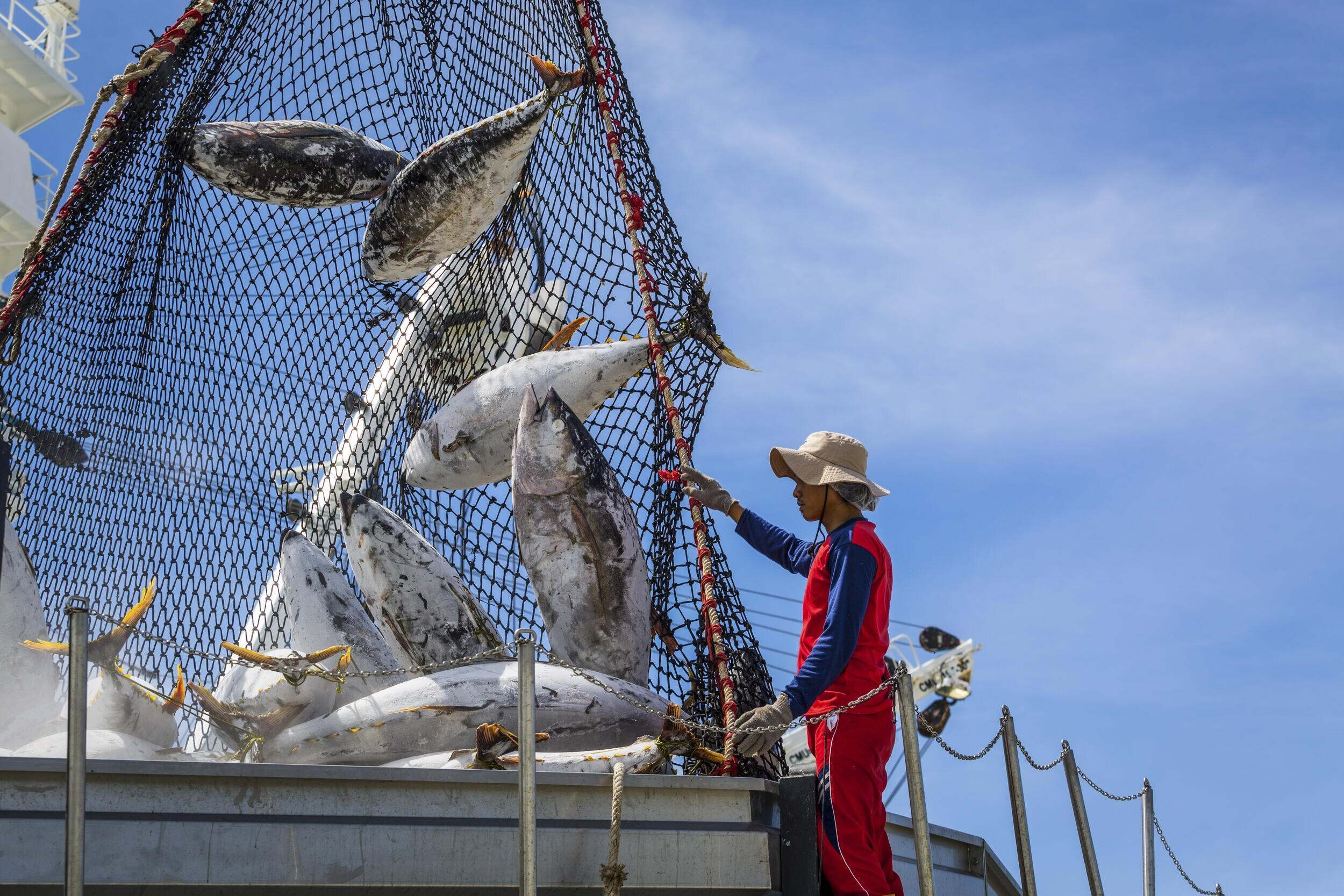
AI and big data have the potential to transform food systems and enhance sustainability, addressing urgent challenges in both marine and agricultural sectors. Initiatives like The Nature Conservancy's collaboration with partners are implementing AI for improved oversight of fisheries, reducing illegal fishing and supporting Pacific Island economies. In agriculture, AI technologies are being deployed to monitor and improve food security, particularly during crises. Collaborative efforts aim to generate actionable insights for policy makers and farmers, emphasizing the urgency to deploy these tools effectively to protect vital food resources.
Education
AI can be harnessed to protect nature and strengthen food security. Here's how
The World Trade Organization (WTO) is essential for global trade and is undergoing significant reforms to adapt to modern challenges, particularly in the realms of artificial intelligence (AI) and digital trade. A new framework is emerging that aims to standardize data flows, enhance algorithmic transparency, and support small and medium-sized enterprises (SMEs) in international trade. Despite criticism, about 72% of global goods trade continues under WTO rules, which offer vital customs and market access protections. The WTO's modernization seeks to create a more inclusive market, enabling easier access for SMEs and maintaining open markets essential for long-term economic growth.
Ethiopia, Kenya, Rwanda, Sweden, Switzerland, Taiwan, China, Tanzania, Uganda, United Arab Emirates, United Kingdom | Financial services, ICT, Education
The world still needs the WTO - and it's being reformed for the age of AI
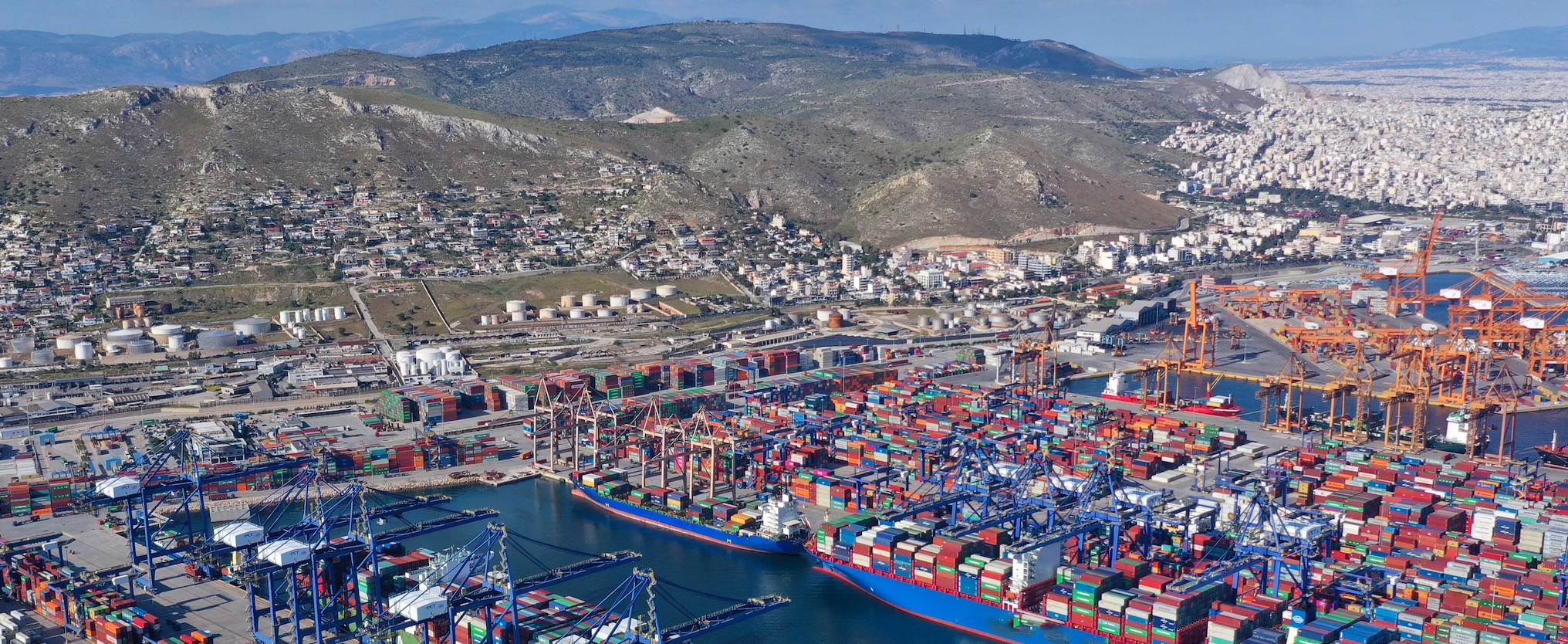
The shipping industry is transitioning from fossil fuels to electric and hybrid propulsion systems, driven by regulatory pressure and climate commitments, including the International Maritime Organization's goal of net-zero emissions by 2050. The electric ship market is projected to grow significantly by 2032. Achieving a zero-emission ecosystem will require coordination across various stakeholders, including clean propulsion technologies, robust energy storage, retrofitting existing vessels, port charging infrastructure, and clean energy sources. Public-private collaboration is essential for building the necessary infrastructure for widespread adoption, along with early action from adopters to establish confidence in new technologies.
What it will take to create a financially sustainable, zero-emission electric shipping ecosystem
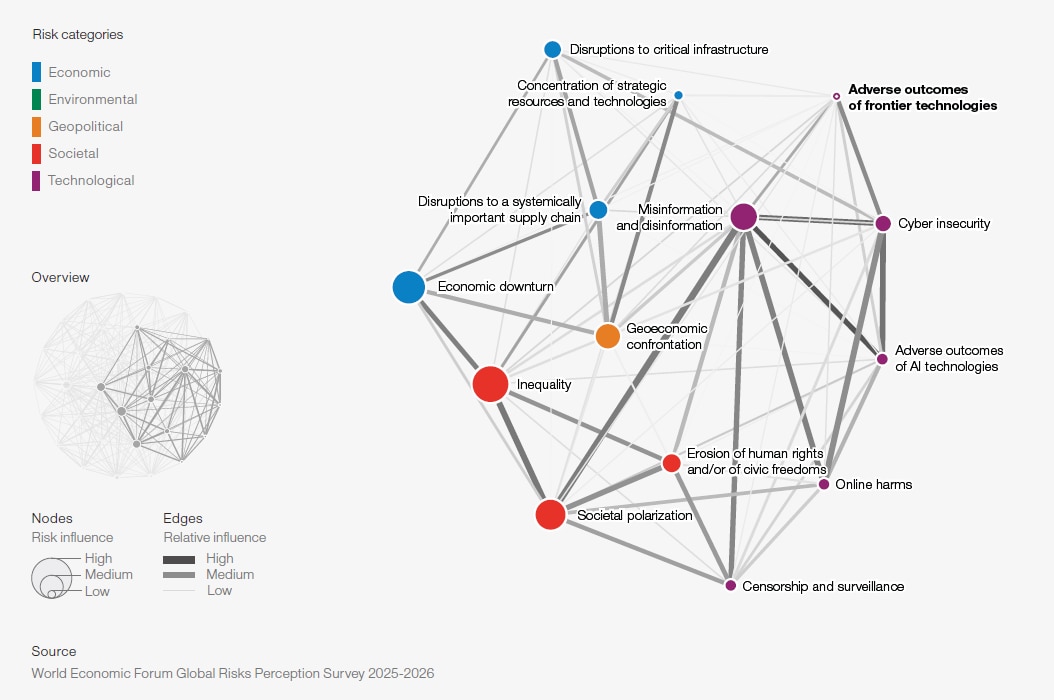
Businesses must navigate significant technological risks and opportunities, particularly concerning AI, cybersecurity, and critical infrastructure. The World Economic Forum’s Global Risks Report 2026 emphasizes that AI presents both productivity gains and labor disruptions, potentially deepening societal inequality. Cyber insecurity has become a major threat, with increasing cyberattacks on critical infrastructure. Meanwhile, the global expansion of digital infrastructure faces risks from physical and cyber threats alike. Companies that prioritize robust cybersecurity, modernize infrastructure, and responsibly harness AI can turn these challenges into competitive advantages while fostering resilience and growth.
ICT, Financial services, Education
How can businesses navigate technology risks and opportunities in a competitive age?
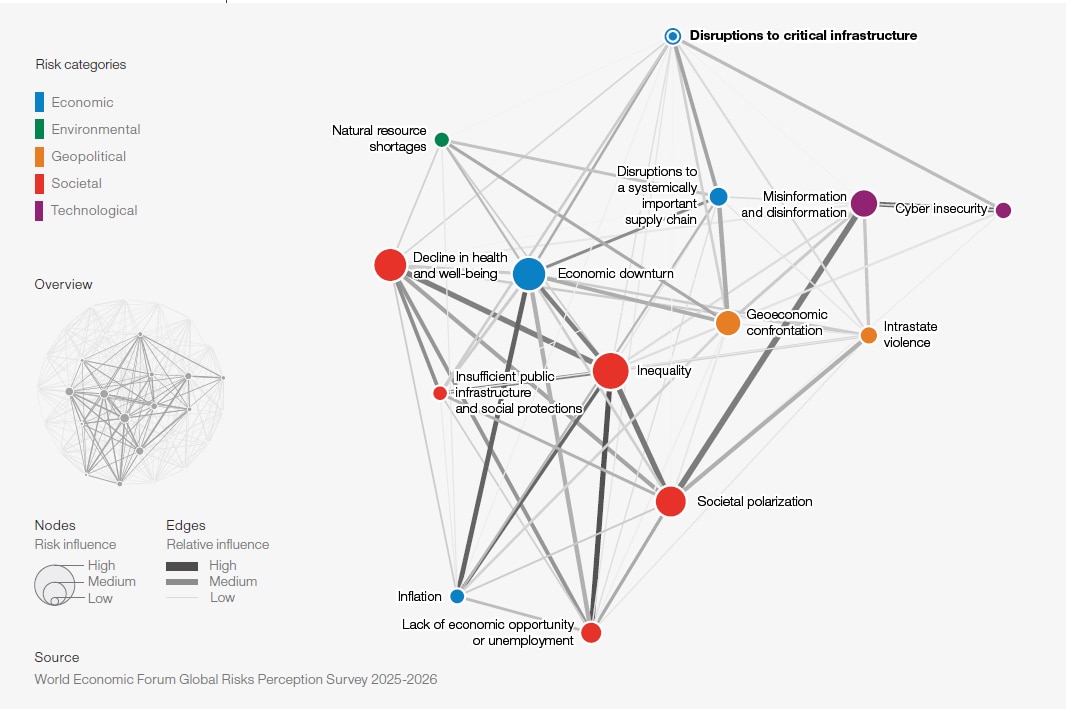
Critical infrastructure is increasingly vulnerable to significant risks, including extreme weather and cyber threats, according to the Global Risks Report 2026. Despite these dangers, public attention towards disruptions is alarmingly low, ranked 23rd among global risks for the next decade. The report emphasizes potential cascading effects on essential services when infrastructure fails, particularly highlighting climate challenges and geopolitical conflicts. Furthermore, a lack of sufficient public financing hampers necessary upgrades, leaving aging infrastructure exposed. A holistic understanding of risk, integrating climate and economic concerns, is crucial for effective management and mitigation of these threats.
Burkina Faso, Germany, Ghana, Haiti, Indonesia, Kenya, Nigeria, Russian Federation, Rwanda, Ukraine, United Kingdom | ICT, Financial services, Health, Education
Critical infrastructure is at critical risk: It’s time to treat it as such
Geoeconomic confrontation has topped the 2026 global risk report, overshadowing environmental concerns due to rising geopolitical tensions, economic instability, and technological anxieties, particularly regarding AI and misinformation. The report indicates that economic risks, such as downturn fears and high debt levels, are significant pressure points, alongside societal polarization and inequality. While environmental risks have slipped in urgency short-term, long-term projections still view them as critical. The report warns that geopolitical fragmentation may undermine climate cooperation, potentially leading to greater instability. Four structural forces—technological acceleration, geostrategic shifts, climate change, and demographic bifurcation—are reshaping the risk landscape.
Bahrain, Bolivia, Colombia, Ecuador, Egypt, Ethiopia, Georgia, Ghana, Guinea, Haiti, Iceland, Indonesia, Jamaica, Japan, Jordan, Kenya, Kyrgyz Republic, Malaysia, Mongolia, Montenegro, Namibia, Nigeria, Peru, Philippines, Republic of Korea, Russian Federation, Rwanda, Senegal, Singapore, Sweden, Taiwan, China, Tanzania, Ukraine, United Arab Emirates, United Kingdom, Venezuela, Yemen, Zimbabwe | ICT, Financial services, Health, Education
Geoeconomic conflict overshadows climate in WEF risk report