
Publications

INSIGHT REPORT

Pioneering the Future: Space

Technologies Poised to Revolutionize

Exploration and Economy by 2035

September 2026

FACTSHEETS

Pioneering the Future: Space

Technologies Poised to Revolutionize Exploration and Economy by 2035

June 2026

WHITE PAPER

Future of Space Law:

Operationalizing Space Governance

March 2026

REPORT

Clear Orbit, Secure Future:

 A Call to Action on Space Debris

Jan 2026

WHITE PAPER

The Future of Space Law

Insights from the ATS, UNCLOS, and ITU Frameworks

December 2025

WHITE PAPER

The Future of Space Law: 

The Evolving Dynamics of Air and Space Regulation

 September  2025

The Future Of Space Law

News

Centre for Space Futures, Novaspace and SpaceTech Gulf  Sign Agreement to Develop Global Space Capability Mapping Dashboard

Riyadh, Saudi Arabia , 23 Jun 2026|  Press Release

Clear Orbit, Secure Future: A Call to Action on Space Debris

Riyadh, Saudi Arabia, 26 Jan 2026 | Press Release

Centre for Space Futures Holds Workshop with Participation of 40 Global Experts

Riyadh, Saudi Arabia, 05 Dec 2025 | Press Release

Centre for Space Futures Releases White Paper on 'The Future of Space Law'

Riyadh, Saudi Arabia, 12 Sep 2025 | Press Release

The Board of Directors of the Centre for Space Futures Endorses Its Strategic Direction

Riyadh, Saudi Arabia, 26 May 2025 | Press Release

Saudi Space Agency to Launch the Centre for Space Futures with the World Economic Forum

Riyadh, Saudi Arabia, 29 April | Press Release

5 ways we can tackle growing risks from rocket bodies in orbit

Dec 09, 2025 | Economic Growth, Stories

Read More

Forum Agenda

Forum Videos

VIDEO

Press Conference: Centre for Space Futures in Riyadh

The World Economic Forum's Special Meeting, April 29, 2024

VIDEO

The Purpose of Astronauts at Davos 2024

World Economic Forum , March 9, 2024

VIDEO

PortWatch: Monitoring Trade Disruptions from Space

World Economic Forum , Dec 18, 2023

VIDEO

India's Moon Mission Triumph: Ambassador Ruchira Kamboj's Insights

World Economic Forum , Aug 23, 2023

VIDEO

Space Exploration is Back at Davos 2023

World Economic Forum , Feb 16, 2023

Forum Publications

Strategic Intelligence Insights

AI's future is uncertain and marked by contradictions. While it promises benefits in sectors like healthcare and manufacturing, challenges such as job displacement, rising energy demands, and social inequality remain pressing. Experts predict the creation of 78 million new jobs by 2030, despite 92 million being displaced, highlighting a need for skills unique to humans. The "productivity paradox" suggests that AI adoption can initially hurt productivity before long-term gains manifest. As AI continues to evolve, balancing its implementation with human oversight and adaptation will be crucial for future success.
Education
AI paradoxes: 5 contradictions to watch in 2026 and why AI's future isn't straightforward

The Asia Pacific is set for significant sustainability advancements by 2026, driven by a surge in renewable energy and technological integration. The region's renewable capacity is projected to nearly double by the decade's end, supporting the long-awaited ASEAN Power Grid (APG) for cross-border electricity trade, primarily through solar power and offshore wind initiatives. However, the region's reliance on fossil fuels necessitates investment in battery storage solutions to ensure grid reliability. Geothermal energy also shows potential, particularly in Indonesia and the Philippines, with new financial mechanisms to accelerate development. Stricter environmental regulations may emerge as AI adoption grows.
India, Indonesia, Philippines, Singapore, Taiwan, China, Thailand | Financial services
Five trends that will shape sustainability in Asia Pacific in 2026
The world is projected to face a 56% freshwater deficit by 2030, driven by increasing populations and resource demands. This scarcity presents a unique opportunity for businesses to lead through sustainable water management. AI technology's growth will heighten pressure on water resources, as it requires significant water for cooling in data centers and manufacturing. Circular water solutions, which focus on reusing and recycling water, can enhance operational efficiency and sustainability. Case studies from companies like Nestlé and Digital Realty illustrate the potential cost savings and environmental benefits of adopting these practices. Addressing water challenges is crucial for unlocking growth and maintaining trust with consumers.
Education
How water can unleash growth in the era of AI

Taiwan faces a growing shortage of nearly 30,000 green-collar workers as demand surges due to net zero and sustainability goals, a marked increase from eight years ago. The Ministry of Environment reports that software, engineering, biotechnology, and medical research roles are most affected. The semiconductor and ICT sectors alone account for 21% of the unmet demand. With green technology contributing NT$512.3 billion to the economy in 2024, the government is working to enhance training programs and certification to meet this need. Globally, green skill vacancies are expected to rise sharply, underscoring a significant skills gap that threatens climate objectives.
Singapore, Taiwan, China | Education
Taiwan’s green jobs gap nears 30,000 as net zero drive lifts demand
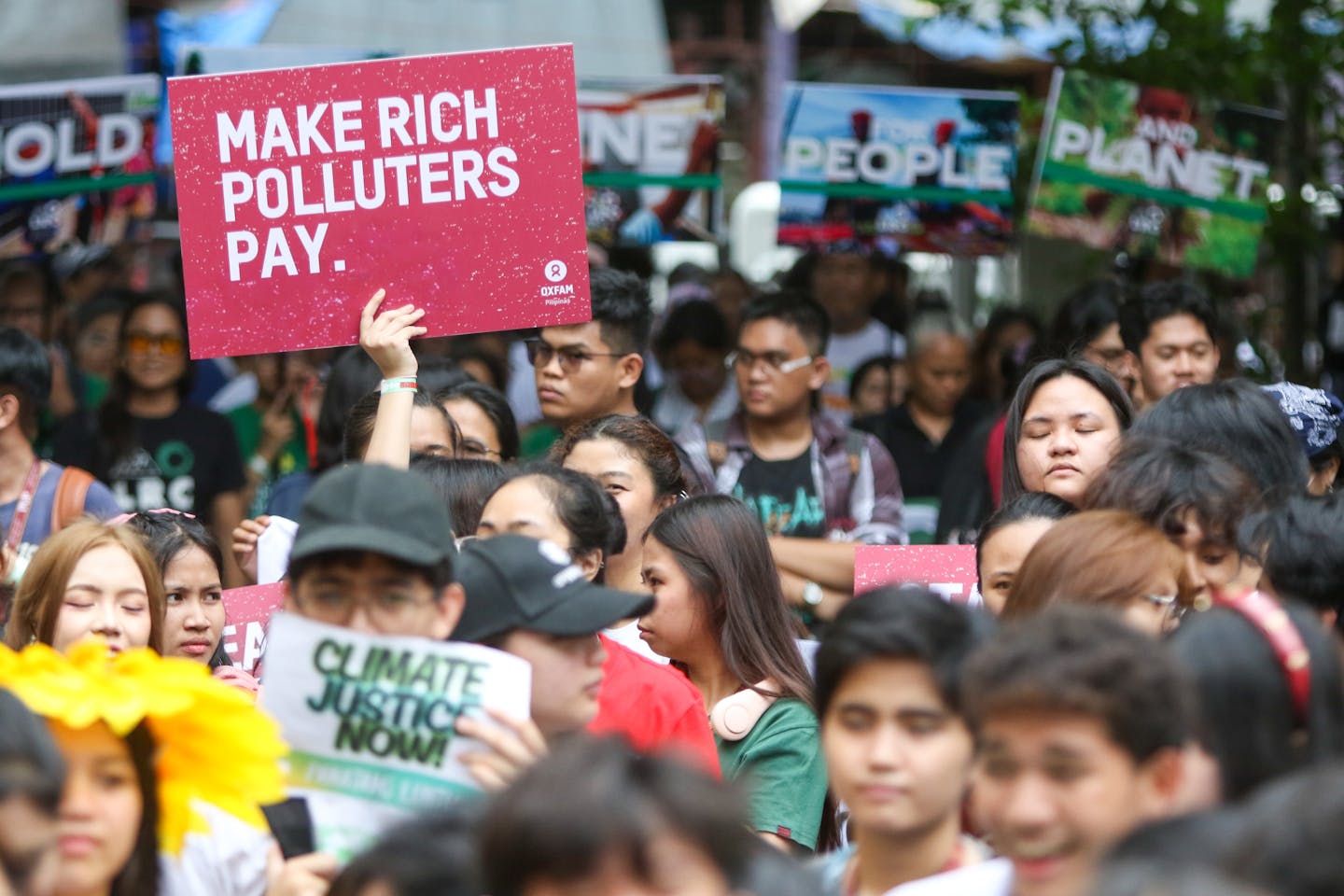
In 2025, major climate, nature, and development stories in Asia highlighted urgent issues like weak governance and extreme weather impacts. Key events included Philippine President Ferdinand Marcos Jr. addressing corruption in flood control projects following devastating typhoons, and the challenges faced by Southeast Asian philanthropies due to cuts in U.S. foreign aid. The Gates Foundation committed US$100 million to enhance health outcomes in the region. A decline in corporate use of the term "ESG" indicated a shift in sustainability discourse, reflecting concerns over greenwashing and regulatory uncertainty. Overall, these narratives underscored a complex landscape for climate action in Asia.
Eswatini, Indonesia, Malaysia, Nigeria, Philippines, Senegal, Singapore, Thailand | Financial services, Health
Eco-Business’ 10 most read stories of 2025

President Trump’s budget cuts to climate and weather research institutions are deemed a significant disservice to both Americans and global communities reliant on climate data. Experts, including Columbia University’s Jeffrey Sachs, warn that these cuts may hinder critical research necessary for adapting to increasing extreme weather events. These changes threaten the National Centre for Atmospheric Research (NCAR), vital for providing weather modeling and data support to various sectors. Sachs also emphasizes the potential for China to enhance its climate diplomacy, suggesting the establishment of a United Nations campus in China focused on energy transformation and global sustainable development.
Trump’s funding cuts for climate agencies ‘a huge disservice’ to Americans and the world, expert warns
The 2025 update of the GovTech Maturity Index (GTMI) by the World Bank reviews digital transformation in the public sector across 197 economies. It assesses four areas: Core Government Systems (CGSI), Online Public Service Delivery (PSDI), Digital Citizen Engagement (DCEI), and GovTech Enablers (GTEI), utilizing 48 indicators. The findings reveal progress since 2022 but highlight growing disparities between high- and low-income economies. Advances are noted in core systems and service delivery, while digital citizen engagement lags. The report calls for enhanced interoperability, sustainability of online services, and targeted support for low-income regions.
Albania, Algeria, Angola, Barbados, Belgium, Benin, Bolivia, Botswana, Cambodia, Chad, Chile, Denmark, Dominican Republic, Egypt, El Salvador, Estonia, Eswatini, Ethiopia, Finland, Gabon, Georgia, Germany, Ghana, Greece, Guatemala, Guinea, Haiti, Hungary, Iceland, Indonesia, Ireland, Israel, Jamaica, Japan, Jordan, Kenya, Kuwait, Latvia, Lesotho, Luxembourg, Madagascar, Malawi, Mali, Malta, Mauritania, Mauritius, Moldova, Mongolia, Montenegro, Mozambique, New Zealand, Nicaragua, Panama, Paraguay, Peru, Philippines, Portugal, Qatar, Rwanda, Senegal, Singapore, Slovakia, Slovenia, Sweden, Switzerland, Taiwan, China, Tajikistan, Tanzania, Thailand, Tunisia, Uganda, United Arab Emirates, United Kingdom, Zambia, Zimbabwe | Financial services, Health, ICT, Education
GovTech Maturity Index 2025 : Tracking Public Sector Digital Transformation Worldwide

The carbon emissions generated by the super-rich's use of private jets, yachts, and rockets pose a significant environmental threat. The wealthiest individuals, particularly the top 125 billionaires, emit three million tonnes of carbon annually, comparable to the footprint of Madagascar. The rise of ultra-high net worth individuals has led to a surge in luxury transport options, with private yacht and jet usage increasing markedly. Public sentiment is shifting against these excessive emissions, with a majority supporting higher taxes or outright bans on private flights. Inequality exacerbates the climate crisis, highlighting the need for social cohesion and collective action to address emissions.
The politics of the hyper-polluting private transport used by the world’s super-rich is hotting up

Across wealthy Western societies, public confidence in a better future is declining, with many believing that their descendants will face worse conditions than current generations. This shift marks a waning belief in progress as an inevitable historical force, a concept rooted in Western thought. Historical and philosophical traditions have long grappled with this tension between hopeful progress and looming decline. Contemporary surveys, including those from Denmark and Pew Research Center, reveal widespread pessimism about economic and social futures, reflecting anxieties over climate change, technological disruption, demographic shifts, and cultural uncertainty. This suggests a broader cultural era marked by doubt about ongoing progress and stability.
Africa, Latin America | Financial services
Faith in Progress Has Lost its Footing
Ecological myopia limits climate action by viewing climate change as a standalone issue rather than as part of broader Earth system disruptions. This narrow perspective prevents recognition of the links between climate, social, and economic policies, and obscures the urgent challenges posed by climate impacts, such as record heat and droughts in the Amazon. A political geoecological approach is proposed to address this myopia by integrating climate, economic, and social considerations, recognizing the interconnectedness of modern society with ecological systems. Rethinking these relationships is essential for effective climate policy and resilience, particularly as humanity's activities continue to destabilize the planet.
Nigeria | Financial services, Health
Ecological myopia: the blind spot holding back climate action

Research indicates that the universe may be asymmetric or lopsided, challenging the accepted isotropic view held by the standard cosmological model (Lambda-CDM). The study identifies the cosmic dipole anomaly, where significant temperature variations exist in the cosmic microwave background (CMB), as a key issue. Unlike CMB measurements, corresponding variations in distant astronomical sources do not align, failing the Ellis-Baldwin test, and highlighting inconsistencies with the symmetric universe assumption. This anomaly poses a considerable challenge to conventional cosmology, suggesting a need for reevaluation of existing models as new data emerges.
The universe may be lopsided – new research

Investors are being urged to focus on resilient health opportunities resulting from the financial risks posed by climate change, which significantly impacts economic volatility through health effects. By 2050, climate-related health impacts may lead to $12.5 trillion in economic losses and increased healthcare costs, affecting productivity and stability across various sectors. Upcoming market expansions include telehealth and climate-resilient infrastructure, with projected substantial returns on investments in these areas. Catalysts such as technological advancements, policy support, and innovative financing structures are set to drive the growth of the resilient health market, promising benefits up to ten times the initial investment.
Africa | Financial services, Health
Resilient health: a new investment frontier
Companies that prioritize LGBTQ+ inclusion demonstrate enhanced sustainability outcomes. Research analyzing 898 U.S. firms from 2010-2023 reveals that inclusive workplaces foster innovation, leading to better environmental performance, such as reduced emissions and increased renewable energy use. The legalization of same-sex marriage positively influenced companies in supportive states, indicating that a broader culture of inclusion can drive sustainability. This finding underscores the importance for businesses to integrate diversity, equity, and inclusion (DEI) with environmental strategies, suggesting that a commitment to inclusion is a crucial factor for sustainable innovation.
LGBTQ+ inclusion can boost corporate sustainability

AI is enhancing healthcare by improving efficiency, diagnostic accuracy, and patient access, but it is limited by classical computing in modeling complex molecular interactions. Quantum technologies are emerging to address these gaps, enabling advancements in drug discovery, diagnostics, and data security. Early implementations, such as quantum magnetocardiography at Mayo Clinic and collaborations between IBM and Moderna, illustrate their potential. While AI offers immediate improvements, quantum computing promises transformative breakthroughs, necessitating readiness from healthcare leaders to integrate both technologies effectively for optimal healthcare advancements.
Health, Education
Quantum vs AI in healthcare: How they differ and why leaders must prepare for convergence

Artificial intelligence (AI) requires substantial energy infrastructure, creating a new global energy challenge. As emerging economies drive urbanization and digital adoption, they face the risk of AI-related energy demands overshadowing their development needs. To support AI growth sustainably and securely, it is essential to expand energy sources, strengthen grids, and invest in infrastructure. Energy consumption is rising, particularly for data centers, which could nearly double by 2030. A pragmatic energy strategy should ensure security, affordability, and sustainability, especially for countries in the Global South to avoid leaving them behind in the digital era.
Africa, Latin America | Education
Powering the future: Why the AI revolution must be built on real energy security
In 2025, frontier technologies made significant advancements, influencing decision-making across industries. Key innovations included advanced nuclear technologies, engineered living therapeutics, and autonomous biochemical sensing. A convergence of foundational technologies is creating unprecedented business opportunities, as highlighted in the Technology Convergence Report. Additionally, the Forum's Technology Pioneers program recognized 100 startups driving innovation. Addressing environmental challenges, technologies like automated food-waste upcycling and modular geothermal energy emerged as vital solutions. The agri-tech sector also showed promise in addressing global food security amid increasing demands.
Egypt, Georgia, Germany | Health, Education
From quantum to climate: the frontier tech stories that defined 2025
Digital technology is significantly reshaping society by influencing regulation, surveillance, protests, and climate impacts. In 2026, the balance between innovation and regulation will be increasingly challenged as governments and companies invest in AI. The EU is adjusting privacy laws to permit AI data usage without consent, while countries like Australia are enforcing strict age regulations for social media. Youth-led protests fueled by social media are rising globally, countered by government internet shutdowns to suppress dissent. Additionally, increased surveillance and digital management of migration reflect state responses to global upheavals. Climate concerns are also rising due to the surge in data centers supporting AI technology.
Africa | Financial services, ICT, Education
AI, bans and facial scans: Digital frontiers in 2026
Artificial intelligence is fundamentally reliant on a physical infrastructure, including data centers that require significant electricity and water. The current expansion of infrastructure includes large hyperscale data centers, with notable projects like OpenAI's 5-gigawatt campus in Abu Dhabi. Governments view AI as a vital component of industrial policy, with major investments and initiatives, exemplified by France's €100 billion commitment and the UAE's appointment of the first AI minister. This race for AI capabilities also revolves around securing essential resources like energy, land, water, semiconductors, and minerals, influencing the global competitive landscape in technology.
Inside the AI-Led Resource Race
AI has transitioned from experimental pilots to integral systems in various industries, though governance has not kept pace with its rapid adoption. Major constraints identified for future growth include energy consumption, safety, and equity. Organizations face increasing digital safety challenges amid evolving online threats. The rise of AI agents is notable, with many executives planning their adoption, highlighting a gap between experimentation and oversight. AI also presents opportunities for creative fields while raising concerns about privacy and bias. The energy demands of AI systems are significant, with calls for more efficient design and deployment. The EU's AI Act marks a significant step in regulation.
Education
From experimentation to infrastructure: the AI shifts that defined 2025
Air pollution costs approximately 6% of global GDP annually, significantly surpassing expected economic growth from AI, yet it garners less than 0.1% of global philanthropic funds. Key findings indicate that small investments, as little as $50,000-100,000, can lead to major improvements in clean air strategies in 83 countries, primarily in Africa and parts of Latin America. The lack of air quality data hampers effective policy-making, with countries such as Bangladesh and the Democratic Republic of the Congo lacking any reference-grade monitors. The EPIC Air Quality Fund demonstrates that modest financial contributions can facilitate considerable advancements in air quality monitoring and policy enforcement.
Health
Could this be the biggest global health ROI you've never heard of?