
Publications

INSIGHT REPORT

Pioneering the Future: Space

Technologies Poised to Revolutionize

Exploration and Economy by 2035

September 2026

FACTSHEETS

Pioneering the Future: Space

Technologies Poised to Revolutionize Exploration and Economy by 2035

June 2026

WHITE PAPER

Future of Space Law:

Operationalizing Space Governance

March 2026

REPORT

Clear Orbit, Secure Future:

 A Call to Action on Space Debris

Jan 2026

WHITE PAPER

The Future of Space Law

Insights from the ATS, UNCLOS, and ITU Frameworks

December 2025

WHITE PAPER

The Future of Space Law: 

The Evolving Dynamics of Air and Space Regulation

 September  2025

The Future Of Space Law

News

Centre for Space Futures, Novaspace and SpaceTech Gulf  Sign Agreement to Develop Global Space Capability Mapping Dashboard

Riyadh, Saudi Arabia , 23 Jun 2026|  Press Release

Clear Orbit, Secure Future: A Call to Action on Space Debris

Riyadh, Saudi Arabia, 26 Jan 2026 | Press Release

Centre for Space Futures Holds Workshop with Participation of 40 Global Experts

Riyadh, Saudi Arabia, 05 Dec 2025 | Press Release

Centre for Space Futures Releases White Paper on 'The Future of Space Law'

Riyadh, Saudi Arabia, 12 Sep 2025 | Press Release

The Board of Directors of the Centre for Space Futures Endorses Its Strategic Direction

Riyadh, Saudi Arabia, 26 May 2025 | Press Release

Saudi Space Agency to Launch the Centre for Space Futures with the World Economic Forum

Riyadh, Saudi Arabia, 29 April | Press Release

5 ways we can tackle growing risks from rocket bodies in orbit

Dec 09, 2025 | Economic Growth, Stories

Read More

Forum Agenda

Forum Videos

VIDEO

Press Conference: Centre for Space Futures in Riyadh

The World Economic Forum's Special Meeting, April 29, 2024

VIDEO

The Purpose of Astronauts at Davos 2024

World Economic Forum , March 9, 2024

VIDEO

PortWatch: Monitoring Trade Disruptions from Space

World Economic Forum , Dec 18, 2023

VIDEO

India's Moon Mission Triumph: Ambassador Ruchira Kamboj's Insights

World Economic Forum , Aug 23, 2023

VIDEO

Space Exploration is Back at Davos 2023

World Economic Forum , Feb 16, 2023

Forum Publications

Strategic Intelligence Insights

Up to 40% of the world’s land is degraded, impacting over 3.2 billion people and threatening economies reliant on healthy land. Unsustainable land use and climate change drive this degradation by favoring short-term gains over long-term soil health. Healthy soil is a vital economic asset that supports productivity, resilience, and sustainable value, yet it is often overlooked in business and government risk assessments. Investing in soil health is crucial and feasible to mitigate growing risks and ensure economic stability.
Africa | Health
The Hidden Economic Power of Healthy Soils
Digital Self-Determination (DSD) establishes a governance foundation that enables individuals and communities to express preferences and influence data governance and reuse, turning data spaces into trusted social institutions. Despite growing recognition of DSD, practical implementation remains limited. The Roadmap for Digital Self-Determination in Data Spaces, supported by the Swiss Federal Administration, addresses this gap through four phases and six tools: establishing governance foundations; enabling community engagement; translating preferences into governance instruments; and assessing ongoing effectiveness. Key tools include governance readiness assessments, guidance on public engagement, legal and technical governance instruments, and stress-testing methods to ensure fairness, transparency, and control as conditions evolve.
ICT, Health
From Principles to Practice: A Roadmap for Digital Self-Determination in Data Spaces
Access to sufficient, high-quality data is crucial for innovation and competitiveness, yet many organizations, especially smaller ones, struggle to obtain large datasets. Data ecosystems, where data is the central product, offer a solution by enabling data access while ensuring users’ data sovereignty and consent. This study systematically reviews incentive mechanisms that encourage users to share data within these ecosystems. It identifies five key dimensions of incentives and five categories of factors influencing their effectiveness, culminating in a typology of eight ideal incentive types. The work provides a comprehensive framework to foster active data sharing in data ecosystems and guides future research.
Health, ICT
What’s in it for me? a systematic literature review on incentive mechanisms fostering users’ data sharing behavior in data ecosystems

Tuvalu relies heavily on maritime transport to connect its dispersed islands, with government-owned vessels like the new flagship Manu Sina playing a vital role. Despite this, aging ships, harsh marine conditions, limited technical capacity, and climate change pose significant challenges to fleet reliability. Sustaining these maritime investments requires enhanced asset management, reliable maintenance funding, capacity-building, and improved institutional arrangements. Introducing dedicated O&M financing, training programs, and community monitoring can help maintain service continuity. Development partners’ support is crucial to ensure long-term operational sustainability and climate resilience of Tuvalu's interisland transport infrastructure.
Development Asia: A Push for Interisland Transport in Tuvalu
China has emerged as a global leader in commercializing data by treating it as a key national asset. Following a crackdown on private tech firms from 2020 to 2023, including canceling Ant Group's IPO and imposing strict oversight on data collection, China shifted to a government-led approach to harness data's economic value. By 2026, initiatives like data exchanges, new accounting standards, and pilot programs have enabled data to be traded and monetized similarly to traditional capital. The Chinese government actively builds infrastructure to facilitate data exchange and supports services like valuation and analytics, driving productivity gains and broad participation in the data economy.
Africa | Financial services, Health, ICT
The People’s Republic of Data: How China Is Turning Data into Capital
Climate adaptation is a trillion-dollar challenge, with current global spending at $190 billion annually to protect 1.2 billion people to developed-economy standards. Extending protection to everyone exposed to climate hazards would cost $540 billion. The Urban Tech Hub’s Climate Adaptation Knowledge Base catalogs data on 2,667 adaptation actions, 831 solutions, and 12,868 outcomes across 1,309 cities worldwide, providing a comprehensive resource to inform and advance climate resilience efforts globally.
Health
Adaptbase
Seoul’s Magok District transformed from farmland into a mixed-use smart city, facing challenges like traffic congestion, odor, environmental concerns, and safety issues despite advanced infrastructure. To address these, the Seoul Metropolitan Government launched the Magok Smart City Living Lab in 2019, adopting a citizen-led approach where residents, workers, and visitors identify problems and co-develop solutions with experts using technologies like IoT. This participatory platform tests innovations in real-life settings and integrates feedback through multi-stakeholder governance, improving urban services, addressing daily challenges, and enhancing quality of life beyond traditional smart city efforts.
Africa | Health
Development Asia: When Cities Listen: How Citizens are Shaping Magok Smart City
Rising geopolitical tensions and complex trade relations have increased demand for timely global trade data. Advances in Big Data and alternative data sources like the Automatic Identification System (AIS), which tracks over 80% of maritime merchandise trade, enable near-real-time monitoring of trade developments. The OECD enhances AIS data by integrating vessel movements, satellite imagery, and rule-based mapping to estimate trade flows by product and location. The updated OECD AIS Tracking Dashboard visualizes maritime activity, port efficiency, trade estimates, and commodity-specific flows, including monitoring key chokepoints like the Suez Canal and Strait of Hormuz.
ASEAN
Monitoring Maritime Trade: The OECD AIS Vessel Tracking Dashboard
Poverty mapping is essential for monitoring Sustainable Development Goal 1, which targets ending poverty globally. Traditional census and survey methods are often costly, infrequent, and lack fine resolution, especially in severely deprived areas. Advances in computational methods and nontraditional data sources—such as satellite imagery, mobile phone data, and social media—enable more precise, timely poverty estimation by integrating insights from statistical physics, complex systems, and data science. Key challenges remain in data representativeness, regional transferability, interpretability, and uncertainty assessment. Contemporary poverty mapping offers significant analytical potential while also facing practical limitations.
Africa | Health
Poverty Mapping: Data, Models and Applications
The Arctic plays a crucial yet underemphasized role in Europe's pursuit of digital sovereignty. The EU’s upcoming Arctic Strategy should extend beyond traditional security concerns to address hybrid threats, especially in the Baltic Sea region. Central to this are projects expanding Arctic submarine cable infrastructure, which is vital critical infrastructure. Success depends on an ambitious EU commitment to innovation and sustainability, particularly through green technology development.
Antarctica | ICT
The EU’s New Arctic Strategy
Christoph Igel has been appointed Director of the Fraunhofer Institute for Communication, Information Processing and Ergonomics FKIE as of August 15, 2026, co-leading with Peter Martini. Fraunhofer FKIE specializes in advancing defense and security technologies for the armed forces and civilian agencies, focusing on data processing, cybersecurity, and human-machine systems. Igel brings extensive experience in information technology and cybersecurity, previously leading the Federal Agency for Innovation in Cybersecurity. His leadership aims to enhance research, technology transfer, and innovation, strengthening ties between research and practical application to support the Bundeswehr, emergency services, industry, and society.
Education, ICT
Christoph Igel Joins Fraunhofer FKIE’s Institute Management

The universe's accelerating expansion, driven by dark energy, remains confirmed despite a 2025 study from South Korea claiming otherwise. That study suggested Type Ia supernova brightness varies with cosmic age, challenging the acceleration evidence. However, a University of Southampton re-analysis using data from the Dark Energy Survey identified critical errors in the 2025 work, such as neglecting brightness differences linked to host galaxy mass. Correcting these issues, the data reaffirm standard cosmology that the universe's expansion is accelerating, supporting the existence of dark energy as the driver behind this phenomenon.
The death of dark energy is a false alarm – the universe is still accelerating

Stargazing for a living is far less glamorous than in movies; it involves long, cold nights, detailed preparation, and meticulous scheduling to maximize limited telescope time. Observations begin with instrument calibration and strategic planning to efficiently study stars. While the night often involves routine data collection, unexpected astronomical events like gamma-ray bursts require immediate response. Despite challenges such as harsh weather and technical issues, moments like witnessing the Milky Way’s full grandeur highlight the profound awe and significance of astronomical research.
An astronomer on what it’s really like to stargaze for a living
The current oil crisis presents an opportunity to accelerate the shift toward renewable energy and recycled plastics to reduce plastic pollution. Mandating recycled content in products can create stable demand, encouraging innovation and investment by global brands. Recycling, although currently limited globally, can play a major role in a circular economy by keeping plastics in use and reducing virgin plastic demand. Rather than focusing on difficult production caps or bans, practical policies like recycled content mandates, combined with cross-border trade in recyclable plastics and treating plastics as resources rather than waste, can effectively transform supply chains and significantly curb plastic pollution.
To cut plastic pollution, mandate recycled content and allow for trade and global circularity

Solar eclipses on Earth are unique due to a cosmic coincidence: the Sun is about 400 times wider than the Moon but also about 400 times further away, making their apparent sizes nearly equal and allowing the Moon to perfectly cover the Sun during totality. The next total solar eclipse visible in parts of Europe occurs on August 12, 2026. Viewing safety requires special glasses or indirect methods. On other planets like Mars, eclipses are partial and brief due to small, irregular moons like Phobos and Deimos. Jupiter and Saturn experience more frequent and larger eclipses caused by their many moons, but lack the precise size alignment seen on Earth, resulting in different eclipse experiences.
How a cosmic coincidence gives Earth its ‘perfect’ solar eclipses

On August 5, 2026, the upper stage of a SpaceX Falcon 9 rocket unintentionally crashed into the Moon, creating a new crater several meters wide. The four-tonne rocket stage, traveling at 2.43 km/s, impacted the lunar surface after completing its mission of delivering robotic landers. Unlike Earth, the Moon’s lack of atmosphere means debris impacts cause direct collisions, posing risks to future lunar infrastructure. The event was observed by various observatories, including the Lovell Telescope, to study crater formation and lunar surface characteristics. Increasing lunar debris underscores the need for space junk management to protect upcoming lunar bases and operations.
Part of a rocket crashed into the Moon – why this could threaten future lunar bases

The discovery of an atmosphere on the exoplanet LHS 1140b, located 48 light-years away in a habitable zone, has sparked interest in interstellar travel. Advances in miniaturized technology enable the concept of small, sensor-equipped spacecraft propelled by light sails—thin, reflective membranes pushed by powerful lasers—to reach nearby star systems at 10-20% light speed within decades. The Breakthrough Starshot initiative explores this method, where an array of synchronized lasers would accelerate tiny probes that pass through target systems rapidly, sending data back to Earth. While challenging, laser-driven light sails combined with AI-equipped mini probes offer a feasible way to study distant exoplanets up close.
We might soon have the technology to reach other star systems
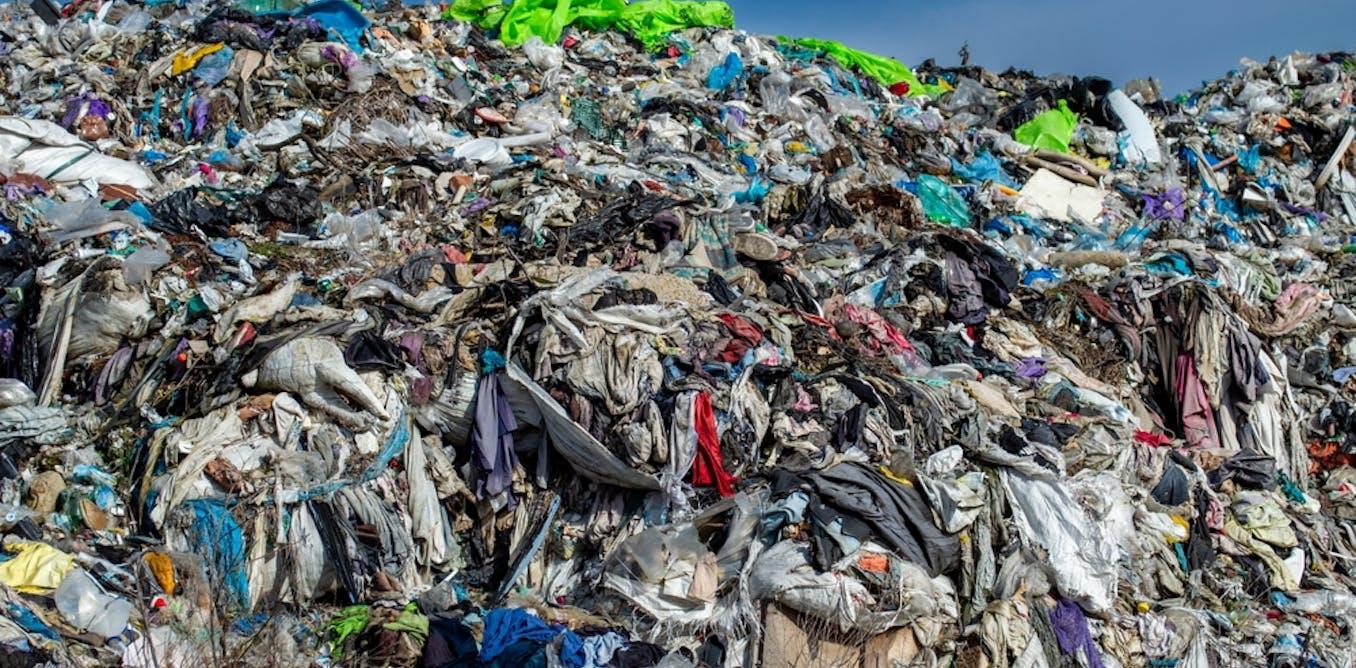
Smart clothing incorporating electronics textiles (e-textiles) capable of health monitoring and energy harvesting is nearing market availability, with a projected global market exceeding $15 billion by 2028. However, e-textiles pose significant environmental challenges as they generate a new hybrid waste combining electronic and textile pollutants, including toxic substances and valuable materials like silver that are difficult to recycle. Current textile and electronic waste streams are already large, and e-textiles could exacerbate this problem without changes in disposal and recycling practices. To prevent environmental harm, regulation and sustainable design strategies are crucial, including design for disassembly, material transparency, biodegradable conductors, energy-harvesting integration to minimize batteries, and durability standards. Adoption of these measures by industry and policymakers is essential to turning e-textiles into an environmental asset rather than liability.
ICT
Smart clothes will soon be on sale. But regulations are needed to prevent a new waste mountain

The Council of the Baltic Sea States (CBSS), founded in 1992 to bridge East-West divides, has shifted toward regional security following Russia’s 2022 invasion of Ukraine. With most Baltic Sea states now in both NATO and the EU, CBSS’s original inclusive role diminished after Russia's exit. Recent assessments urge the CBSS to focus decisively on security aligned with NATO and the EU, emphasizing resilience, civil preparedness, and public-private collaboration. However, the CBSS should also continue its "soft" cooperation on environment, youth, and cultural projects that build societal resilience and trust. Its added value lies in addressing everyday security challenges, bridging civil and political levels, and integrating security with social and environmental efforts, complementing but not duplicating NATO and EU roles.
Financial services
What role should the Council of the Baltic Sea States play in today’s fractured world?
US hyperscalers dominate Europe’s cloud market, limiting the region's technological sovereignty and data privacy. The ApeiroRA project, supported by Fraunhofer ISST and AISEC alongside SAP, is developing an open-source, vendor-neutral European cloud-edge infrastructure. This infrastructure integrates decentralized edge data centers with central clouds to enhance real-time processing, interoperability, and security through zero trust and confidential computing. Fraunhofer contributes scalable lifecycle management, resource efficiency via digital twins, and AI-driven operations, aiming to reduce European dependence on US providers and foster a sustainable, sovereign cloud-edge ecosystem.
ICT
Sovereign Cloud-Edge Services for Europe’s Technological Independence