Publications

INSIGHT REPORT

Pioneering the Future: Space

Technologies Poised to Revolutionize

Exploration and Economy by 2035

September 2026

FACTSHEETS

Pioneering the Future: Space

Technologies Poised to Revolutionize Exploration and Economy by 2035

June 2026

WHITE PAPER

Future of Space Law:

Operationalizing Space Governance

March 2026

REPORT

Clear Orbit, Secure Future:

 A Call to Action on Space Debris

Jan 2026

WHITE PAPER

The Future of Space Law

Insights from the ATS, UNCLOS, and ITU Frameworks

December 2025

WHITE PAPER

The Future of Space Law: 

The Evolving Dynamics of Air and Space Regulation

 September  2025

The Future Of Space Law

News

Centre for Space Futures, Novaspace and SpaceTech Gulf  Sign Agreement to Develop Global Space Capability Mapping Dashboard

Riyadh, Saudi Arabia , 23 Jun 2026|  Press Release

Clear Orbit, Secure Future: A Call to Action on Space Debris

Riyadh, Saudi Arabia, 26 Jan 2026 | Press Release

Centre for Space Futures Holds Workshop with Participation of 40 Global Experts

Riyadh, Saudi Arabia, 05 Dec 2025 | Press Release

Centre for Space Futures Releases White Paper on 'The Future of Space Law'

Riyadh, Saudi Arabia, 12 Sep 2025 | Press Release

The Board of Directors of the Centre for Space Futures Endorses Its Strategic Direction

Riyadh, Saudi Arabia, 26 May 2025 | Press Release

Saudi Space Agency to Launch the Centre for Space Futures with the World Economic Forum

Riyadh, Saudi Arabia, 29 April | Press Release

5 ways we can tackle growing risks from rocket bodies in orbit

Dec 09, 2025 | Economic Growth, Stories

Read More

Forum Agenda

Forum Videos

VIDEO

Press Conference: Centre for Space Futures in Riyadh

The World Economic Forum's Special Meeting, April 29, 2024

VIDEO

The Purpose of Astronauts at Davos 2024

World Economic Forum , March 9, 2024

VIDEO

PortWatch: Monitoring Trade Disruptions from Space

World Economic Forum , Dec 18, 2023

VIDEO

India's Moon Mission Triumph: Ambassador Ruchira Kamboj's Insights

World Economic Forum , Aug 23, 2023

VIDEO

Space Exploration is Back at Davos 2023

World Economic Forum , Feb 16, 2023

Forum Publications

Strategic Intelligence Insights

Around 12,000 remote Philippine schools lack internet access due to infrastructural challenges, unreliable power, and maintenance issues. Satellite internet from Low Earth Orbit services like Starlink offers promising, stable connectivity, enabling richer digital learning experiences. Success depends on community-led management, shared usage beyond schools, and local storage of educational content to conserve data. Reliable power solutions, including solar panels, and ongoing IT training for school staff are essential. While government-provided devices are limited, smartphones can supplement learning if schools implement clear policies to prevent distractions. A holistic strategy involving infrastructure, skills development, power reliability, device access, and sustainable management ensures lasting benefits for schools and communities.
Africa | ICT, Education
Asian Development Blog: How Satellite and Community Action Are Connecting Remote Schools
The 2020 European Strategy for Data seeks to establish Common European Data Spaces to create a unified data market across Europe, driving economic growth and citizen benefit. Data spaces, especially in strategic sectors, require robust data management and sharing capabilities but remain nascent and face challenges. A conceptual framework and analysis of six European projects reveal key requirements including trust, business models, interoperability, workflow orchestration, energy efficiency, and data quality. Solutions frequently involve semantic standards, data catalogs, distributed ledger technologies, and federated identity management. The study identifies best practices, recurring implementation patterns, and open research gaps to guide future initiatives toward scalable, stable, cross-domain data spaces supporting sustainable innovation and collaboration.
Health, ICT
Leveraging technologies for data management and sharing to foster collaboration and implement data spaces
The European Commission’s July 2026 draft reform of the EU Emissions Trading System (ETS) proposes extending free emission allowances, risking reinforcement of uncompetitive industries and reliance on public subsidies that hinder innovation. Using IMF data, the analysis reveals that carbon market revenues—though finite as emissions decline—are a crucial financial resource for Europe to invest in clean industrial capacity. Slower auctioning reduces fiscal revenue substantially, weakening incentives for clean production and shrinking funds needed to close investment gaps. Strengthening the ETS is essential to avoid fragmented national subsidies and support a unified, competitive green transition.
More Allowances, More Revenue? The Industrial-Policy Stakes of the EU ETS Reform
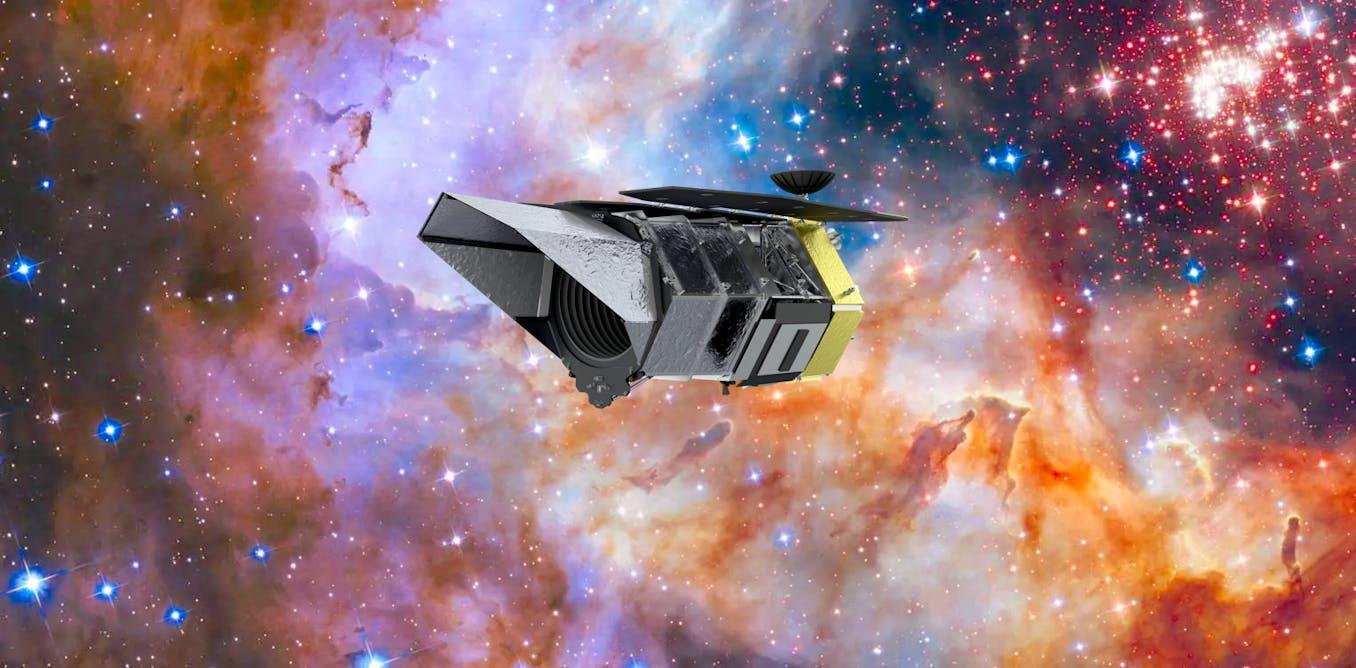
The Nancy Grace Roman Space Telescope, launching in late August from Florida, will study the universe's origins, composition, and evolution. Named after NASA’s first chief astronomer, Roman is designed for wide-field surveys, capturing infrared light with a field of view 100 times greater than Hubble's, enabling cosmic surveys 1,000 times faster. It carries a coronagraph to block starlight and observe faint planets and dust disks. The mission aims to detect billions of galaxies and stars to investigate dark matter's role in galaxy formation and test whether dark energy, driving cosmic expansion, is constant or changing, providing insights into fundamental cosmic mysteries.
Nasa’s new space telescope will tackle some of the universe’s biggest mysteries
Cold waters, particularly in the Arctic and Antarctic regions, constitute a distinct and underconceptualized operational maritime space, termed the "white water zone," complementing existing categories like blue, green, and brown waters. Historically peripheral due to harsh conditions, these areas have gained strategic importance amid climate change, resource potential, and shifting geopolitical claims, notably Russia's sovereignty consolidation and Western efforts to preserve a rules-based order. Recognizing cold waters as a unique domain is crucial for guiding maritime force posture, capability development, and international cooperation in these emerging global hotspots.
Antarctica
Defining the White Water Zone

The UK government's decision to dissolve the Department for Science, Innovation and Technology and merge its functions into the new Department for Business, Innovation, Science and Trade has sparked concern but reflects a historical pattern of shifting science responsibilities within business-focused departments. Despite initial alarm, the UK's research and development budget remains protected with a £58.5 billion pledge through 2030, and UKRI maintains a clear strategic plan. Compared to the US, where science faces severe budget cuts and political interference, the UK's system remains stable. The integration of science with business aligns with regional innovation hubs and may address the country's longstanding challenge of low private-sector R&D investment and commercializing research outcomes.
Education
What the sudden demise of the UK’s department of science means for the future of research
The war in Iran has doubled kerosene prices, causing widespread flight cancellations and prompting some in the aviation industry to call for relaxed climate policies. However, the crisis highlights the true issue: reliance on fossil fuels drives costs, not excessive climate regulations. In 2026/27, the EU will decide whether to end the Emissions Trading System (ETS) exemption for international flights and include all departures from the European Economic Area under the ETS or continue with international offset mechanisms. This decision will significantly affect the EU’s 2040 climate goals, the demand for permanent CO2 removal, and the overall credibility of its climate policies.
EU Aviation between Crisis and Climate Policy

AI companies, including SpaceX, Google, and Amazon, plan to move data centers into space to leverage constant solar energy and reduce Earth’s environmental impact. However, the overall environmental benefits are questionable once considering rocket fuel consumption, satellite cooling challenges, hardware degradation, atmospheric pollution, and space debris risks. Launches emit significant CO₂ and soot that damage the ozone layer, while cooling in space requires large ammonia radiators, increasing launch weight and emissions. Satellite hardware has limited lifespans and contributes to uncontrolled debris, raising concerns about long-term orbital hazards. The full life cycle environmental costs currently challenge the sustainability of off-world AI data centers.
Why AI’s environmental footprint won’t disappear into orbit

The traditional astronaut archetype emphasizing physical uniformity is challenged by evidence that diverse experiences and abilities can be advantageous in space. Historical examples show individuals with disabilities or different traits often better tolerate unique spaceflight challenges, such as motion sickness or microgravity effects. Adaptive skills and interdependence among crew members, rather than physical perfection, are crucial for managing unexpected problems during missions. As exploration extends to Mars and beyond, inclusive astronaut selection could enhance mission resilience by leveraging the strengths of disabled individuals who are accustomed to navigating adversity and uncertainty.
What if disabled astronauts are just better suited to space?

Climate change poses catastrophic risks, including the potential submersion of London by 2200 due to ice sheet collapse and rising sea levels, among threats like food supply collapse and heat-related deaths. These worst-case scenarios, while not most likely, remain plausible and avoidable if greenhouse gas emissions are reduced. Current scientific communication often downplays these risks, creating public complacency or despair. A new, comprehensive global climate-risk assessment is needed to present both best and worst outcomes, empowering informed decisions and fostering "stubborn hope"—the determination to drive positive change despite uncertainties. Such transparency is vital for navigating and mitigating humanity's existential climate challenges.
Antarctica | Financial services
Why climate scientists need to talk more about the very worst‑case scenarios
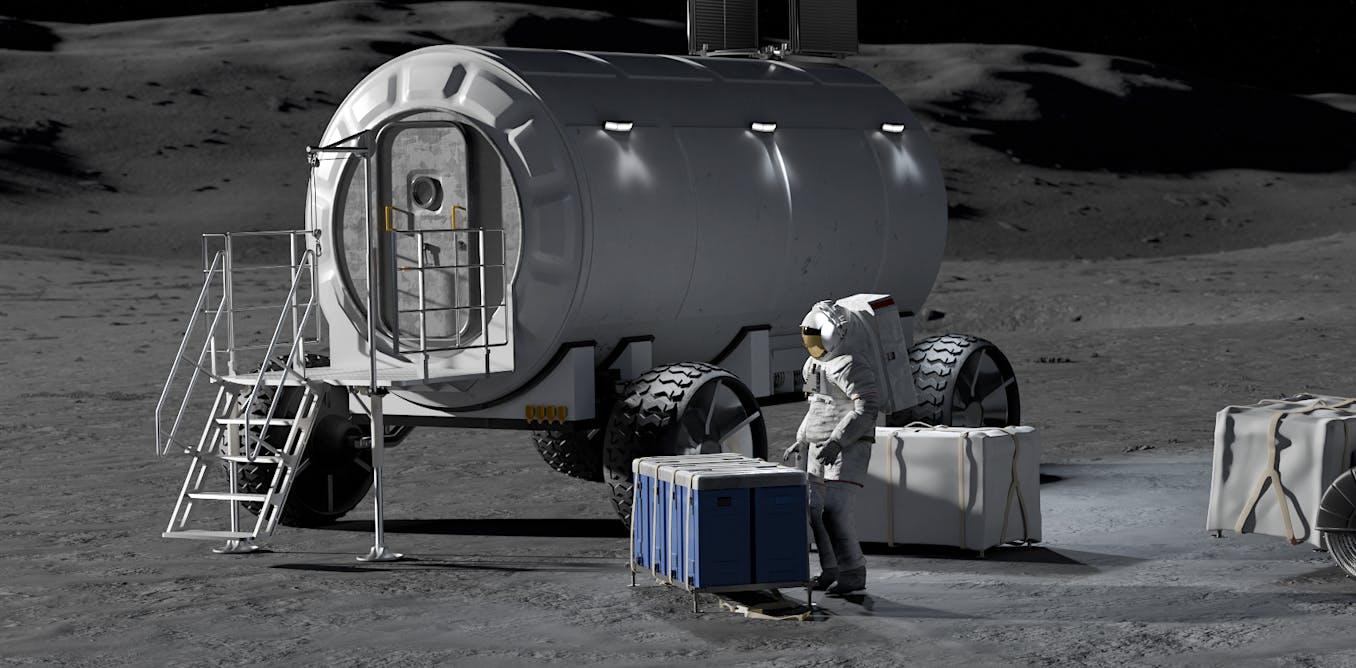
The renewed lunar race between the US and China centers on the Moon's south pole, targeted for its valuable water ice deposits that can support life and fuel rockets. Unlike the Apollo missions, current plans aim for establishing permanent bases staffed by rotating crews, similar to Antarctic research stations. China, with its Tiangong space station and successful Chang'e lunar program, is a major competitor alongside the US, which is developing landers via private companies like SpaceX and Blue Origin. The environment is extremely harsh, with perpetual cold in shadowed craters and limited sunlight, necessitating advanced communication, heating, and energy solutions, including nuclear power, to sustain human operations.
Antarctica
Why the US‑China Moon race could turn into a lunar land grab
The United Nations employs artificial intelligence to swiftly detect methane emissions, a potent climate pollutant, using satellite data. Since 2022, AI models have identified 80-85% of methane leaks through the Methane Alert and Response System, launched in 2024. This system has uncovered leaks releasing approximately 1.2 million metric tons of methane—equivalent to emissions from 24 million cars annually—before they were fixed. By enabling faster identification and response, AI helps convert satellite data into effective climate action, addressing a major driver of global warming.
UN uses AI to curb methane emissions
Satellite imagery has played a crucial role in exposing significant events globally, including North Korean smuggling and mass graves in Burundi. In the U.S.-Israeli conflict with Iran, satellite images have revealed damage from Israeli strikes on Iran’s supreme leader’s compound and Iranian attacks on U.S. bases. A satellite image helped attribute responsibility for a deadly strike on an Iranian school, and recent imagery showed a U.S. bombing of a water facility, raising potential war crime concerns. Despite these insights, five U.S. satellite providers restricted high-resolution images of Iran and nearby regions to prevent Iran from targeting U.S. troops, limiting access for news and research organizations.
What U.S. Restrictions on Satellite Imagery Mean for Iran Reporting
Artificial intelligence is being proposed as a cost-saving alternative to digital tagging in company sustainability reporting, which will become mandatory in the EU from 2027 for companies with turnovers over €450 million and more than 1,000 employees. The European Sustainability Reporting Standards (ESRS) require companies to digitally tag sustainability data to enhance transparency and comparability for investors and policymakers. Digital tagging links data points to references, making sustainability information like environmental impact and risk exposure searchable and comparable. Some large companies argue that AI could replace this process to reduce costs, but concerns remain about whether AI alone can fulfill the accuracy and utility requirements of digital tagging in sustainability disclosures.
Could AI replace digital-tagging in company sustainability reporting?

Iran faces severe environmental degradation, including excessive groundwater extraction causing land subsidence, drying of major lakes like Urmia, and extreme air pollution leading to thousands of premature deaths annually. These ecological crises undermine agriculture, infrastructure, public health, and economic productivity. Despite potential financial gains from a new US-Iran peace deal and lifted sanctions, Iran has historically prioritized military and geopolitical investments over environmental restoration. A strategic national investment focused on water management, ecosystem recovery, renewable energy, and pollution reduction could repair damaged natural systems, boost long-term economic growth, improve public health, enhance food security, create jobs, and promote sustainable development.
Iran’s environmental catastrophe has also wrecked its economy

The UK’s new defence investment plan allocates £15 billion to the Ministry of Defence, prioritizing nuclear deterrence, submarines, a sixth-generation fighter jet, and autonomous systems. Despite increasing reliance on space-based systems for modern warfare, the plan is vague on long-term space strategy, failing to prioritize specific capabilities or clarify how sovereign and allied/commercial systems will be balanced. It commits £3.2 billion to space capabilities by 2030, with a focus on satellite communications like the Skynet system and radar monitoring via Darc. However, uncertainties remain regarding the integration and funding of intelligence, surveillance, and reconnaissance efforts, including the Istari satellite program. Overall, the plan lacks a clear, detailed roadmap for advancing the UK's military space capabilities.
New UK defence plan fails to deliver on space, despite the military’s growing reliance on satellite systems

WiFi on trains, planes, and buses often suffers from poor coverage and inconsistent speeds, especially in rural or high-speed environments. The UK government plans to upgrade train WiFi by deploying low Earth orbit (LEO) satellite systems like Starlink and OneWeb to provide near-global, high-speed coverage without costly trackside infrastructure. Similar advances in planes use LEO satellites with improved antenna technology to deliver faster, more reliable internet on long-haul flights. Bus WiFi currently relies on cellular networks but faces challenges in rural areas; emerging hybrid 5G-LEO satellite systems could enhance connectivity for coaches and buses. These innovations promise more consistent, higher-quality internet across various modes of transportation.
ICT
Are we finally about to get decent wifi on trains and planes?
Economic security is an integral part of national security, encompassing the defense and promotion of a nation's economic, industrial, and scientific interests, including digital sovereignty. Critical infrastructure and supply chains must be protected against cyberattacks, espionage, and other threats that impact both corporate competitiveness and sovereignty. The evolving nature of 21st-century security, highlighted by dual-use technologies and conflicts like the war in Ukraine, underscores the need for a comprehensive national strategy. France currently lacks an integrated approach to economic security, which must be developed along with greater societal awareness to effectively safeguard national interests.
Austria, Belgium, Benin, Burkina Faso, Burundi, Canada, Costa Rica, Croatia, Czech Republic, Denmark, Egypt, Estonia, Finland, France, Germany, Greece, Israel, Italy, Jordan, Lesotho, Lithuania, Luxembourg, Mauritania, Mauritius, Morocco, Namibia, Netherlands, Norway, Panama, Peru, Philippines, Poland, Portugal, Rwanda, Senegal, Slovakia, Spain, Sweden, Switzerland, Tunisia, Ukraine | Education, Financial services
[National Security: The Reality Check] - “Economic Security Is National Security”
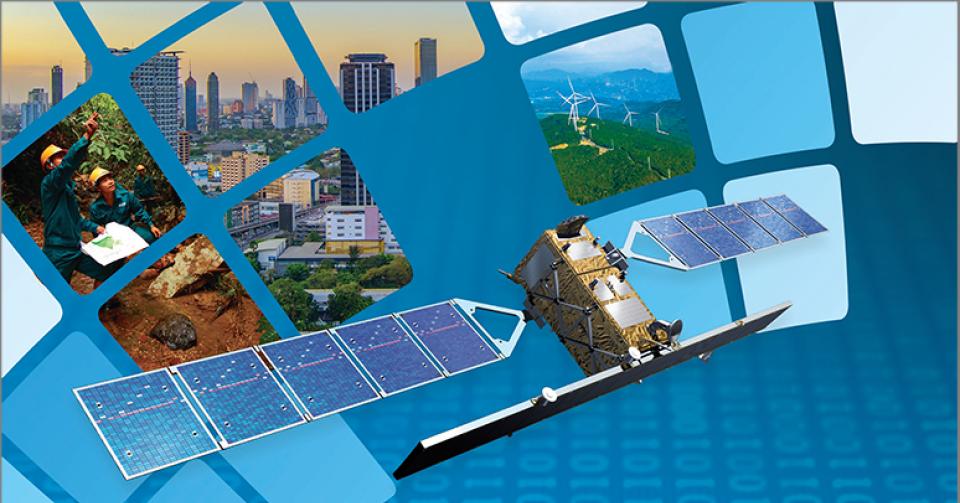
Satellite Earth Observation provides critical environmental data worldwide, offering timely, accurate, and consistent information to address development challenges. It supports key areas including land mapping, disaster risk management, climate resilience, coastal zone management, forest monitoring, and greenhouse gas monitoring. This technology enhances development operations by enabling informed decision-making and improved resource management through comprehensive earth observation capabilities.
Satellite Earth Observation: A Compendium of Capabilities and Applications for Development
The EU Semiconductor Geopolitical Risk Survey outlines potential challenges and strategic considerations for Europe’s semiconductor sector between 2026 and 2031. It emphasizes the growing geopolitical risks impacting semiconductor supply chains, technology development, and economic security. The paper, authored by experts Joris Teer and Pierre Sel, discusses Europe's need to strengthen technological independence and resilience in semiconductor production amid global competition and evolving diplomatic landscapes. It provides policy recommendations to enhance the EU's position in the critical semiconductor industry over the coming years.
ICT
The EU Semiconductor Geopolitical Risk Survey: Outlook for 2026–2031