
Publications

INSIGHT REPORT

Pioneering the Future: Space

Technologies Poised to Revolutionize

Exploration and Economy by 2035

September 2026

FACTSHEETS

Pioneering the Future: Space

Technologies Poised to Revolutionize Exploration and Economy by 2035

June 2026

WHITE PAPER

Future of Space Law:

Operationalizing Space Governance

March 2026

REPORT

Clear Orbit, Secure Future:

 A Call to Action on Space Debris

Jan 2026

WHITE PAPER

The Future of Space Law

Insights from the ATS, UNCLOS, and ITU Frameworks

December 2025

WHITE PAPER

The Future of Space Law: 

The Evolving Dynamics of Air and Space Regulation

 September  2025

The Future Of Space Law

News

Centre for Space Futures, Novaspace and SpaceTech Gulf  Sign Agreement to Develop Global Space Capability Mapping Dashboard

Riyadh, Saudi Arabia , 23 Jun 2026|  Press Release

Clear Orbit, Secure Future: A Call to Action on Space Debris

Riyadh, Saudi Arabia, 26 Jan 2026 | Press Release

Centre for Space Futures Holds Workshop with Participation of 40 Global Experts

Riyadh, Saudi Arabia, 05 Dec 2025 | Press Release

Centre for Space Futures Releases White Paper on 'The Future of Space Law'

Riyadh, Saudi Arabia, 12 Sep 2025 | Press Release

The Board of Directors of the Centre for Space Futures Endorses Its Strategic Direction

Riyadh, Saudi Arabia, 26 May 2025 | Press Release

Saudi Space Agency to Launch the Centre for Space Futures with the World Economic Forum

Riyadh, Saudi Arabia, 29 April | Press Release

5 ways we can tackle growing risks from rocket bodies in orbit

Dec 09, 2025 | Economic Growth, Stories

Read More

Forum Agenda

Forum Videos

VIDEO

Press Conference: Centre for Space Futures in Riyadh

The World Economic Forum's Special Meeting, April 29, 2024

VIDEO

The Purpose of Astronauts at Davos 2024

World Economic Forum , March 9, 2024

VIDEO

PortWatch: Monitoring Trade Disruptions from Space

World Economic Forum , Dec 18, 2023

VIDEO

India's Moon Mission Triumph: Ambassador Ruchira Kamboj's Insights

World Economic Forum , Aug 23, 2023

VIDEO

Space Exploration is Back at Davos 2023

World Economic Forum , Feb 16, 2023

Forum Publications

Strategic Intelligence Insights

France's introduction of a voluntary military-service scheme marks a significant shift in its defense strategy, coinciding with broader changes across the EU prompted by heightened security threats from Russia, particularly following the invasion of Ukraine. European nations are reassessing their military structures, grappling with recruitment challenges and an inadequate manpower base. Many are considering reinstating conscription or enhancing reserve forces to bolster defense readiness. This transformation reflects a growing urgency in Europe to strengthen national defenses amid diminishing reliance on U.S. security guarantees.
France
Transforming Military Service in the EU: France Is Not an Isolated Case
The transition to a low-carbon economy in Latin America necessitates enhancing energy reliability to support economic growth and social wellbeing. Recent power outages highlight vulnerabilities stemming from increased reliance on renewable energy, which lacks the stability of traditional power sources. Building resilience requires collaboration among governments, regulators, and institutions, alongside advanced technology for grid integration. Investment in grid capacity, regional interconnections, and digital solutions is crucial, with an estimated need of over $30 billion annually through 2035. Focusing on flexible infrastructure and climate-resilient strategies is vital to achieving a secure and sustainable energy transition.
Angola, Chad | Financial services
Resilience amid power blackouts: Lessons for energy reliability in Latin America

Malaysia's financial regulators aim to enforce compliance with sustainability reporting requirements, despite global trends to relax such mandates. The Advisory Committee on Sustainability Reporting (ACSR) plans a phased review of disclosures under the National Sustainability Reporting Framework (NSRF), mandating large public companies to report using the ISSB framework starting in 2025. Acknowledging capacity challenges, ACSR emphasizes support and skill development for companies while warning of potential enforcement actions for serious non-compliance. The initiative contrasts with recent delays in other countries, underscoring Malaysia's commitment to sustainability assessment.
Financial services
Malaysian regulators to act on companies not complying with sustainability reporting requirements
The green economy, valued at $5 trillion, is expected to grow to over $7 trillion by 2030, driven by rapidly expanding green revenues that outpace conventional revenues. Key sectors include transport, carbon management, agriculture, and waste management. CEOs can leverage this growth by improving technology efficiency, engaging with stakeholders, and attracting diverse investments. Current findings show that green revenues grow twice as fast and often secure lower capital costs, challenging the myth of sustainability as a profit trade-off. Leading businesses treat sustainability as essential for long-term competitiveness and value creation.
The $5 trillion green economy is growing. Here’s how CEOs can turn opportunity into long-term growth
Europe and China are pursuing a new joint venture strategy to enhance collaboration in cleantech. This initiative aims to leverage the strengths of both regions to develop sustainable energy solutions and tackle climate challenges. The strategy includes sharing technological advancements and investment in clean energy projects to foster innovation and reduce carbon footprints.
Europe-China: A New Joint Venture Strategy for Cleantech

Japan Airlines (JAL) is transferring sensors from its CONTRAIL carbon dioxide monitoring program to Boeing 787-9 aircraft, preserving a vital climate dataset that has collected over 30,000 greenhouse gas measurements from 22,000 flights over three decades. This initiative follows the retirement of older aircraft, ensuring ongoing data collection critical for global climate modeling. The upgraded aircraft will expand monitoring to new regions, including deeper into the southern hemisphere and the Middle East, while providing continuous and high-frequency atmospheric measurements unavailable from ground stations. Data from this program aids in tracking emissions and verifying the effectiveness of emissions-reduction strategies.
Japan revamps aviation-based CO2 monitoring to preserve decades-old climate datasets

China is shifting its climate adaptation strategy from reactive to proactive approaches, focusing on building a "climate-adapted society" by 2035. This strategy, emphasized in its latest Nationally Determined Contribution, combines adaptation with mitigation efforts. China's centralized planning allocates significant resources to infrastructure and disaster prevention, contrasting with the EU's decentralized approach. Annual funding needs for adaptation are projected at over CNY 2 trillion (US$280 billion) from 2026 to 2030, but China faces a falling financial support gap, having received only US$530 million in international climate adaptation funding between 2020 and 2022.
Nigeria | Financial services
How can China meet its climate adaptation challenges?

AI models are facing a data shortage, limiting their growth and effectiveness. Although data generation has increased, a lack of variety is hindering advancements. In industries like pharmaceuticals and finance, complex modeling requires new data that traditional experimentation cannot provide efficiently. Solutions include automation for data collection and computational models that simulate outcomes based on first principles. These large quantitative models can rapidly explore drug interactions and industrial processes, significantly reducing development times. A broad innovation ecosystem and improved access to essential datasets are crucial to unlock the potential of synthetic data in advancing AI capabilities.
Africa | Financial services, ICT, Education, Health
We're running low on data to train AI. The good news is there's a fix for that

Investment in early childhood care and education (ECCE) is crucial for fostering social and economic growth, particularly highlighted by the recent G20 commitment to prioritize education. Over 350 million preschool children lack access to quality care, stunting human potential. Evidence indicates investing in ECCE yields substantial economic returns, breaking poverty cycles and promoting gender equity in the workforce. Despite international pledges, funding remains inadequate, with many low-income countries allocating less than 2% of education budgets to ECCE. Mobilizing political will and financing for ECCE is essential to tackle these challenges effectively.
Ghana, Russian Federation, South Africa, Sweden, United Kingdom | Financial services, Education, Health
The Transformative Power of Early Childhood Education
Asian businesses face significant challenges in decarbonizing Scope 3 emissions, which constitute the majority of their carbon footprint and are complex to control. However, this region, accounting for half of global carbon emissions yet driving over half of global GDP growth, is poised for opportunities through value chain decarbonization. Companies that address environmental risks and enhance operational efficiency report financial gains and resilience improvements. Decarbonization strategies not only align with regulatory demands but also create competitive advantages and new revenue streams, exemplified by initiatives in construction waste reuse and carbon assessment services.
How Asian businesses are using value chain decarbonization to drive growth and sustainability

India's rivers face severe pollution, predominantly from textile and tannery industries that release untreated wastewater, endangering health, agriculture, and local economies. Regions like the Noyyal basin and Jojari River are witnessing arable land degradation and forced migration due to toxic exposure. Enhanced monitoring through AI, real-time detection, and stricter regulations are essential for industries to reduce pollution. Many rivers, including the Yamuna and Ganga, risk functional collapse, while polluted waterways threaten drinking supplies and public health. Urgent action is required to protect these vital ecosystems for future sustainability.
India’s river crisis: Why industry must lead the cleanup
One-third of global soil is degraded, threatening human health, biodiversity, and economies. Healthy soil is crucial for food security, climate resilience, and ecosystem stability but remains undervalued in global policies. Degradation costs the global economy $878 billion annually, exacerbating food and water insecurity and contributing to conflict. Investing in soil restoration yields significant returns, enhancing agricultural productivity and sustainability. Efforts like the Great Green Wall in Africa and regenerative agriculture demonstrate successful soil management. Coordinated global action is necessary to integrate soil health into sustainable development and climate strategies.
Health
How healthy soil and land creates solid ground for global resilience
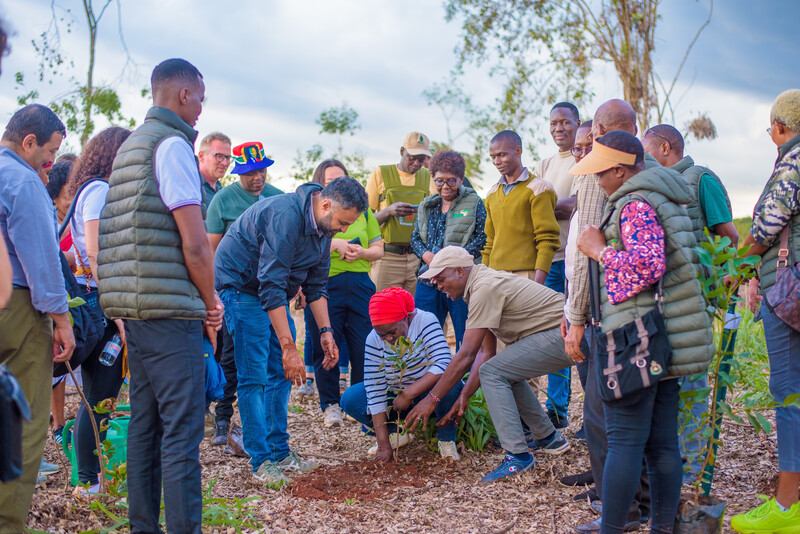
Africa has approximately 2.18 million social enterprises, generating $96 billion in annual revenue and creating over 12 million jobs. More than half of these enterprises are led by women, and one in three by individuals under 35. These mission-driven businesses enhance access to essential services, create dignified employment, and strengthen community resilience, contributing to inclusive and sustainable growth. The importance of social enterprises is recognized in a new report, which illustrates their significant role in fostering economic and social development across the continent.
Egypt, Ethiopia, Ghana, Senegal, South Africa | ICT, Health, Education
Africa’s 2.18 million social enterprises are rewriting the continent’s growth story
Urban areas face significant challenges from climate change and water scarcity, while buildings contribute to 39% of global energy-related carbon emissions. Transforming existing buildings through retrofitting and refurbishment is essential, as most structures in 2050 are already built. Smart, integrated energy systems could allow buildings to generate, store, and share energy with electric vehicles and neighboring units. Sustainable urban development also demands attention to social infrastructure, fostering community and wellbeing. Technology must support this transition, requiring improved policies and market conditions to optimize building performance and efficiency.
Africa | Financial services, Health, Education
Making cities future-proof: How to sustainably build livable urban centres
Geopolitics and artificial intelligence will significantly influence global business trends in 2026. The world economy is expected to grow by 3.1%, although underlying conditions are increasingly fragile. Companies must remain vigilant against systemic risks arising from geopolitical tensions. AI adoption is projected to deepen, moving from broad applications to systematic integration in workplaces. Talent management will adapt to technological shifts, emphasizing continuous learning and essential analytical skills. Sustainability initiatives will persist, albeit away from the spotlight, as environmental concerns continue to polarize debate in the U.S.
Chile, Egypt, Estonia, Ethiopia, Germany, Hungary, India, Indonesia, Israel, Japan, Poland, Qatar, Russian Federation, Saudi Arabia, Senegal, Singapore, Spain, Sweden, Switzerland, Taiwan, China, Tanzania, Tunisia, United Arab Emirates, United Kingdom | Financial services, Health, Education
6 business trends for 2026

The "Golden Dome" initiative, announced by President Trump in January 2025, aims to establish comprehensive missile defense for the United States, protecting against airborne threats like aircraft, drones, and missiles. With an estimated budget of $175 billion, the program intends to enhance existing systems and introduce space-based sensors and interceptors. The initiative focuses primarily on countering intercontinental ballistic missiles (ICBMs) deemed strategic threats. While defense systems aim to neutralize missiles during their flight phases, challenges remain in their effectiveness, particularly against long-range ballistic threats. The implications for Germany and Europe are complex, necessitating careful navigation of US defense strategies.
‘Golden Dome’ and the Illusory Promise of Invulnerability

Iran faces a severe air pollution crisis exacerbated by one of the worst droughts in decades, causing wetlands to dry and increasing dust sources that disrupt air quality. Major cities, including Tehran, have recorded hazardous levels of air pollution, leading to school closures and a spike in respiratory issues and deaths linked to poor air quality. Contributing factors include ageing vehicles and low-quality fuel; however, the deeper issues stem from governmental mismanagement and economic isolation. These elements have hindered technological advancements and maintained a dependency on cheap energy, compounding the environmental crisis.
Egypt, Nigeria, Pakistan
Iran’s record drought and cheap fuel have sparked an air pollution crisis – but the real causes run much deeper

China's Shenzhou-20 capsule returned to Earth without crew after space debris cracked its window, highlighting the growing threat of space debris, with over 15,100 tonnes present in orbit. Smaller debris can cause significant damage at high speeds, raising risks to astronauts and equipment. While international treaties exist, they are outdated and lack enforceable guidelines for debris management. Current debris mitigation technologies, such as nets or laser brooms, are still under research, and geopolitical tensions further complicate effective governance. Collisions in space have historically generated substantial new debris, emphasizing the urgent need for comprehensive solutions.
Space debris: will it take a catastrophe for nations to take the issue seriously?

Data centre investments in Africa aim to enhance digital capabilities and support future growth, yet present significant risks. Major initiatives include Cassava Technologies’ partnership with Nvidia and Kenya’s US$1 billion project with Microsoft, targeting improved cloud capacity. Despite 39 African countries hosting data centres, the continent requires at least 700 more to foster digital inclusion. Current challenges include inadequate infrastructure, local backlash, high operational costs, and dependency on foreign direct investment amidst geopolitical uncertainties. Successful data centre implementation necessitates careful planning to balance economic needs and technological evolution.
South Africa | Financial services, ICT
Data centre investments are a gamble for Africa
Addressing deforestation is crucial for enhancing supply chain resilience, regulatory compliance, and stakeholder satisfaction. Companies like Bunge and PepsiCo are committed to eliminating deforestation from their supply chains, setting ambitious targets for 2025 and 2030. The Accountability Framework provides guidance for companies on setting measurable goals and improving practices for transparency and traceability. Bunge has achieved significant traceability in its soy supply chains and employs satellite monitoring, while PepsiCo focuses on supplier training and procurement improvements. Collective action and collaboration are essential to tackle deforestation effectively in agricultural and forestry sectors.
Why addressing deforestation is a strategic business priority