
Publications

INSIGHT REPORT

Pioneering the Future: Space

Technologies Poised to Revolutionize

Exploration and Economy by 2035

September 2026

FACTSHEETS

Pioneering the Future: Space

Technologies Poised to Revolutionize Exploration and Economy by 2035

June 2026

WHITE PAPER

Future of Space Law:

Operationalizing Space Governance

March 2026

REPORT

Clear Orbit, Secure Future:

 A Call to Action on Space Debris

Jan 2026

WHITE PAPER

The Future of Space Law

Insights from the ATS, UNCLOS, and ITU Frameworks

December 2025

WHITE PAPER

The Future of Space Law: 

The Evolving Dynamics of Air and Space Regulation

 September  2025

The Future Of Space Law

News

Centre for Space Futures, Novaspace and SpaceTech Gulf  Sign Agreement to Develop Global Space Capability Mapping Dashboard

Riyadh, Saudi Arabia , 23 Jun 2026|  Press Release

Clear Orbit, Secure Future: A Call to Action on Space Debris

Riyadh, Saudi Arabia, 26 Jan 2026 | Press Release

Centre for Space Futures Holds Workshop with Participation of 40 Global Experts

Riyadh, Saudi Arabia, 05 Dec 2025 | Press Release

Centre for Space Futures Releases White Paper on 'The Future of Space Law'

Riyadh, Saudi Arabia, 12 Sep 2025 | Press Release

The Board of Directors of the Centre for Space Futures Endorses Its Strategic Direction

Riyadh, Saudi Arabia, 26 May 2025 | Press Release

Saudi Space Agency to Launch the Centre for Space Futures with the World Economic Forum

Riyadh, Saudi Arabia, 29 April | Press Release

5 ways we can tackle growing risks from rocket bodies in orbit

Dec 09, 2025 | Economic Growth, Stories

Read More

Forum Agenda

Forum Videos

VIDEO

Press Conference: Centre for Space Futures in Riyadh

The World Economic Forum's Special Meeting, April 29, 2024

VIDEO

The Purpose of Astronauts at Davos 2024

World Economic Forum , March 9, 2024

VIDEO

PortWatch: Monitoring Trade Disruptions from Space

World Economic Forum , Dec 18, 2023

VIDEO

India's Moon Mission Triumph: Ambassador Ruchira Kamboj's Insights

World Economic Forum , Aug 23, 2023

VIDEO

Space Exploration is Back at Davos 2023

World Economic Forum , Feb 16, 2023

Forum Publications

Strategic Intelligence Insights

Technology significantly impacts daily life, with over 1 trillion semiconductors sold annually and 11,000 data centers managing vast data loads. Despite this growth, the sector heavily relies on limited natural resources and faces threats from climate change. Semiconductor manufacturing consumes over 1 trillion liters of freshwater, while data centers require over 60 GW of energy. Additionally, 60 billion kg of e-waste is generated each year, with under 25% recycled. To succeed, tech companies need to address their environmental impacts and can leverage nature-positive strategies for financial benefits, including resource recovery and efficiency savings.
ICT, Education
Nature Positive: Role of the Technology Sector

Technology significantly impacts daily life, with over 1 trillion semiconductors sold each year and 11,000 data centers managing vast amounts of data. However, the sector heavily relies on finite natural resources and faces threats from climate change. Semiconductor production consumes over 1 trillion liters of freshwater annually, while data centers utilize over 60 GW of energy. The industry generates 60 billion kg of e-waste each year, with recycling rates below 25%. To thrive, tech companies must address their environmental impacts, following seven recommended actions that highlight the financial benefits of adopting nature-positive strategies.
Nigeria | Financial services, ICT, Education
Nature Positive: Role of the Technology Sector

South Korea will nearly double its financial support for renewable energy projects in the 2026 budget, allocating KRW 648 billion (US$440 million) for initiatives such as RE100 industrial complexes and agrivoltaic solar. Overall climate ministry spending will increase by 9.9% to KRW 19.16 trillion (US$13 billion). Significant funding boosts will be directed towards energy, resource circulation, and environmental programs, while some climate-related budgets will see minor reductions. The government aims to accelerate its transition from coal and oil while promoting electric vehicles, introducing subsidies, and expanding support for reusable containers.
Republic of Korea
South Korea doubles financial support for renewable projects in 2026 budget
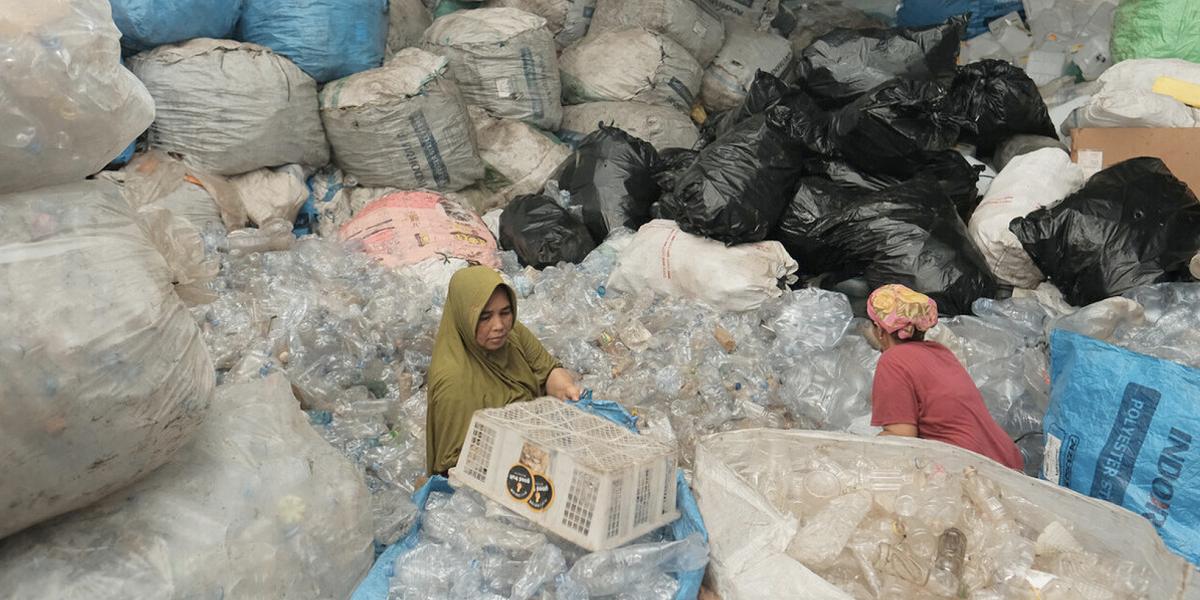
Development challenges, such as plastic waste management and energy transitions, are inherently complex and involve multiple actors and feedback loops. Traditional analytical tools often overlook these complexities, leading to unintended consequences. System dynamics modeling can visualize these complexities by mapping resource flows, simulating policy impacts, and identifying leverage points for effective circular economy strategies. Benefits of this approach include a holistic understanding of systems, risk-free policy testing, collaboration facilitation, and a long-term perspective on interventions. Choosing an appropriate modeling tool is essential and should align with the project’s purpose, stakeholder needs, complexity capacity, and data availability.
Bangladesh | Financial services
Understanding Development Complexity Through System Dynamics
Governments and international bodies are currently focusing on regulating the outputs of AI systems. However, a more effective approach to AI governance requires attention to upstream factors, particularly how data is collected, governed, shared, and stewarded. Integrating robust data governance practices, such as data stewardship and data commons, is essential for protecting fundamental rights and ensuring equitable distribution of AI's economic and social benefits. An effective AI governance framework must combine both input and output governance into a cohesive system.
Education
Toward AI Governance That Works: Examining the Building Blocks of AI and the Impacts

Google's Project Suncatcher aims to develop a space-based data center using solar-powered satellites equipped with TPU chips. Targeting a 2027 launch for two prototypes, the project explores the feasibility of these chips surviving space conditions. Rivals like SpaceX and startups are also pursuing space computing. Space-based data centers promise reduced environmental impacts and operational efficiency but face challenges such as thermal management, communication, maintenance, and economic viability. Successful prototypes could lead to a paradigm shift in data center construction, depending on overcoming substantial engineering and cost hurdles.
Data centres in space: will 2027 really be the year AI goes to orbit?

A national emergency briefing on climate and nature held in November informed around 1,200 UK leaders of the urgent crises facing the country. Experts emphasized that the nature crisis is critical infrastructure-related and a national security issue. Urgent emissions reductions were highlighted, with a need for radical change to prevent dangerous climate overshoot. Discussions covered food security, the impact of climate change on health, and the economic potential of a faster energy transition. Many leaders were shocked by the accelerating realities of the climate crisis, underscoring the inadequacy of current actions. The event aimed to motivate genuine action among decision-makers.
Nigeria | Health
What we told UK leaders about climate and nature at a national emergency briefing

Innovation teams face pressure to deliver measurable results amidst formal processes that can stifle creativity, leading to what is termed the “paradox of institutionalising spontaneity.” A study conducted on a multinational technology firm revealed that successful innovators navigate these constraints by creating temporary “spaces for play” that allow for experimentation within structural limits. This involves three phases: securing legitimacy by aligning projects with strategic goals, maintaining momentum through resource leverage, and reconstituting efforts to stay connected with core business strategies. Tactics include cultivating senior sponsorship, engaging customers, and continuous reflection.
Education
How successful innovation teams develop creative spaces within organisations

Investment in green computing can facilitate AI growth in Africa, potentially unlocking $1.2-$1.5 trillion in economic value by 2030. The continent faces a "compute paradox," characterized by significant unmet demand for GPUs coupled with inadequate infrastructure. Despite rising demand for AI solutions and increasing initiatives like Nairobi’s IXAfrica campus and Senegal’s datacenter, challenges remain in aligning GPU costs with economic realities. Access barriers for local innovators hinder progress, with high GPU prices and fragmented market demand exacerbating underutilization issues. Coordinated investment in infrastructure, governance, and skills is necessary to close the compute gap and elevate local innovation.
Burkina Faso, Ghana, Rwanda | Education
Africa’s AI moment: How coordinated investment in 'green' computing can unlock $1.5 trillion
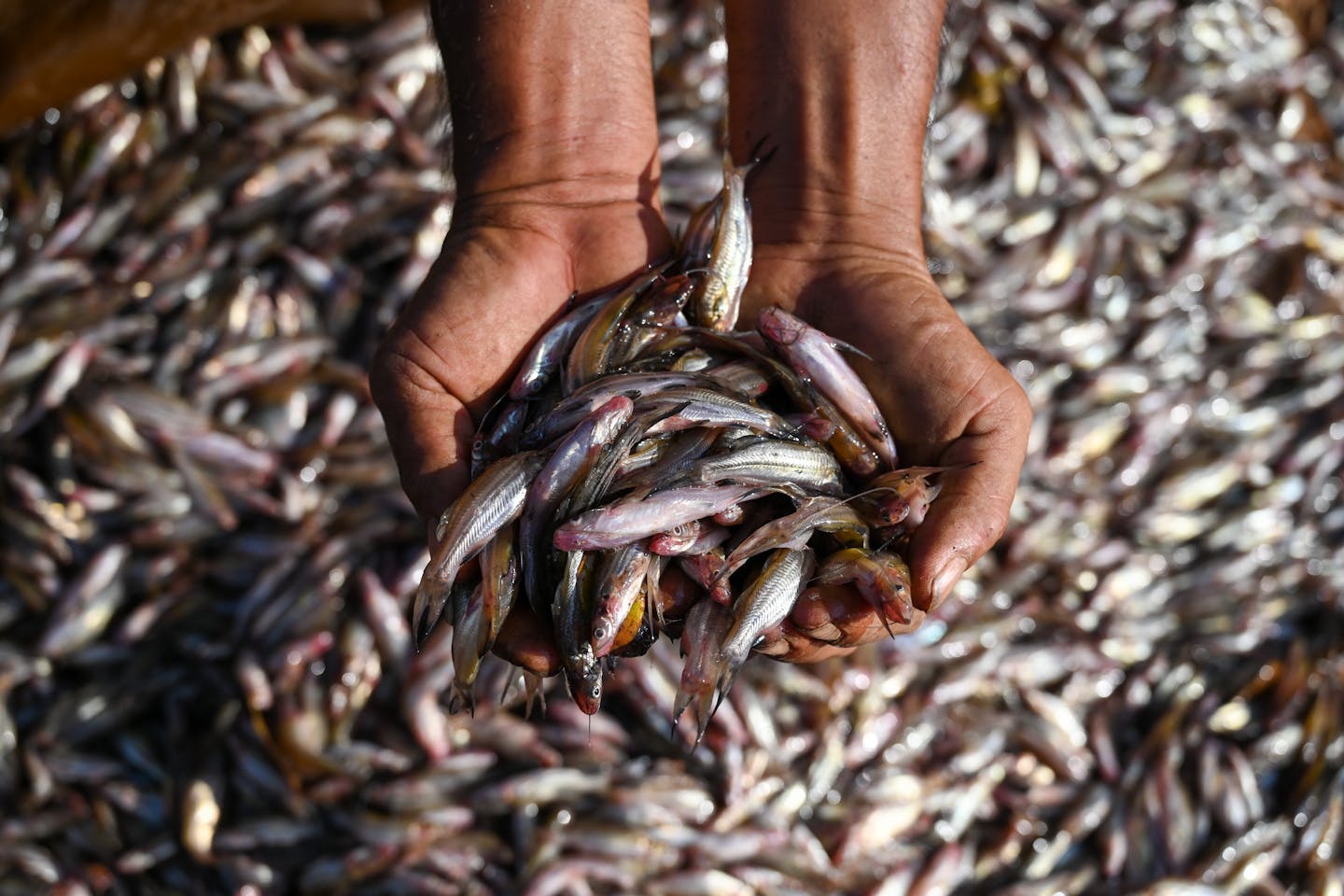
Countries are submitting climate pledges ahead of COP30 but experts criticize these commitments for lacking specific, actionable targets. While 85 of 96 coastal nations included ocean initiatives, many focus on broad conservation rather than addressing the phasing out of offshore fossil fuels, which is vital for ocean health and carbon sequestration. The majority of ocean-related measures target adaptation, with limited emphasis on climate mitigation strategies like reducing offshore oil and gas extraction, which was notably included only by Colombia and the UK. Researchers emphasize the need for clearer, diversified commitments to effectively tackle climate change.
Antarctica, Denmark, Nigeria, Norway
Concrete ocean pledges lacking in countries’ climate plans, say experts

China is leading the world in renewable energy deployment, installing over 360 gigawatts of wind and solar capacity in 2024 alone, contributing to a total of 1.4 terawatts. However, challenges such as system integration, economic costs, and market mechanisms persist. To address these, China is simultaneously expanding renewable generation and strengthening the power grid, investing over $80 billion in infrastructure. The nation is also reforming market structures to enhance flexibility and promote equitable cost distribution across energy systems, facilitating a transition to a cleaner, more resilient power infrastructure.
Denmark, Egypt, Ethiopia, Ghana, India, Nigeria, Taiwan, China | Financial services
China's renewable energy boom has its own challenges. Here's what we can learn

Chungnam province in South Korea is advancing a demonstration project to produce synthetic sustainable aviation fuel (e-SAF) from captured CO2 after passing a national feasibility review. The KRW 140.2 billion project in Boryeong aims to convert CO2 emissions from a coal plant into e-SAF, using carbon capture and utilization technology. Led by LG Chem, partners plan to produce 700 tonnes of e-SAF annually, with project completion expected by 2030. The initiative supports South Korea's net zero targets, aligning with increasing global demand for sustainable aviation fuels amid stricter climate regulations.
South Korean province clears CO2-to-eSAF project in push for cleaner aviation fuel
Rapid advancements in satellite technology and geographic information systems (GIS) are transforming national spatial data into essential public infrastructure, enabling improved planning and decision-making. Approximately 90% of government-managed issues involve geography. The integration of earth observation and GIS, which together provide real-time data and actionable insights, is crucial for addressing global development goals. However, the growing number of satellites raises concerns over space congestion and governance. Countries must prioritize the intentional development of spatial systems for effective public administration, enhancing capabilities for real-time intelligence governance and collaboration across sectors.
Ethiopia, Germany, Indonesia, Japan, Republic of Korea, Singapore, Spain, United Kingdom | Financial services, ICT, Health, Education
The World Isn’t Flat, but Government Data Is

The Global South faces inadequacies from three dominant AI paradigms set by the Global North. Current models do not address their developmental and sustainable growth challenges, risking agency decay, bond erosion, and environmental burdens. Instead of choosing sides, the Global South can pursue a "Fourth Path" for AI, advocating for prosocial AI that is localized and equitable. This approach, inspired by the Non-Aligned Movement, emphasizes tailored systems that reflect local contexts and values, ensuring that AI technology serves both people and the planet effectively.
Health, Education
How the Global South Can Chart a New Path for AI
Electronics exposed to radiation, especially in satellites and medical devices like CT scanners, are prone to failures and malfunctions. Researchers at the Fraunhofer Institute for Integrated Circuits IIS are developing an open-source tool to enhance the robustness and reliability of these electronics. The tool, part of the FlowSpace project, aims to provide accessible information and a design process that allows chip designers to consider radiation effects and component aging during development. This approach enables more reliable circuit designs while minimizing space and energy use, crucial for space applications.
Preventing Faults Induced by Radiation
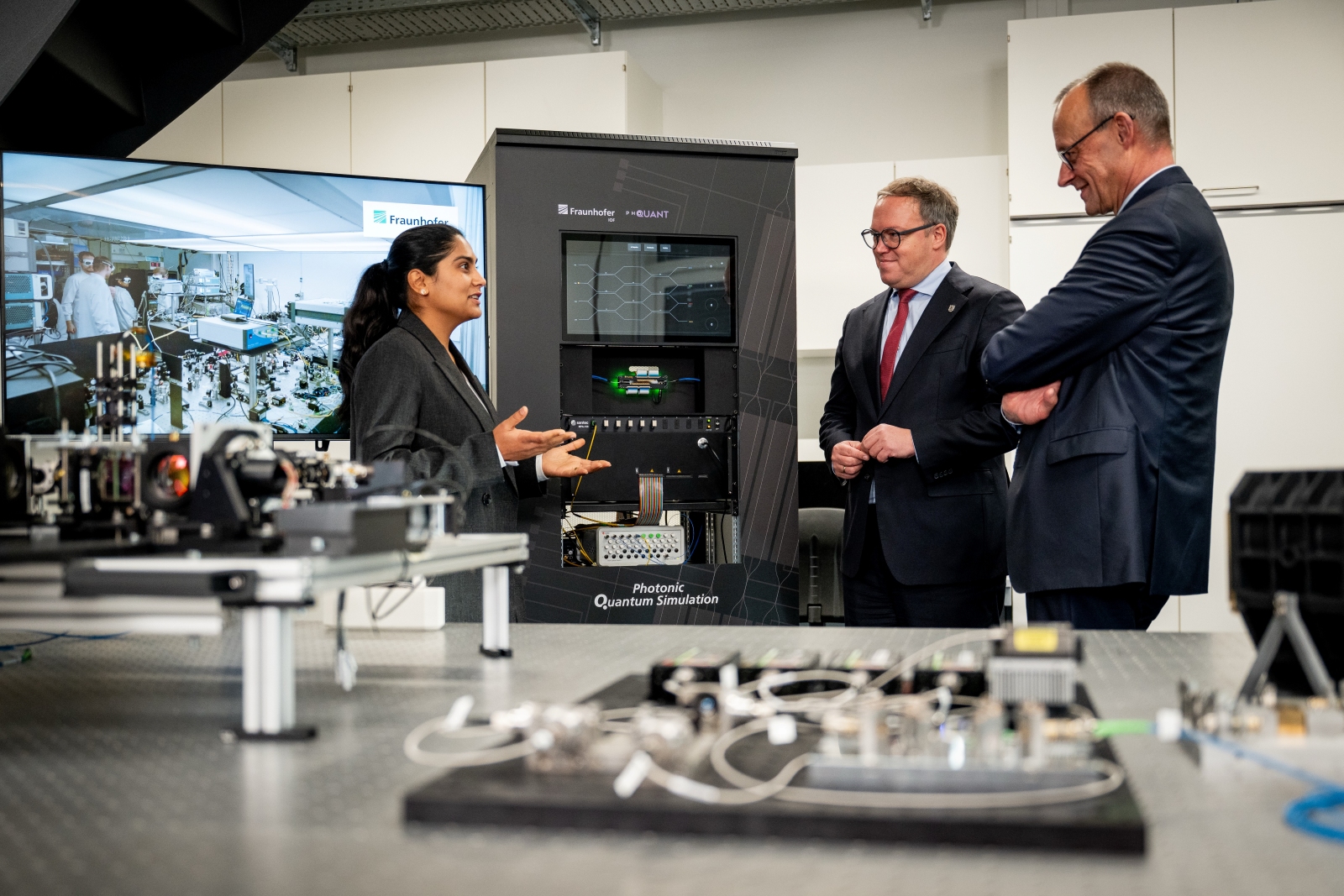
Chancellor Friedrich Merz visited the Fraunhofer Institute for Applied Optics and Precision Engineering IOF in Jena during his inaugural trip to Thuringia. He toured a quantum laboratory, where researchers showcased a photonic quantum computer and advanced quantum communication systems. Merz emphasized the significant potential of quantum technologies for innovation and economic strength in Germany, highlighting the region’s contributions to global competition. The visit underscored the collaborative efforts between federal and state governments to strengthen research and industry ties, promoting Jena’s status as an innovation hub.
Federal Chancellor visits Fraunhofer IOF

Artificial intelligence (AI) is increasingly utilized in strategic foresight, aiding governments, businesses, and research institutions in anticipating the future. Research by the OECD and World Economic Forum identifies three maturity levels of AI integration: analysis augmentation, where AI assists in data synthesis; creative sparring, where it generates and tests ideas; and integrated workflow, involving comprehensive AI embedding. While AI enhances time efficiency and data analysis, concerns arise regarding output quality, bias, and ethical governance. Despite these challenges, practitioners view AI as a valuable supplement to human insight in foresight efforts.
Education
What AI’s role in strategic foresight tells us about the future of thinking
Data centres are projected to see energy consumption double globally by 2030, reaching 945 TWh. To combat this, a holistic sustainability approach is essential, accounting for the interconnectedness of energy, cooling, water, and materials. Key strategies include optimizing workloads to reduce power demand and enhancing physical efficiency through innovations like water cooling, which can cut power use significantly. Additionally, addressing water consumption, critical materials, and recycling is crucial for sustainability. Employing a three-pillar strategy focusing on physical efficiency, workload efficiency, and a circular economy can guide data centres toward long-term sustainability goals.
Education
3 ways data centres can avoid doubling their energy use by 2030

NASA is planning missions to the Moon and Mars, but cosmic rays pose a significant threat to astronauts in deep space. These high-energy particles can damage DNA and increase cancer risk. Research is underway to measure cosmic ray effects and develop protective strategies, such as using particle accelerators to simulate radiation on Earth. While physical shields are limited in effectiveness, scientists are exploring biological defenses like antioxidants and mechanisms observed in hibernating organisms and tardigrades. These strategies could enhance protection against cosmic radiation during long space missions.
Before trips to Mars, we need better protection from cosmic rays

The green economy, valued at over $5 trillion annually, is the second most dynamic growth sector after technology, with revenues growing twice as fast as conventional ones. Companies in this sector benefit from cheaper capital and higher market valuations. Despite challenges, successful companies accelerate growth by maturing technologies, reducing costs, navigating regulations, and leveraging smart capital. Insights from leaders in the field offer guidance for businesses to capitalize on this market, which is projected to exceed $7 trillion by 2030.
Already a Multi-Trillion-Dollar Market: CEO Guide to Growth in the Green Economy