Publications

INSIGHT REPORT

Pioneering the Future: Space

Technologies Poised to Revolutionize

Exploration and Economy by 2035

September 2026

FACTSHEETS

Pioneering the Future: Space

Technologies Poised to Revolutionize Exploration and Economy by 2035

June 2026

WHITE PAPER

Future of Space Law:

Operationalizing Space Governance

March 2026

REPORT

Clear Orbit, Secure Future:

 A Call to Action on Space Debris

Jan 2026

WHITE PAPER

The Future of Space Law

Insights from the ATS, UNCLOS, and ITU Frameworks

December 2025

WHITE PAPER

The Future of Space Law: 

The Evolving Dynamics of Air and Space Regulation

 September  2025

The Future Of Space Law

News

Centre for Space Futures, Novaspace and SpaceTech Gulf  Sign Agreement to Develop Global Space Capability Mapping Dashboard

Riyadh, Saudi Arabia , 23 Jun 2026|  Press Release

Clear Orbit, Secure Future: A Call to Action on Space Debris

Riyadh, Saudi Arabia, 26 Jan 2026 | Press Release

Centre for Space Futures Holds Workshop with Participation of 40 Global Experts

Riyadh, Saudi Arabia, 05 Dec 2025 | Press Release

Centre for Space Futures Releases White Paper on 'The Future of Space Law'

Riyadh, Saudi Arabia, 12 Sep 2025 | Press Release

The Board of Directors of the Centre for Space Futures Endorses Its Strategic Direction

Riyadh, Saudi Arabia, 26 May 2025 | Press Release

Saudi Space Agency to Launch the Centre for Space Futures with the World Economic Forum

Riyadh, Saudi Arabia, 29 April | Press Release

5 ways we can tackle growing risks from rocket bodies in orbit

Dec 09, 2025 | Economic Growth, Stories

Read More

Forum Agenda

Forum Videos

VIDEO

Press Conference: Centre for Space Futures in Riyadh

The World Economic Forum's Special Meeting, April 29, 2024

VIDEO

The Purpose of Astronauts at Davos 2024

World Economic Forum , March 9, 2024

VIDEO

PortWatch: Monitoring Trade Disruptions from Space

World Economic Forum , Dec 18, 2023

VIDEO

India's Moon Mission Triumph: Ambassador Ruchira Kamboj's Insights

World Economic Forum , Aug 23, 2023

VIDEO

Space Exploration is Back at Davos 2023

World Economic Forum , Feb 16, 2023

Forum Publications

Strategic Intelligence Insights

UN climate negotiations have facilitated a slower rise in global emissions compared to what could have occurred without their framework. Since the Paris Agreement in 2015, projections suggest a potential warming of 2.5°C, significantly lower than earlier estimates of 4°C or 6°C. The growth of renewable energy and electric vehicles, driven by supportive policies, showcases tangible progress. Countries’ climate commitments, while not perfectly aligned with the 1.5°C goal, are often seen as minimum targets. Upcoming financial support for developing nations may enhance their ability to reduce emissions further. The focus of the current COP30 summit is on implementing established climate strategies.
Antarctica, Nigeria | Financial services, Health, ICT
The UN climate summits are working – just not in the way their critics think

The global pursuit of fusion energy, recognized for its potential as a safe, abundant, zero-carbon power source, is entering a crucial phase. The U.S. Department of Energy's new roadmap aims to integrate fusion into the energy mix by the early 2030s. AI plays a pivotal role in this advancement, enhancing research partnerships like that of DeepMind and Commonwealth Fusion Systems. With 33 nations collaborating on the ITER project and over 45 companies striving for commercialization, fusion energy's growing significance is evidenced by early power purchase agreements from major corporations. The IAEA forecasts that fusion could contribute significantly to global electricity generation by 2100.
Will AI + Fusion = Accelerated Commercialization?

Opposition to climate policies is increasingly used by Europe's far-right as an economic argument, framing climate action as detrimental to society. They portray pro-climate advocates as opportunists, suggesting that climate measures unfairly redistribute resources from “deserving” to “undeserving” groups. Rising energy prices and recent geopolitical events, such as the Ukraine war, have further fueled these narratives, casting blame on green policies rather than external factors. Despite the substantial economic risks associated with climate inaction, the far right successfully positions itself as the voice of economic realism, challenging perceptions of climate policy within public discourse.
Nigeria | Financial services, Health, Education
Why the far right’s push for “climate realism” is winning political ground
Global temperatures are approaching dangerous tipping points that can trigger irreversible changes in natural systems, such as the collapse of coral reefs and Arctic permafrost thawing. The Global Tipping Points Report 2025, authored by over 160 scientists, reveals the urgent need to limit warming to prevent cascading effects. It emphasizes halving greenhouse gas emissions by 2030 and accelerating sustainable practices. Europe faces significant climate impacts and holds a unique opportunity to lead in global climate governance, aiming to mitigate risks through effective policy and early action to protect human rights and environmental stability.
Antarctica | Financial services, Health
The world is on the cusp of climate tipping points – the stakes could not be higher for COP30

NASA's Artemis III mission, aiming to return astronauts to the Moon, faces challenges primarily due to delays in SpaceX's Starship development. NASA reopened the lunar landing vehicle contract to competitors like Blue Origin following concerns over Starship's lengthy test flight program and its poor performance in recent tests. Although SpaceX claims to have achieved many milestones for the lunar mission, its test flights have consistently failed to demonstrate the necessary payload capabilities. SpaceX's approach of building a versatile launcher rather than a specialized lunar lander complicates the project's timeline and efficiency.
What’s gone wrong between Nasa and Elon Musk’s SpaceX?
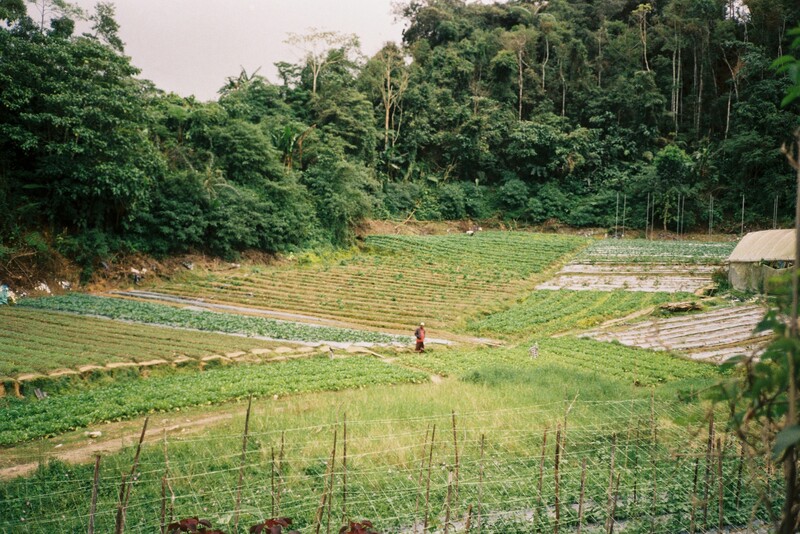
A sustainable bioeconomy utilizes natural resources conservatively to foster social justice and environmental stewardship, aiming for a nature-positive future. At COP30 in Belém, Brazil, discussions will center on five critical dimensions: forests, agriculture, social bioeconomy, biotechnology, and finance. The Brazilian government prioritizes this model to enhance positive impacts on nature while reducing detrimental effects. Key discussions emphasize the bioeconomy’s role in addressing climate change by conserving ecosystems that absorb CO2 and promoting fair benefits for Indigenous communities protecting biodiversity. Major principles established by the G20 will guide its development towards equitable and circular use of biological resources.
COP30: How the bioeconomy helps people, planet and profit to exist in harmony
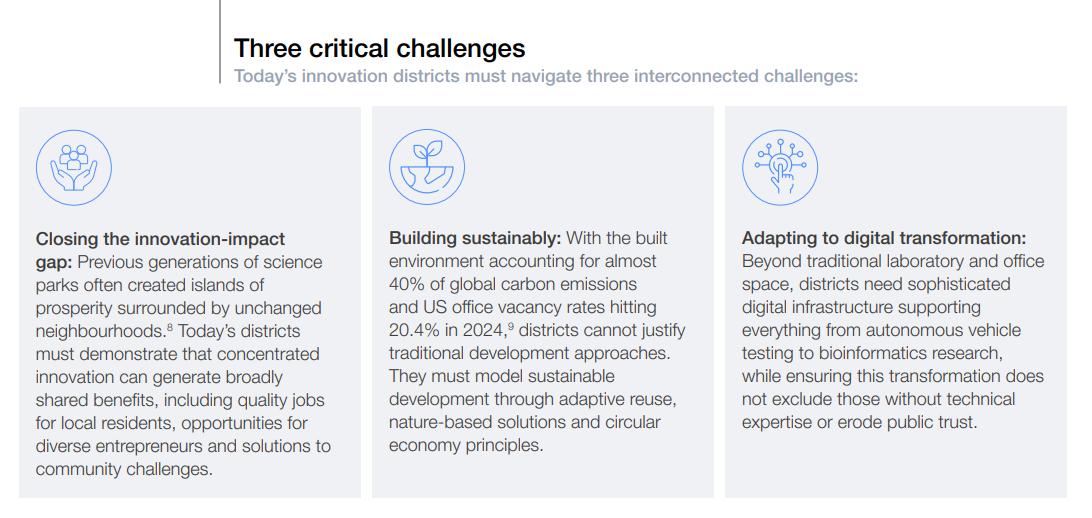
Innovation ecosystems are evolving to ensure equitable benefits for all city residents. A new toolkit from the World Economic Forum outlines best practices for innovation districts, emphasizing inclusive governance, human-centric placemaking, and scalable digital infrastructure. The Urban Transformation Summit 2025 highlighted collaboration among over 300 leaders and recognized cities like Harar and Kigali for pioneering public-private partnerships. Notable initiatives revealed include Santiago’s successful anti-pollution efforts, Egypt's smart cities strategy, and the UK’s plans for affordable new towns. Additionally, Los Angeles is expanding its Convention Center to enhance its status as a global convention hub.
Indonesia, United Arab Emirates, United Kingdom | Financial services, Health, ICT, Education
How to build an innovation hub that drives growth – and other urban transformation stories to read
Artificial intelligence (AI) and machine learning (ML) are critically transforming weather, water, and climate (WWC) services in the Arctic, a region marked by climatic instability and geopolitical contention. Stakeholders are increasingly dependent on AI/ML for decision-making support amidst a lack of regulatory frameworks. The absence of treaties governing algorithmic decision-making and inadequacies in existing international norms underscore the need for urgent policy action. Key areas identified for intervention include international organizations, law, and security.
Antarctica
Algorithmic North: Weather, Security and International Law
Ten years after its inception, the Paris Agreement, initially hailed for fostering global climate cooperation, faces significant challenges in delivering actual change. While it successfully unites 195 countries and has shifted the trajectory of warming from an expected 4°C-5°C to around 2.5°C-3°C, progress has stagnated, with emissions continuing to rise. Key issues include the flexible, bottom-up approach allowing minimal commitments from some countries and the exclusion of critical stakeholders, such as businesses and affected communities, from negotiations. Additionally, the slow implementation of agreements, like the "loss and damage" fund, reveals a growing disconnect between pledges and actionable outcomes.
Antarctica, Nigeria | Health
As the Paris climate agreement turns ten, it’s showing its age
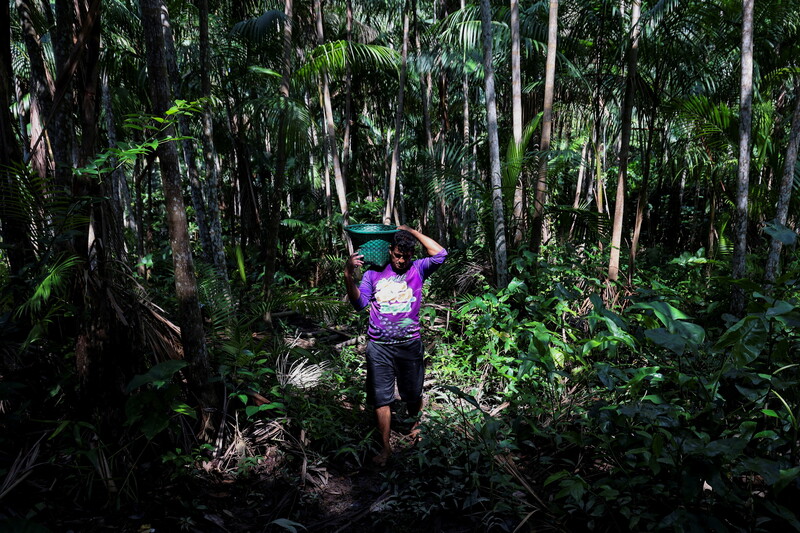
The food system is responsible for a third of global greenhouse gas emissions and significantly drives deforestation and biodiversity loss. At COP30 in Brazil, Lasse Bruun from the UN Foundation emphasizes the need for integrating food systems into climate negotiations. Key initiatives include unified policies that link agriculture, health, and trade, and a push for ‘protein diversification’ towards plant-based diets. Transforming food systems could unlock $121 trillion in economic growth by 2070. Successful past policies in Brazil highlight the potential for food systems to combat climate change and improve public health while ensuring equity.
UN Foundation: A new way forward for food systems on the COP30 agenda
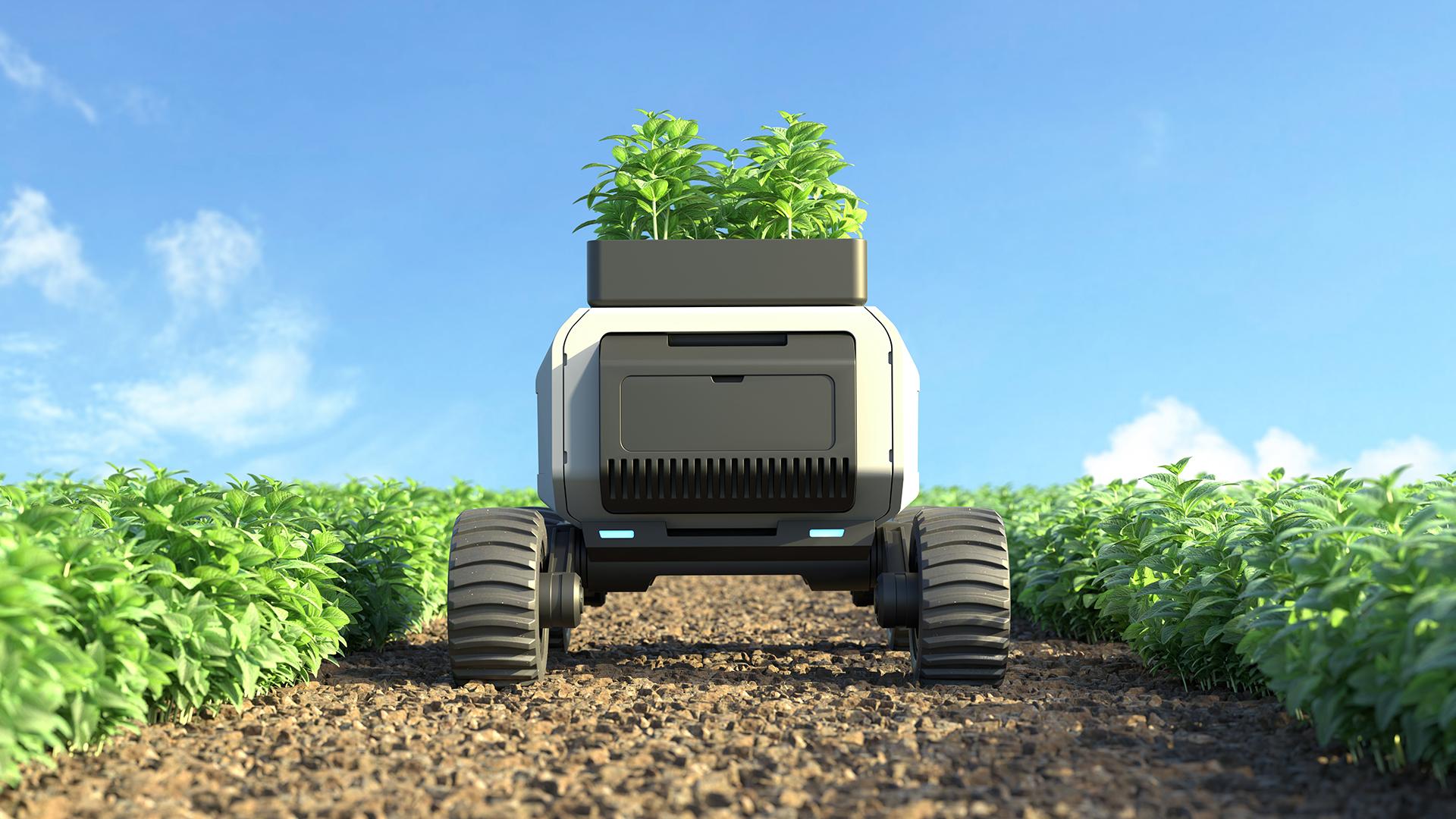
Global agriculture faces significant challenges due to climate change, resource degradation, demographic shifts, and geopolitical instability, necessitating innovative solutions beyond conventional methods. The World Economic Forum’s Artificial Intelligence for Agriculture Innovation (AI4AI) initiative highlights how frontier technologies—such as artificial intelligence, robotics, edge IoT, nanotechnology, and satellite remote sensing—can transform agriculture. The report outlines breakthrough use cases, practical pathways for ecosystem development, and emphasizes the need for collective action among governments, industry, and research to advance agricultural deep tech and ensure sustainable food security.
Nigeria | Health, ICT
Shaping the Deep-Tech Revolution in Agriculture

Sustainability has become essential for Asia's future leaders, with universities playing a pivotal role in equipping them through innovative programs like the Ho Bee Professorship in Sustainability Management at Singapore Management University (SMU). This partnership with Ho Bee Land aims to connect academic insights with industry practices, preparing students to tackle sustainability challenges. Initiatives like the Luminary Speaker Series and the Sustainability Business Case Challenge encourage dialogue on integrating technology, finance, and policy for a low-carbon economy. Young professionals are encouraged to turn sustainability ambitions into actionable, measurable outcomes grounded in credible data and collaborative strategies.
Education
From ambition to action: How SMU and Ho Bee Land are nurturing Asia’s next generation of sustainability leaders
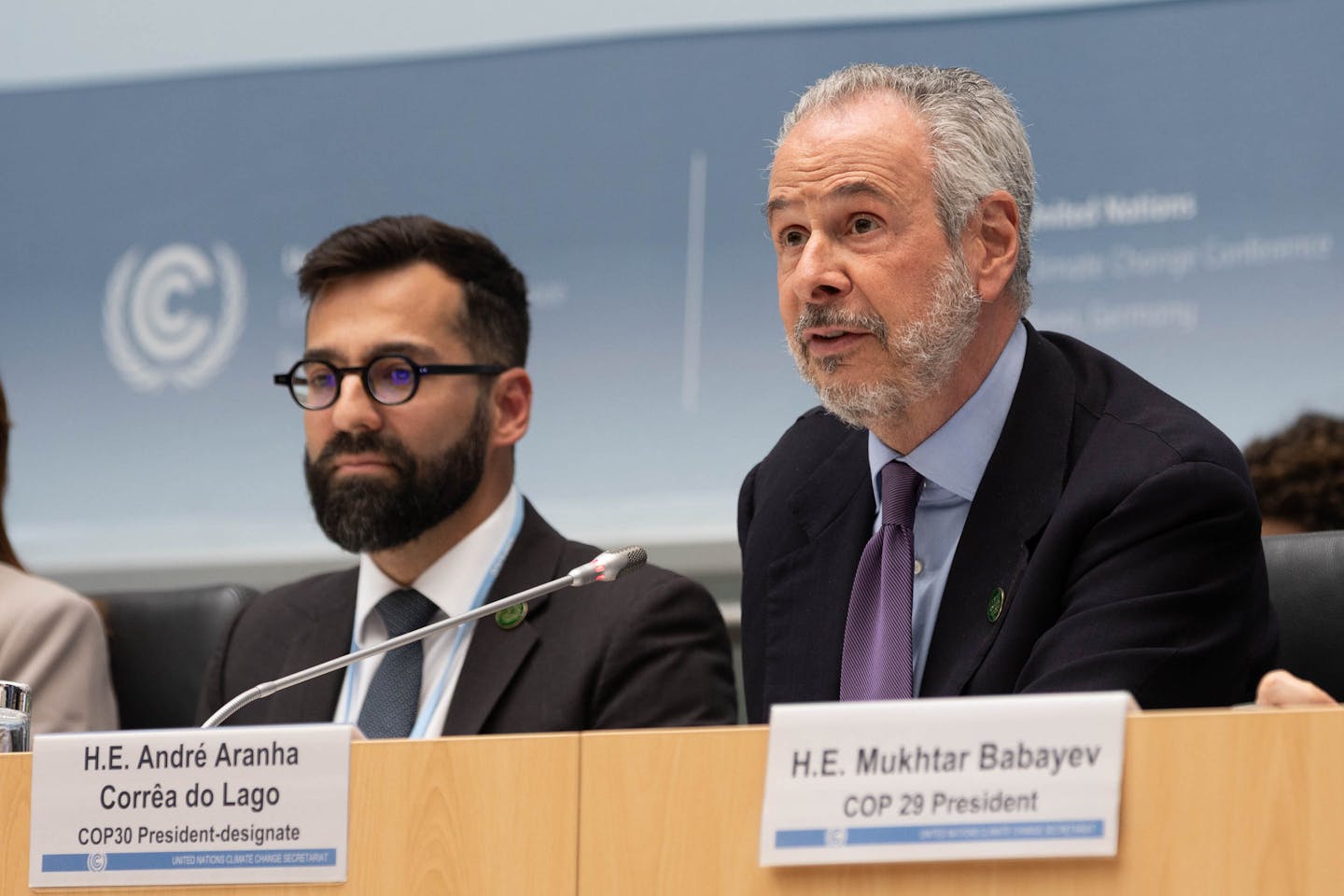
The COP presidencies of Azerbaijan and Brazil have introduced "The Baku to Belém Roadmap," aiming to mobilize US$1.3 trillion annually for climate finance in developing countries by 2035. The roadmap calls for a reformation of the global financial architecture to align with climate goals, responding to criticisms that the prior target of US$300 billion was inadequate. While the plan acknowledges issues like heavy debt burdens in developing nations and highlights accountability for top carbon emitters, critics argue it lacks concrete mechanisms for holding polluters responsible and fails to address the true financial needs for climate action. Success hinges on coordinated efforts among all financial actors.
Latin America | Financial services
COP29 and 30 presidencies release roadmap to deliver US$1.3 trillion in climate finance
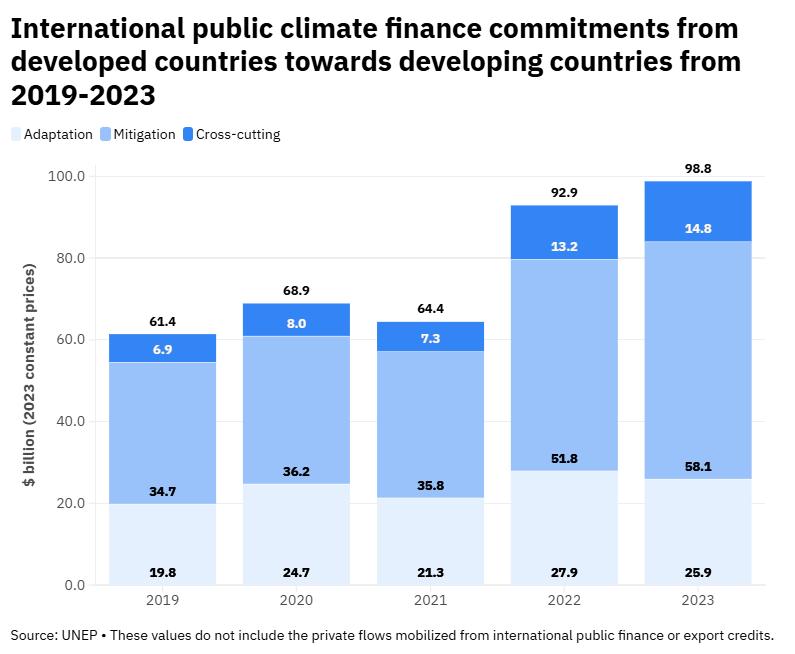
A report from the UNEP reveals a $310 billion annual gap in climate adaptation finance, with developed nations providing only $26 billion in 2023. The 2025 US climate disaster costs are projected to be the highest on record, already totaling $101.4 billion due to 14 billion-dollar events. Only 64 countries have submitted their latest Nationally Determined Contributions ahead of COP30, despite calls for accelerated emission reductions. Additionally, extreme heat-related deaths have surged by 63% since the 1990s.
Nigeria | Financial services
Climate adaptation finance 'running on empty', and other climate and nature news
The transition to a nature-positive economy can generate $10.1 trillion in value by 2030, offering resilience and new revenue streams for businesses. The World Economic Forum and Oliver Wyman identified 50 investible opportunities across 12 critical sectors, including agriculture and energy, categorized into five types: incremental efficiency improvements, deployable technologies, emerging innovations, ecosystem collaborations, and transformative investments. Despite the significant benefits, many companies still view nature-related investments as costs rather than growth drivers, highlighting a need for a shift in perception.
Financial services
Building a pipeline of 50 investible opportunities for a nature-positive economy

Encouraging advancements in forest restoration and resilience were highlighted ahead of COP30, with Brazil pledging $1 billion to the Tropical Forests Forever Facility and Mexico aiming to restore 30% of its degraded land as part of its National Restoration Plan. These initiatives underscore the recognition of forests' vital role in climate regulation and economic value, generating significant returns on investment. The discussions at recent climate forums emphasized collaboration among public, private sectors, and local communities to combat deforestation and promote sustainable landscape management as part of the UN Decade on Ecosystem Restoration.
Financial services
Ahead of COP30, a new era of forest restoration and resilience is taking root

The UN climate summit (Cop30) in Belém, Brazil highlights a critical divide in climate governance strategies: stability versus politicisation. Proponents of stability advocate for consistent long-term policies to guide emission reductions and attract business investment. In contrast, supporters of politicisation argue for activism and political conflict to compel significant policy changes and expose efforts by fossil fuel interests to undermine climate goals. Both approaches have merits and drawbacks, complicating climate strategies across different regions and sectors. These dynamics will influence discussions at Cop30 as nations navigate the balance between reporting, accountability, and political activism in addressing climate change.
Antarctica, Nigeria
Why even pro-climate action organisations may pull in different directions
COP30, scheduled for 10-21 November in Belém, Brazil, will gather 198 signatories of the UN Framework Convention on Climate Change to address critical climate issues. Key agenda items include revised Nationally Determined Contributions (NDCs 3.0), financing for resilience, and transforming food systems. Despite progress in private sector climate action, government policy ambition is lagging, widening the gap needed to meet the 1.5°C target. Currently, major economies' NDC submissions show insufficient progress, with the UN warning that a significant emissions reduction is essential to avoid catastrophic warming. COP30 aims to rejuvenate political will and propel the climate action necessary for economic stability and success.
Brazil, Nigeria
COP30 in Brazil: What is at stake for global collaboration on climate and nature?

Europe's cybersecurity heavily relies on the United States due to the dominance of US companies in the cybersecurity market and their provision of critical cyber threat intelligence (CTI). The US military also contributes to this ecosystem through intelligence-gathering operations. With American firms leading the market for cybersecurity applications and services, including antivirus software and CTI, Europe faces significant vulnerabilities, especially if US political priorities shift or support diminishes. There is an urgent need for European decision-makers to address these dependencies and enhance Europe's cybersecurity resilience.
Germany, Russian Federation | Financial services
Europe’s Cybersecurity Depends on the United States
COP30 is taking place amid significant geopolitical instability and declining confidence in multilateral governance. Located in Belém, Brazil, crucial for the Amazon's carbon sink, the summit faces logistical challenges and political fragmentation in climate action. Only a minority of countries have updated their Nationally Determined Contributions (NDCs) to lower greenhouse gas emissions. The competition among major players like Europe, China, and Brazil will be critical in shaping global climate diplomacy and determining the summit's effectiveness in renewing commitment to climate goals. Current NDCs reflect insufficient ambition, with global temperature projections indicating a potential increase of 2.5°C by 2100, far above the Paris Agreement targets.
Belgium, France, Nigeria | Financial services, Health
COP30: Multilateralism on Life Support