
Publications

INSIGHT REPORT

Pioneering the Future: Space

Technologies Poised to Revolutionize

Exploration and Economy by 2035

September 2026

FACTSHEETS

Pioneering the Future: Space

Technologies Poised to Revolutionize Exploration and Economy by 2035

June 2026

WHITE PAPER

Future of Space Law:

Operationalizing Space Governance

March 2026

REPORT

Clear Orbit, Secure Future:

 A Call to Action on Space Debris

Jan 2026

WHITE PAPER

The Future of Space Law

Insights from the ATS, UNCLOS, and ITU Frameworks

December 2025

WHITE PAPER

The Future of Space Law: 

The Evolving Dynamics of Air and Space Regulation

 September  2025

The Future Of Space Law

News

Centre for Space Futures, Novaspace and SpaceTech Gulf  Sign Agreement to Develop Global Space Capability Mapping Dashboard

Riyadh, Saudi Arabia , 23 Jun 2026|  Press Release

Clear Orbit, Secure Future: A Call to Action on Space Debris

Riyadh, Saudi Arabia, 26 Jan 2026 | Press Release

Centre for Space Futures Holds Workshop with Participation of 40 Global Experts

Riyadh, Saudi Arabia, 05 Dec 2025 | Press Release

Centre for Space Futures Releases White Paper on 'The Future of Space Law'

Riyadh, Saudi Arabia, 12 Sep 2025 | Press Release

The Board of Directors of the Centre for Space Futures Endorses Its Strategic Direction

Riyadh, Saudi Arabia, 26 May 2025 | Press Release

Saudi Space Agency to Launch the Centre for Space Futures with the World Economic Forum

Riyadh, Saudi Arabia, 29 April | Press Release

5 ways we can tackle growing risks from rocket bodies in orbit

Dec 09, 2025 | Economic Growth, Stories

Read More

Forum Agenda

Forum Videos

VIDEO

Press Conference: Centre for Space Futures in Riyadh

The World Economic Forum's Special Meeting, April 29, 2024

VIDEO

The Purpose of Astronauts at Davos 2024

World Economic Forum , March 9, 2024

VIDEO

PortWatch: Monitoring Trade Disruptions from Space

World Economic Forum , Dec 18, 2023

VIDEO

India's Moon Mission Triumph: Ambassador Ruchira Kamboj's Insights

World Economic Forum , Aug 23, 2023

VIDEO

Space Exploration is Back at Davos 2023

World Economic Forum , Feb 16, 2023

Forum Publications

Strategic Intelligence Insights

The "electrotech" revolution is transforming energy generation, usage, and transportation through renewables, electric vehicles, heat pumps, and batteries. Driven by physics, economics, and geopolitics, this shift highlights China's leadership while presenting opportunities for other nations. Electrotech technologies are significantly more efficient, with solar prices dropping by 99% since 1980, contrasting with stagnant fossil fuel prices. Furthermore, renewables offer energy sovereignty, potentially empowering many countries. The rapid adoption of solar and battery technologies is reshaping global energy dynamics, making electrotech a pivotal force in energy transition and security.
What is electrotech and what will it mean for geopolitics and energy security?

Cybersecurity has become a central element of national security due to the increasing complexity and dynamics of cyber threats. Successful nations will integrate cybersecurity within their national strategies and governance, recognizing its role in economic stability and sovereignty. The rise of advanced technologies, especially generative AI, has empowered both attackers and defenders, but significant challenges persist, such as workforce shortages and geopolitical tensions. Critical infrastructure is particularly vulnerable to attacks, which have disrupted essential services globally. Initiatives like the UAE's National Cybersecurity Strategy aim to enhance resilience through comprehensive governance and public-private partnerships. Effective cyber risk management requires elevated oversight and sustained investment across sectors.
Colombia, Russian Federation, Seychelles, Ukraine, United Kingdom | Financial services, ICT, Health, Education
Putting cybersecurity at the core of national security

Recognizing the diverse aspects of the night-time economy—beyond nightlife to include healthcare, logistics, and community services—enables cities to create inclusive policies that improve urban life. Night-time workers are vital, deserving equitable wages and safety. Although many cities overlook their night-time potential, over 80 have established night mayors or offices, reflecting a shift towards a 24-hour economy that supports resilience and inclusion. Effective strategies for safety and vibrant public spaces during the night rely on community engagement and thoughtful design rather than just increased policing. Night initiatives can foster social connections and accessibility, essential for thriving urban environments.
Africa, Latin America | Financial services, Health, Education
4 myths about the 24-hour economy and the new vision for thriving cities

Museums are shifting from traditional roles as artifact holders to innovation hubs connecting culture, technology, and sustainable development. Introducing a framework called Cultural Capital Financing can blend public funding with private investment, allowing museums to operate as impact enterprises. Examples like Tokyo’s teamLab exhibitions and Abu Dhabi’s Saadiyat Cultural District highlight the economic benefits of such transformations. Collaborative financing models, such as Public-Private-Philanthropic Partnerships, alongside initiatives like Percent-for-Art schemes, can help sustain cultural institutions while fostering local economies. Digital advancements further enhance accessibility and revenue generation, underpinning the need for supportive government policies in cultural finance.
Financial services, Education
Cultural capital financing: How museums can combine profit and social purpose
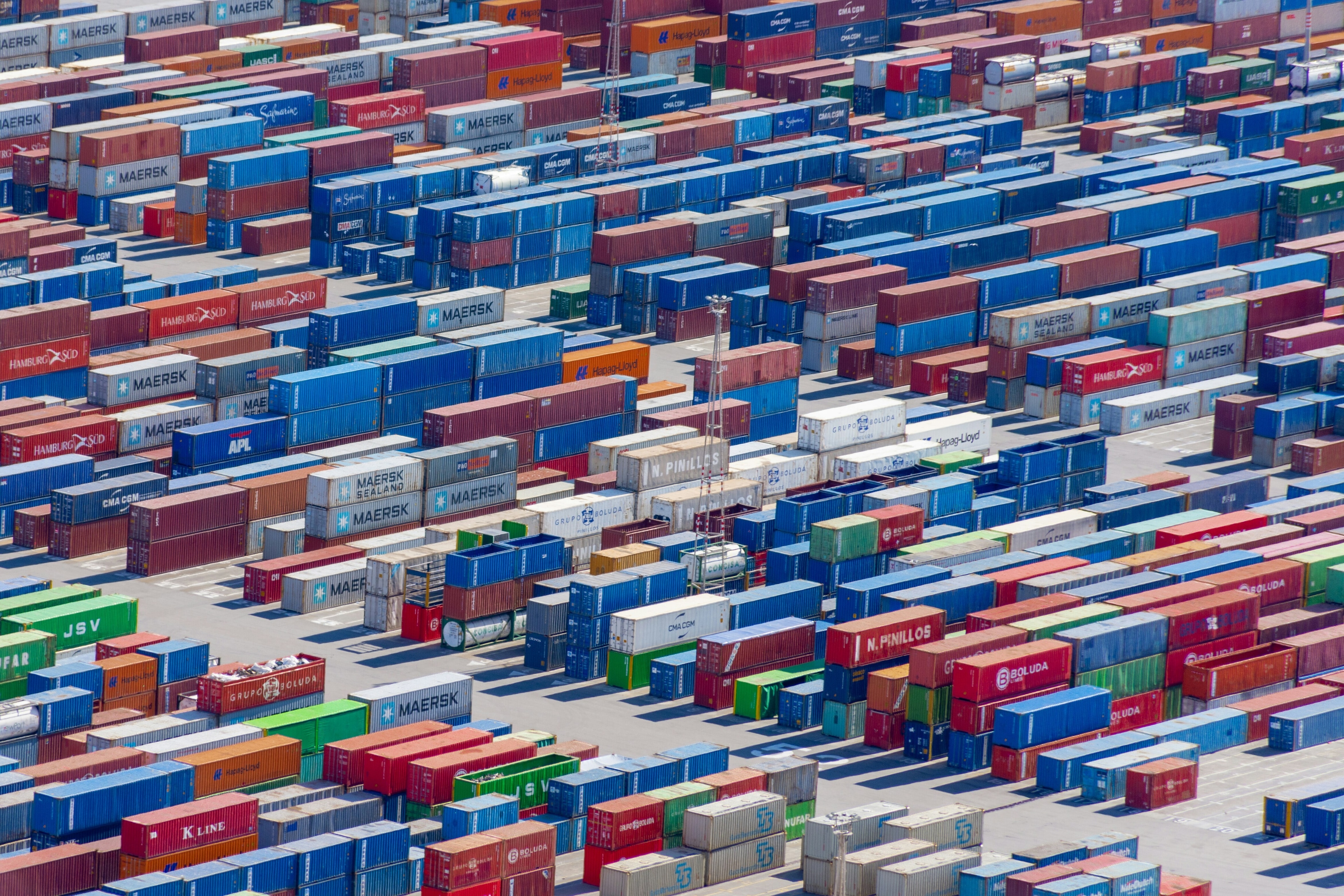
Geopolitical turbulence is reshaping global manufacturing and supply chains, necessitating strategies to enhance industrial competitiveness. Key lessons emphasize that dual supply and demand shocks characterize current disruptions. To build resilience, companies must defend their market positions by standardizing effective practices, optimize inventory management, and strengthen supplier relationships. De-risking operations involves prioritizing supplier resilience, actively exploring alternative products, and leveraging AI for data analysis and optimization. Forward-looking companies must proactively dismantle silos, deepen collaboration, and implement comprehensive risk management strategies to thrive in an uncertain landscape.
Belgium, Burkina Faso, Colombia, Germany, Indonesia, Japan, Jordan, Kenya, Mozambique, Pakistan, Peru, Philippines, Russian Federation, Saudi Arabia, Seychelles, Switzerland, Thailand, Ukraine, United Arab Emirates, United Kingdom | Financial services, ICT, Health, Education
3 steps to industrial competitiveness amidst geopolitical uncertainty
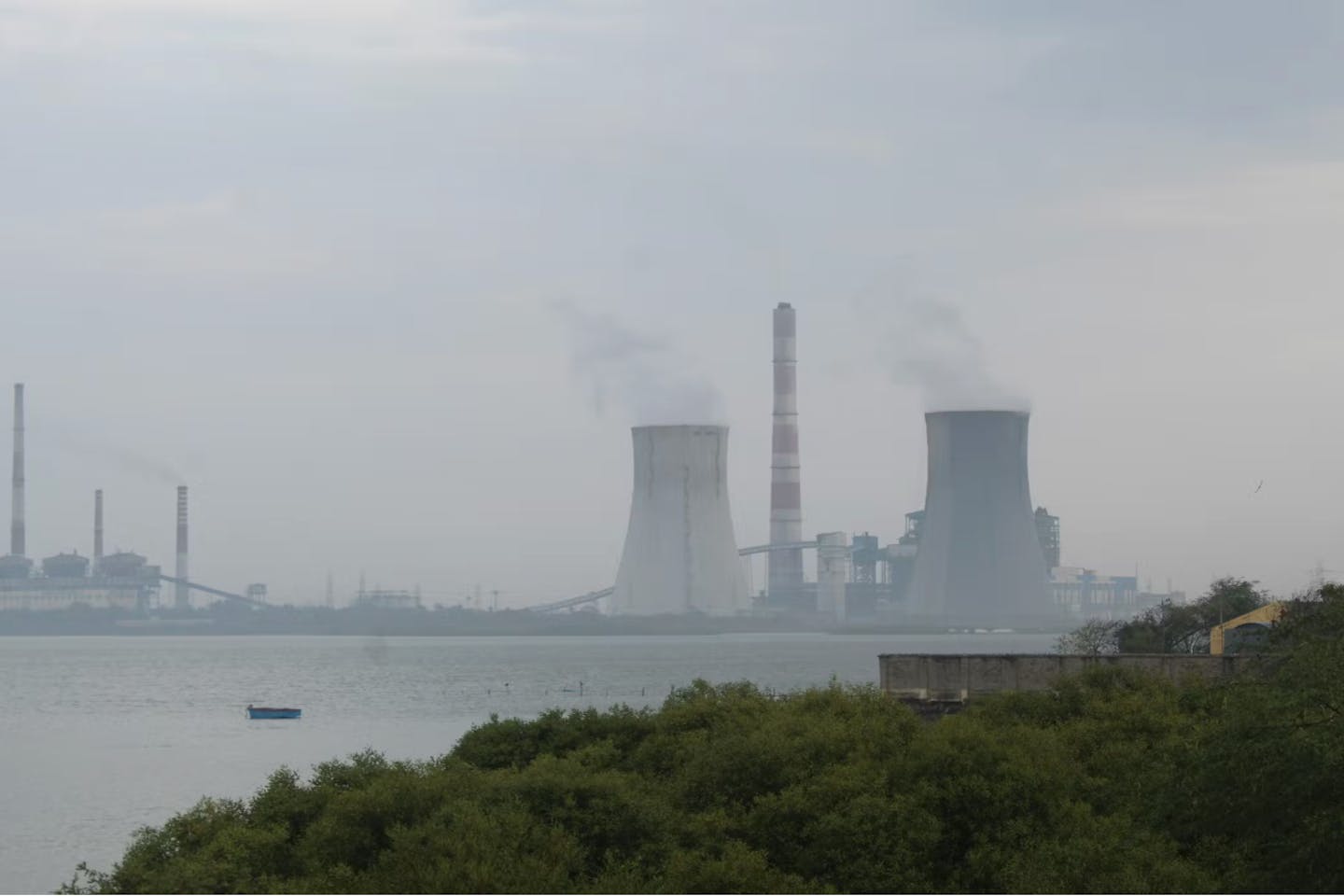
Asian financiers remain committed to climate goals despite perceived ESG backlash, with sustainable finance growing significantly. Eric Lim of UOB noted a 20% increase in their sustainable finance portfolio in 2025 while emphasizing a shift from net zero target-setting to practical decarbonization strategies. OCBC’s Mike Ng echoed this sentiment, highlighting that key markets continue to focus on sustainability investments. Both banks reaffirmed their long-term net zero commitments for 2050, alongside calls for a reassessment of decarbonization pathways in high-emission sectors. Overall, the sustainable finance landscape in Asia appears robust and focused on execution rather than mere vision-setting.
Indonesia, Singapore, Thailand | Financial services
ESG backlash? 'Huge' difference between headlines and reality in Asia: UOB sustainability chief
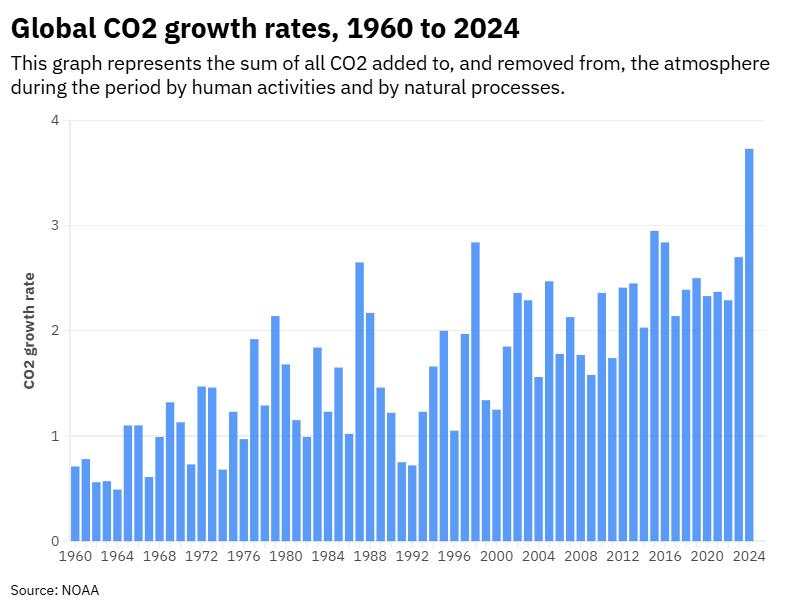
CO2 levels reached a record high in 2024, with the World Meteorological Organization reporting an annual increase of 3.5 ppm, attributed to human activities and wildfires. Nearly 4 in 5 of the world’s poor face climate hazards, with over 887 million directly affected. Global deforestation hit 8.1 million hectares in 2024, exceeding targets for halting forest loss. Meanwhile, a proposed deal to cut global shipping emissions was abandoned under U.S. pressure. In China, natural disasters have caused $30.47 billion in economic losses, while Australia’s tropical rainforests now release more carbon than they absorb.
CO2 levels hit new high in 2024, and other climate and nature news
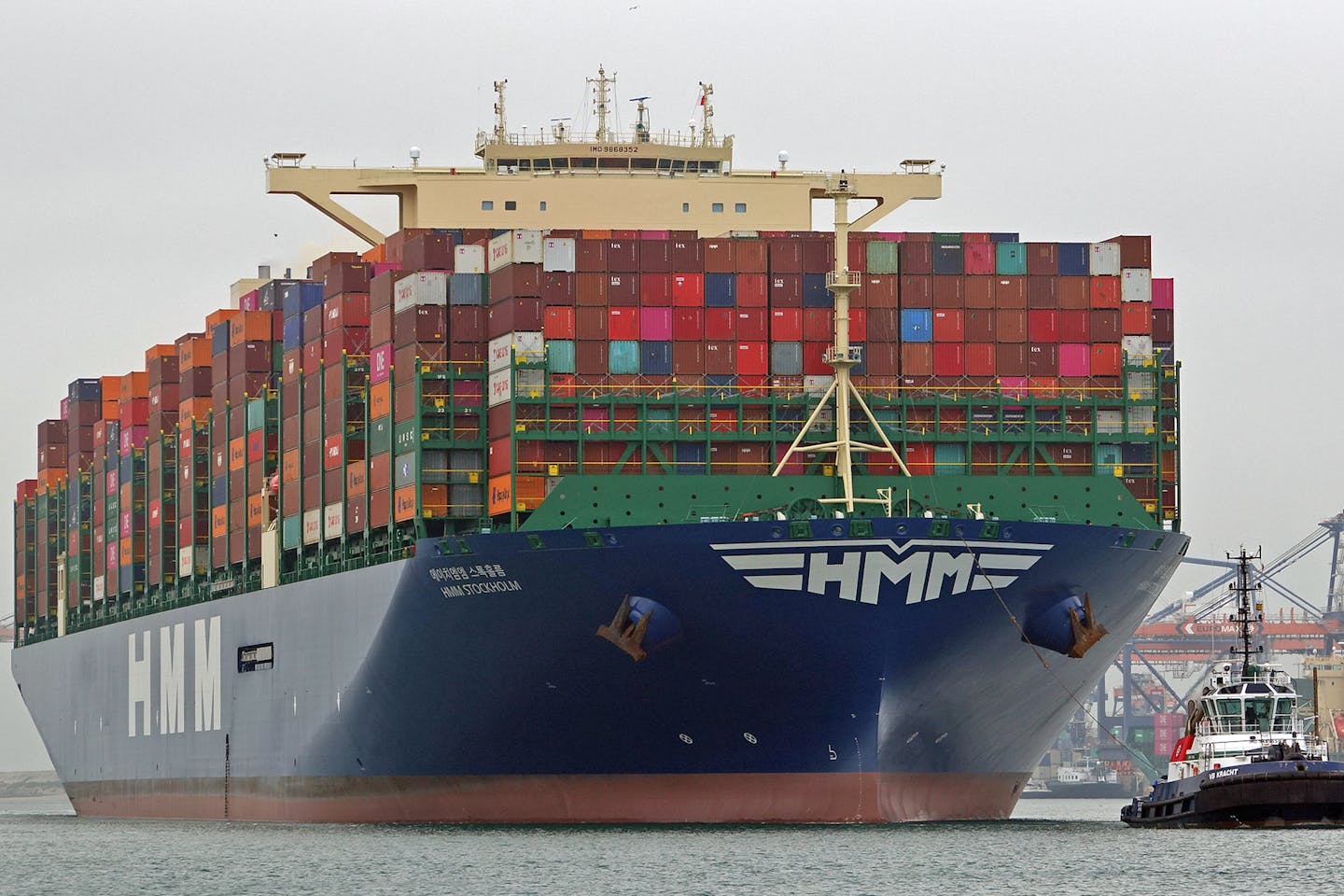
Asia’s major shipbuilding nations, including Japan and South Korea, are urged to lead global efforts for adopting carbon levy mechanisms to address greenhouse gas emissions in shipping, following a recent failed agreement at the International Maritime Organization. China, opposing the carbon levy, advocated for more flexible targets. South Korea aims for net zero shipping emissions by 2050 but did not take a strong stance during talks. Maritime companies in the region have set carbon-neutral goals but require regulatory clarity to drive investment in green technology. The delay is seen as a setback for progressing towards the maritime sector’s decarbonization.
Asia’s ship building countries called to lead adoption of maritime net zero targets, after global delay

The United States' withdrawal from climate commitments is causing a significant global slowdown in climate policy momentum, leading to doubts about meeting decarbonisation goals. A report indicates that supportive climate policies decreased by 7.5%, while regressive policies increased by 575%. The Trump administration's policies accounted for 70% of these reversals. Meanwhile, confidence in hydrogen as a decarbonisation solution is eroding, with many projects canceled due to economic viability concerns and insufficient policy support. In contrast, some Asian countries, like Hong Kong, are making progress with new green taxonomies.
Belgium, Burkina Faso, Colombia, Indonesia, Japan, Nigeria, Philippines, Thailand, Trinidad and Tobago | Financial services, Health
As COP30 approaches, US policy reversals are slowing global climate momentum
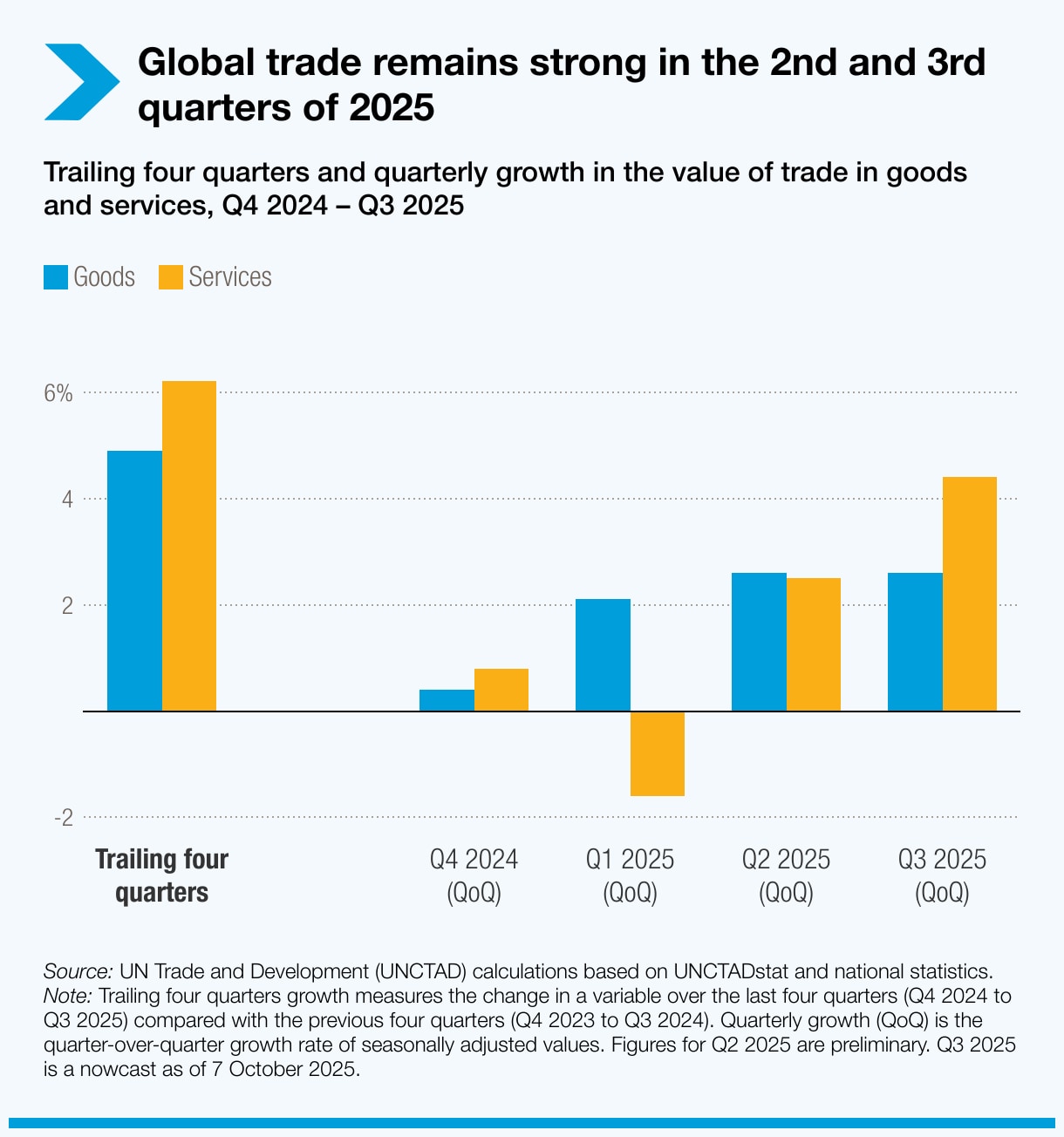
Vulnerabilities in global trade, particularly US-China tensions, have reignited market volatility, impacting financial stability as leaders converge for IMF and World Bank meetings. Despite concerns over geopolitical risks and potential stock market declines, trade data indicates resilience, with a reported $500 billion expansion in the first half of the year and a growth forecast of 2.4% for merchandise trade in 2025, mainly driven by manufacturing and technology sectors. However, both UNCTAD and WTO experts caution against complacency, highlighting ongoing risks and the need for nations to adapt.
Argentina, Australia, Belgium, Brazil, Burkina Faso, Canada, Djibouti, Ethiopia, France, Germany, Guatemala, Honduras, Indonesia, Italy, Jamaica, Japan, Jordan, Kenya, Mexico, Mozambique, Namibia, Pakistan, Peru, Philippines, Russian Federation, Seychelles, South Africa, Sudan, Switzerland, Taiwan, China, Tanzania, Thailand, Trinidad and Tobago, Tunisia, Türkiye, Ukraine, United Arab Emirates, United Kingdom | Financial services, ICT
Trade and policy pressures test market stability, and other international trade stories to know this month
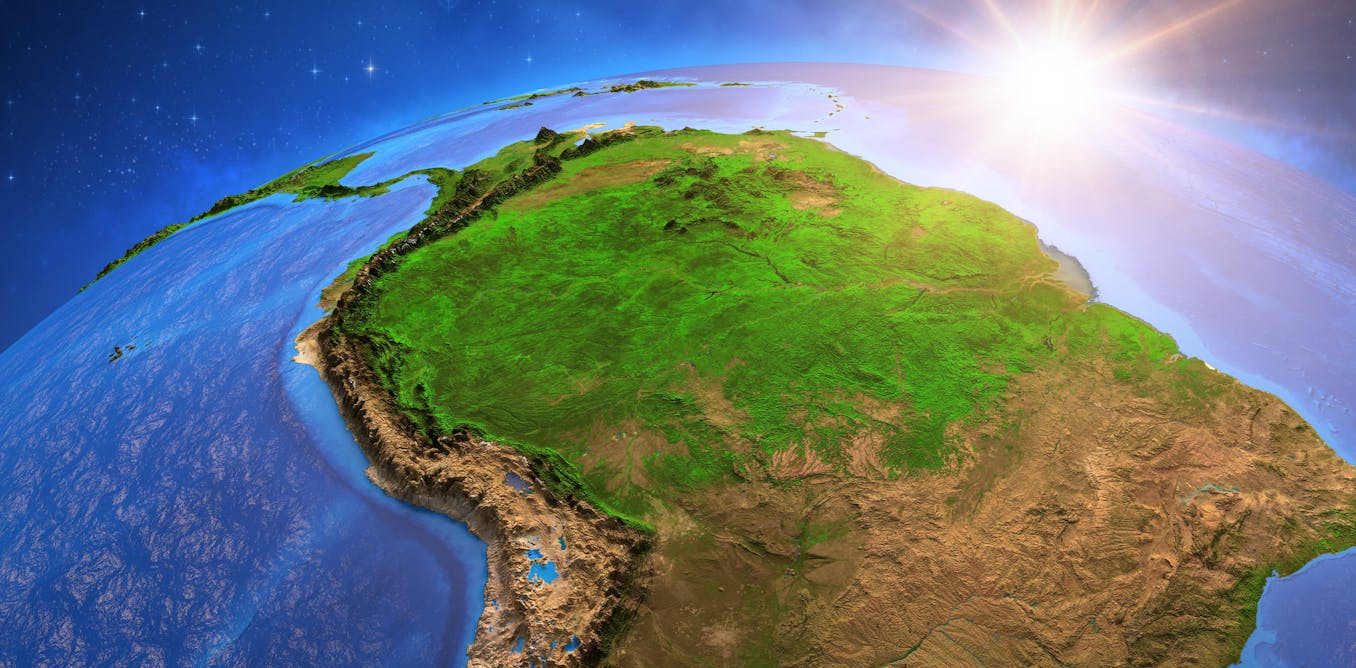
Atmospheric carbon dioxide (CO₂) surged by an unprecedented 3.73ppm in 2024, highlighting a significant struggle of the Amazon rainforest to absorb carbon effectively. Satellite data, primarily from NASA's OCO-2, reveals a stark decrease in the Amazon's CO₂ absorption, with warmer temperatures and extensive drought likely exacerbating this issue. Comparatively, other regions like western Europe and central Canada have shown increased carbon absorption. This decline in the Amazon's efficiency poses serious implications for global carbon levels, particularly as the satellite collecting this vital data may soon be deactivated.
Antarctica
Record-breaking CO₂ rise shows the Amazon is faltering — yet the satellite that spotted this may soon be shut down

New Zealand's mussel industry exemplifies how high-value sectors can collaborate with the environment to regenerate ocean health. A shift from sustainability to a regenerative blue economy is essential, ensuring that all ocean-dependent sectors enhance the ocean's capacity to support life. This economy focuses on ecological recovery and long-term profitability. Strategies include integrating regeneration into ocean planning, transitioning from harmful practices, and exploring new sectors like offshore renewables and aquaculture. Regulatory frameworks are evolving, mandating measurable improvement in nature and fostering a governance shift towards restoration, making it a legal and economic necessity.
Africa | Financial services, ICT
How to build ocean industries that heal, not harm

Strategic foresight is crucial for the Gulf Cooperation Council (GCC) states to adapt to the global energy transition and enhance resilience amid decreasing oil and gas exports. Employing foresight methodologies, such as the "Futures Triangle" and "Three Horizons" frameworks, can help policymakers navigate economic shifts and environmental challenges. The GCC is transitioning from a fossil fuel-dependent economy to a low-carbon future, emphasizing innovations like carbon capture and hydrogen technologies. Successful examples, like Saudi Arabia's Jubail CCS Hub, showcase how foresight can inform sustainable investments and long-term visions for climate resilience.
Bahrain, Indonesia, Jordan, Kenya, Kuwait, Mozambique, Oman, Pakistan, Qatar, Saudi Arabia, Seychelles, United Arab Emirates, United Kingdom
How strategic foresight can future-proof the Gulf’s energy transition

The exploration of the Moon is set to intensify, with the US, China, and other nations planning to establish permanent bases, particularly near the resource-rich south pole. This push raises concerns over potential conflicts due to limited resources and landing sites. Cooperation can be fostered through international treaties, such as the 1967 Outer Space Treaty and the less widely adopted Moon Agreement, which emphasize non-appropriation of resources. The Artemis Accords propose guidelines for responsible resource extraction and the use of safety zones. As lunar missions become imminent, the need for collaborative frameworks is critical to prevent conflict.
How spacefaring nations could avoid conflict on the Moon

Artificial intelligence (AI) is transforming efforts to protect and restore nature by enhancing risk detection, wildlife monitoring, ecosystem modeling, and community engagement. Key applications include early detection of environmental risks like wildfires through sensor networks and predictive modeling, as exemplified by TELUS and Pano AI. AI aids biodiversity monitoring via machine learning and cameras, as seen in WWF's projects in Kenya and initiatives in the Amazon. Additionally, AI supports ecosystem restoration planning by simulating outcomes based on various datasets. Indigenous knowledge integration further enhances climate adaptation strategies. Emphasizing transparency and equity is essential for maximizing AI's benefits for both communities and ecosystems.
Education
AI is helping these organizations to protect and restore nature

Climate risk assessment has become integral to business operations, requiring a holistic approach that encompasses all sectors of a company. Businesses must actively measure, mitigate, and manage their climate impact while addressing unique organizational risks. The implementation of emissions-based tariffs and disclosure mandates emphasizes the necessity for corporations to engage across all departments to develop comprehensive climate strategies. Effective management of climate risks involves adapting to regulatory changes and trade policies, which may penalize carbon-intensive practices. Companies that swiftly adopt climate-informed strategies will enhance their profitability and market standing while reducing legal liabilities and reputational risks.
Nigeria | Financial services, Health
Beyond net zero: Redefining climate accountability

AI is projected to displace 92 million jobs while creating 170 million new roles, emphasizing the need for a workforce ready for an AI-driven economy. Education must adopt a transdisciplinary systems mindset to equip graduates with relevant skills, focusing on creativity, contextual reasoning, and ethical judgment. Historical trends show that disruptive technologies replace certain jobs but also generate new opportunities. Future roles will require expertise in AI systems, ethics, collaboration design, and physical AI applications. A collaborative approach across disciplines will enhance innovation and benefit society, necessitating a curriculum that integrates various scientific and technical fields.
ICT, Education
How education can transform disruptive AI advances into workforce opportunities

Water's value extends far beyond its market price, encompassing vital health, productivity, and economic growth aspects. Chronic underinvestment and fragmented financing hinder water systems’ potential, with indirect benefits estimated at seven times greater than direct uses. Effective management and equitable access are crucial, especially in agriculture, which uses 70% of global freshwater. Current financing models are inadequate, with only 3.1% of development assistance targeting water. Emphasizing water’s multidimensional worth is essential for overcoming investment barriers, improving resilience, and promoting sustainability. Frameworks like the Global Common Good Framework and Total Economic Valuation aid in recognizing and applying this value effectively.
Financial services, Health
What is a glass of water worth? How financing innovation can boost global water resilience

Transport generated 8.3 GtCO₂e in 2023, accounting for 16% of global greenhouse gas emissions, with a 78% increase since 1990. Emissions attributed to transport should consider production-based accounts, revealing that demand from sectors like manufacturing largely drives them. Almost two-thirds of transport emissions arise from other sectors, especially manufacturing (32%) and services (32%). Asia and the Pacific are the largest contributors, producing 48% of global emissions, exacerbated by energy-intensive manufacturing and rapid urbanization. Effective decarbonization strategies must target demand drivers across all sectors.
Argentina, Belgium, Burkina Faso, Burundi, Canada, Colombia, Djibouti, Dominican Republic, Germany, Ghana, India, Indonesia, Italy, Jamaica, Japan, Jordan, Kenya, Mozambique, Pakistan, Peru, Philippines, Russian Federation, Rwanda, Saudi Arabia, Seychelles, South Africa, Sri Lanka, Thailand, Trinidad and Tobago, Ukraine, United Arab Emirates, United Kingdom | Financial services, ICT
Tracing the True Drivers of Transport Emissions
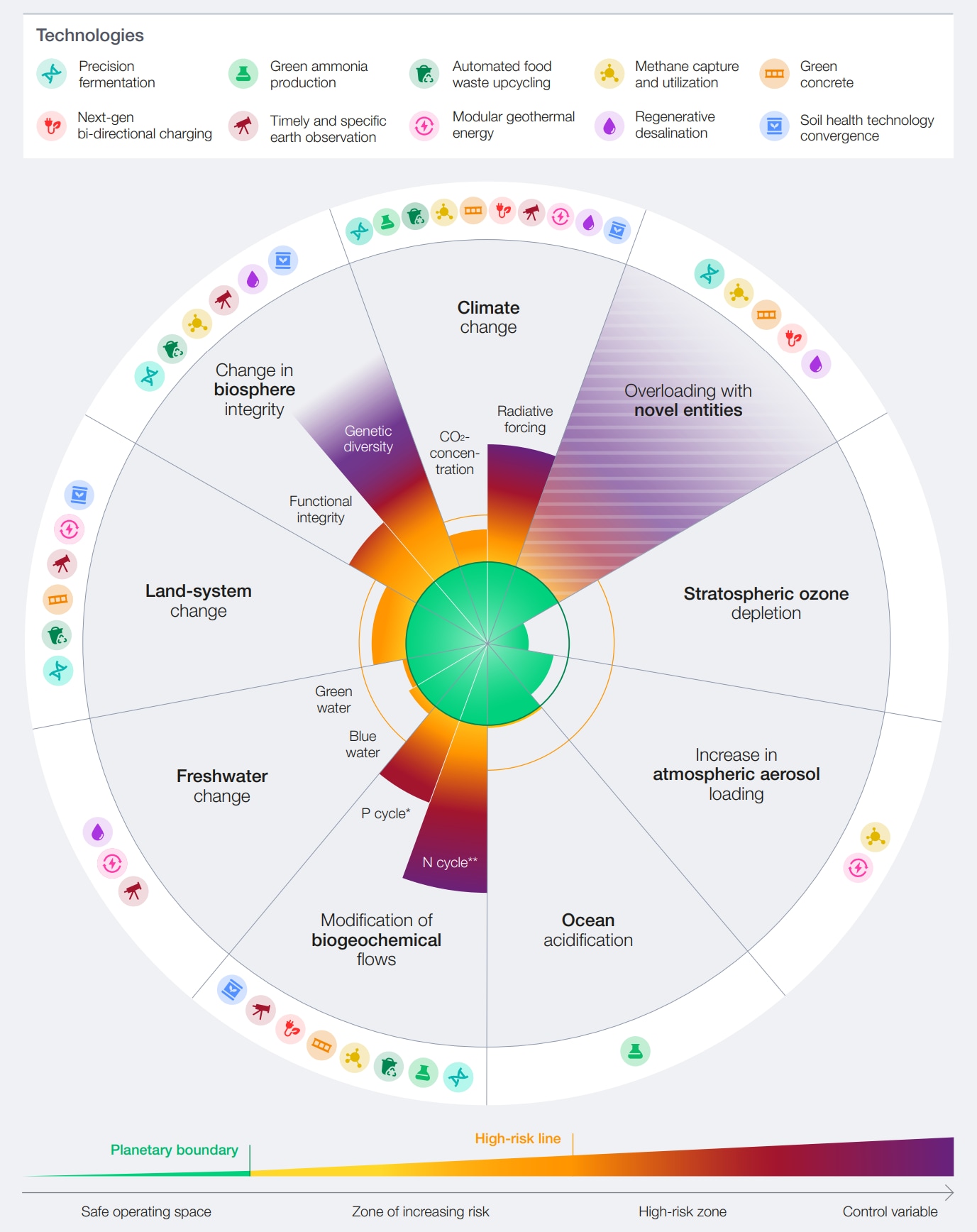
COP30 in Brazil represents a pivotal moment for advancing global climate cooperation, highlighting a shift toward viewing climate adaptation as a profitable investment rather than a burden. Recent research indicates that strategic investments in climate resilience can yield significant economic returns, with studies showing benefits of $2 to $19 for every dollar invested. The urgency of the climate crisis is evident, with increasing temperatures and economic impacts from climate-related disasters costing trillions. Business leaders are encouraged to embrace this new mindset and collaborate on actionable strategies to foster a low-carbon economy while ensuring robust profitability and resilience.
Financial services, Health
Climate and nature action is changing: How new mindsets and solutions will help