
Publications

INSIGHT REPORT

Pioneering the Future: Space

Technologies Poised to Revolutionize

Exploration and Economy by 2035

September 2026

FACTSHEETS

Pioneering the Future: Space

Technologies Poised to Revolutionize Exploration and Economy by 2035

June 2026

WHITE PAPER

Future of Space Law:

Operationalizing Space Governance

March 2026

REPORT

Clear Orbit, Secure Future:

 A Call to Action on Space Debris

Jan 2026

WHITE PAPER

The Future of Space Law

Insights from the ATS, UNCLOS, and ITU Frameworks

December 2025

WHITE PAPER

The Future of Space Law: 

The Evolving Dynamics of Air and Space Regulation

 September  2025

The Future Of Space Law

News

Centre for Space Futures, Novaspace and SpaceTech Gulf  Sign Agreement to Develop Global Space Capability Mapping Dashboard

Riyadh, Saudi Arabia , 23 Jun 2026|  Press Release

Clear Orbit, Secure Future: A Call to Action on Space Debris

Riyadh, Saudi Arabia, 26 Jan 2026 | Press Release

Centre for Space Futures Holds Workshop with Participation of 40 Global Experts

Riyadh, Saudi Arabia, 05 Dec 2025 | Press Release

Centre for Space Futures Releases White Paper on 'The Future of Space Law'

Riyadh, Saudi Arabia, 12 Sep 2025 | Press Release

The Board of Directors of the Centre for Space Futures Endorses Its Strategic Direction

Riyadh, Saudi Arabia, 26 May 2025 | Press Release

Saudi Space Agency to Launch the Centre for Space Futures with the World Economic Forum

Riyadh, Saudi Arabia, 29 April | Press Release

5 ways we can tackle growing risks from rocket bodies in orbit

Dec 09, 2025 | Economic Growth, Stories

Read More

Forum Agenda

Forum Videos

VIDEO

Press Conference: Centre for Space Futures in Riyadh

The World Economic Forum's Special Meeting, April 29, 2024

VIDEO

The Purpose of Astronauts at Davos 2024

World Economic Forum , March 9, 2024

VIDEO

PortWatch: Monitoring Trade Disruptions from Space

World Economic Forum , Dec 18, 2023

VIDEO

India's Moon Mission Triumph: Ambassador Ruchira Kamboj's Insights

World Economic Forum , Aug 23, 2023

VIDEO

Space Exploration is Back at Davos 2023

World Economic Forum , Feb 16, 2023

Forum Publications

Strategic Intelligence Insights

Corporate foresight is essential for leaders to navigate uncertainty and future-proof organizations. A global study found that while 81% of companies utilize foresight for operational purposes, a gap exists in integrating it into strategic planning, with only 43% applying it for long-term strategies. Leadership engagement is mixed, with a conservative approach dominating strategic decision-making. Most firms focus on customer intelligence and innovation but overlook the potential of external foresight to shape industry narratives. Leaders should elevate foresight to a strategic level and foster a culture of exploration to fully leverage its capabilities for competitive advantage.
Education
Why companies must change their approach to corporate foresight

Local and regional governments are crucial in shaping place-based strategies for regional development. However, limited data availability hinders the systematic understanding of their priorities. This paper presents a method utilizing web mining, natural language processing, and machine learning to analyze local governance activities. By web scraping German county and municipality websites, a dataset is created that reveals diverse government functions and strategies. Topic modeling identifies 205 topics, focusing on 30 relevant ones such as Urban Development, Climate Protection, and Business Support, highlighting variations in local governance priorities and their discursive framing across regions. The aggregated dataset is made available online.
Denmark, Germany, Indonesia, Kenya, Sweden, Tanzania, United Kingdom | Financial services, Education, Health
Mapping Local Government Priorities: A Web-Mining Approach for Regional Research

South Asia's youth are transforming the region’s growth narrative by addressing pressing challenges such as unemployment and climate change. Highlighted by young changemakers like Sunita Dangol, who rose from humble beginnings to political leadership, this demographic is increasingly stepping into roles across various sectors. Initiatives such as Project Accelerate provide essential skills training for job readiness, impacting over 230,000 youths, while environmentally focused projects like Treelionaire and ClimaSynth foster climate resilience and education. This surge in youth leadership is essential for sustainable growth and stability in the region.
India | Education, Health, ICT
From politics to innovation: how South Asia’s youth is rewriting its growth story

Asia Pacific has experienced significant health advancements, yet faces challenges due to global pressures and reduced national development spending. Leaders stress the necessity of new partnerships among governments, private sectors, and philanthropy to bolster self-reliance in health services. WHO's Dr. Tedros Ghebreyesus advocates for philanthropists to help countries build capacities rather than depend on aid. Initiatives like the Health for Human Potential Community aim to mobilize over $100 million for health improvement projects in Indonesia, the Philippines, and Vietnam by 2030. Philanthropy in Asia is encouraged to focus on effective interventions, with a call for a revolution in food and nutrition systems to address underlying issues affecting health and productivity.
Africa, ASEAN | Education, Health
Philanthropy’s role in defining moment for health stewardship in Asia – helping countries build self-reliance
Predictive analytics, leveraging machine learning on large datasets, is essential for sustainable city planning, enabling cities to anticipate and manage traffic congestion, crime, and flood risks proactively. The rise of Digital Twins facilitates real-time governance, allowing cities like Singapore and Amsterdam to optimize infrastructure management across various sectors. Integrating socio-demographic data into geospatial models aids in addressing urban vulnerability, as evidenced by equitable cooling infrastructure distribution in Indian cities. Additionally, participatory digital platforms and GIS tools enhance community involvement, fostering more inclusive urban design and responsive policymaking.
Health, Education
Data Analytics in Sustainable City Planning

GCC governments are prioritizing youth empowerment, recognizing that over 50% of their populations were under 25 in 2021. They are implementing youth development strategies focused on education, training, and leadership. Initiatives like Bahrain's National Strategy for Youth Empowerment and Saudi Arabia's Youth Development Strategy aim to equip young people with necessary skills and opportunities. Significant investments are made in education, with digital transformation enhancing learning accessibility. Youth-led programs are fostering entrepreneurship and leadership, enabling young people to drive positive societal change and prepare for future job markets.
Bahrain, Kuwait, Oman, Qatar, Saudi Arabia, United Arab Emirates | Education
How the GCC is giving young people a central role in their future

Cities are facing challenges in fostering sustainable behaviors among residents, primarily due to a gap between policy intentions and community actions. The Sustainable Urban Behaviour (SUB) framework addresses this by integrating behavioral science with urban sustainability, emphasizing that behavior change should be viewed as a systems challenge rather than individual responsibility. Sustainable choices can be fostered by designing urban environments that make these options the easiest and most socially rewarded. Successful examples from Amsterdam, Singapore, and Medellín illustrate how comprehensive, community-centered strategies can transform urban spaces and promote active stewardship of the environment.
Sustainable Urban Behaviour: the missing piece for nature-positive transformation in cities
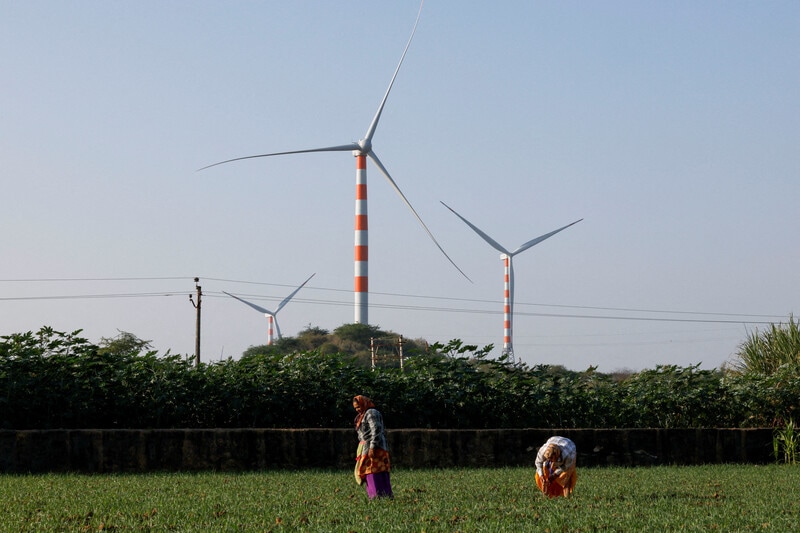
India's pathway to achieving net-zero emissions by 2070 necessitates a green transition that is low-carbon, inclusive, and equitable, particularly affecting regions reliant on coal and carbon-intensive industries. Financing this "just transition" requires aligning policies and capital flows with socioeconomic needs, promoting social equity alongside decarbonization efforts. Key measures include skill development and support for affected communities, with an emphasis on integrating diverse financial instruments like sovereign green bonds and concessional loans. Effective implementation hinges on enhanced institutional coordination, targeted training, and robust regulatory frameworks to foster a sustainable and inclusive economic future.
India, Indonesia | Financial services
How to build India's just transition ecosystem and finance an inclusive future

The energy demands of AI technology are escalating, raising sustainability concerns. To address this issue, harnessing technological convergence can transform AI from an energy burden into a greener solution. Advances in AI can optimize smart grid management, enhancing the reliability of energy distribution and integrating renewable sources effectively. Additionally, AI accelerates breakthroughs in materials science for clean energy applications and supports carbon capture initiatives through real-time monitoring. By merging AI with innovative industrial technologies, the energy consumption associated with AI can be minimized, ensuring its growth is sustainable and beneficial for the planet.
Why we must harness technological convergence for a greener AI energy future

Ultra-fast delivery is rapidly growing in urban areas but is outpacing existing infrastructure, raising concerns about sustainability, congestion, and emissions. Cities need standardized frameworks for shared investment and data management to address these challenges. Regulations are being implemented, such as low-emission zones and restrictions on polluting vehicles, but often result in fragmentation. Successful models, like Amsterdam's zero-emission zones, highlight the importance of clear rules. Collaboration between cities and delivery companies, along with enhanced data sharing, is essential for creating cleaner, more efficient urban logistics systems.
Sweden, United Arab Emirates | Financial services, Health, Education, ICT
What will it take to make ultra-fast delivery work for cities?

Natural disasters resulted in global economic losses of $162 billion in the first half of 2025, with insured losses totaling $100 billion, primarily in the US. The US recorded its costliest first half on record, accounting for $126 billion, driven largely by wildfires and severe storms. The proportion of uninsured losses dropped to a record low of 38%, highlighting improvements in the US insurance market. However, significant protection gaps remain in low-income countries. Experts emphasize the necessity for enhanced insurance measures and risk mitigation strategies globally, particularly in regions vulnerable to climate change impacts.
Financial services, ICT, Health, Education
Natural disasters have cost us $162 billion this year. Insurance covered most of it.

Technology has played a significant role in the rise of overtourism, transforming travel through the internet and social media, which blur the lines between locals and tourists and elevate previously little-known destinations. While historical transportation advancements drove mass tourism, current effects are more subtle, with digital nomadism and online platforms like Airbnb reshaping travel habits. AI may offer solutions, such as creating personalized travel experiences and managing tourist flow, but its overall impact on tourism remains uncertain. Ultimately, factors like climate change and economic pressures may weigh heavier on future travel patterns than technology alone.
Education
Technology has fuelled overtourism – now it could also help to stem the tide

The UK government plans to prohibit public sector organizations from paying ransoms to cyber criminals to deter ransomware attacks and protect critical services. Compliance will be enforced through audits and penalties, while private firms must notify authorities of ransom payment intentions. Meanwhile, a cyberattack on Saint Paul, USA, prompted a state of emergency declaration and the involvement of the Minnesota National Guard for recovery efforts. Additional cybersecurity developments include pro-Ukrainian hackers targeting Russia's Aeroflot, heightened corporate security measures in the US, and ongoing investigations into a pro-Russian hacking group in Europe.
Financial services, Education, ICT
UK to ban ransom payments to cyber criminals, and other cybersecurity news

The investment opportunity in climate adaptation solutions is projected to grow from $2 trillion today to $9 trillion by 2050, driven by escalating risks from climate change. Private investors play a crucial role in this sector, which is often overlooked due to a focus on decarbonization. A partnership analysis identified over 1,400 potential solutions, narrowing them to 21 critical products. The estimated annual revenue for these solutions could increase from $1 trillion to $4 trillion by 2050, spurred by climate-induced demand. Key areas for investment include weather intelligence and wind-resistant building materials, which are expected to see significant growth.
Sizing the $9 trillion climate adaptation investment opportunity

Mastering circular economy models and artificial intelligence (AI) by 2030 is essential for business competitiveness. Traditional linear practices are becoming unsustainable; companies must adopt circular practices to avoid high costs, declining revenues, and customer distrust. Circularity reduces raw material risk and improves profitability through methods like repair and product-as-a-service models. AI is pivotal in optimizing supply chains, enhancing product lifecycles, and managing complex circular ecosystems. Those leveraging both circularity and AI will outperform competitors, as they can efficiently adapt to market changes and meet increasing expectations from regulators, customers, and investors.
ICT, Education
Why you must master the circular economy and AI by 2030 to stay competitive
Global financial markets show resilience at the mid-year mark, with M&A activity reaching a peak of $2.6 trillion, a 28% increase in value despite fewer deals. The US dominates the M&A landscape, accounting for over 50% of global activity. Securities lending revenues have also surged by 53% year-over-year, reflecting strong investor confidence amid economic uncertainties. Concurrently, the White House plans an executive order to address political discrimination in banking services. In other news, significant challenges persist for large accounting firms in adopting AI, and European pharmaceuticals face declines due to tariff threats.
United Arab Emirates | Financial services
Global market resilience at the mid-year mark, and other finance news to know

Renewables, particularly wind and solar, are set to become the world's leading power source by 2026, driven by significant growth that will see output rise from over 4,000 TWh in 2024 to more than 6,000 TWh. They are expected to fulfill over 90% of the increase in global electricity demand, while coal generation declines, particularly in China and the EU. By 2026, renewables are projected to represent 36% of global power supply, surpassing coal's 32%, marking coal's lowest share in a century. The transition occurs despite an anticipated surge in global electricity demand due to industrial growth and electrification trends.
IEA: Renewables will be world’s top power source ‘by 2026’

Saudi Arabia is strategically increasing its engagement in Africa, moving away from ideological religious outreach towards a focus on infrastructure and investment. As a latecomer to the continent, the Kingdom aims to diversify its economy and enhance its global influence amidst shifting geopolitical dynamics. Key areas of focus include securing critical minerals essential for future industries, advancing agricultural partnerships for food security, and promoting sustainability. This strategy is driven by the need for economic reform at home and Africa’s untapped markets, with a view to establishing long-term, sustainable relationships rather than short-term gains.
Burkina Faso, Egypt, Eswatini, Ethiopia, Ghana, India, Kenya, Lesotho, Mauritania, Namibia, Oman, Pakistan, Rwanda, Saudi Arabia, Senegal, South Africa, Sudan, Sweden, Tanzania, Tunisia, United Arab Emirates
Saudi Arabia in Africa: the Kingdom courts the Continent

Nuclear power is seeing a revival as around 70 reactors are under construction in 15 countries due to the demand for secure, low-emission energy. Currently, about 440 reactors operate globally, generating 9% of the world's electricity, with significant contributions from France, Ukraine, and Hungary. Countries are reversing prior decisions to phase out nuclear, with investments from tech firms and commitments by over 20 nations to triple global capacity by 2050. Emerging economies, particularly China, lead in new reactor construction, highlighting a shift towards nuclear as a key solution for rising energy demands and climate challenges.
Where the world nuclear revival is happening

Global negotiations for a plastics treaty in Geneva seek to address the entire life cycle of plastics, from production to disposal. Effective action requires partnerships that translate commitments into real-world impacts, highlighted by initiatives like the Global Plastic Action Partnership (GPAP), which fosters collaboration across 25 countries. Inclusion of marginalized voices affected by plastic pollution is essential for equitable solutions, driven by programs that recognize local innovators. Switzerland plays a pivotal role in shaping negotiations, advocating for comprehensive measures to reduce harmful plastics while ensuring equitable resources for all countries to meet treaty obligations effectively.
Sweden
Why a global plastics treaty needs to move beyond negotiations to inclusive action