Publications

INSIGHT REPORT

Pioneering the Future: Space

Technologies Poised to Revolutionize

Exploration and Economy by 2035

September 2026

FACTSHEETS

Pioneering the Future: Space

Technologies Poised to Revolutionize Exploration and Economy by 2035

June 2026

WHITE PAPER

Future of Space Law:

Operationalizing Space Governance

March 2026

REPORT

Clear Orbit, Secure Future:

 A Call to Action on Space Debris

Jan 2026

WHITE PAPER

The Future of Space Law

Insights from the ATS, UNCLOS, and ITU Frameworks

December 2025

WHITE PAPER

The Future of Space Law: 

The Evolving Dynamics of Air and Space Regulation

 September  2025

The Future Of Space Law

News

Centre for Space Futures, Novaspace and SpaceTech Gulf  Sign Agreement to Develop Global Space Capability Mapping Dashboard

Riyadh, Saudi Arabia , 23 Jun 2026|  Press Release

Clear Orbit, Secure Future: A Call to Action on Space Debris

Riyadh, Saudi Arabia, 26 Jan 2026 | Press Release

Centre for Space Futures Holds Workshop with Participation of 40 Global Experts

Riyadh, Saudi Arabia, 05 Dec 2025 | Press Release

Centre for Space Futures Releases White Paper on 'The Future of Space Law'

Riyadh, Saudi Arabia, 12 Sep 2025 | Press Release

The Board of Directors of the Centre for Space Futures Endorses Its Strategic Direction

Riyadh, Saudi Arabia, 26 May 2025 | Press Release

Saudi Space Agency to Launch the Centre for Space Futures with the World Economic Forum

Riyadh, Saudi Arabia, 29 April | Press Release

5 ways we can tackle growing risks from rocket bodies in orbit

Dec 09, 2025 | Economic Growth, Stories

Read More

Forum Agenda

Forum Videos

VIDEO

Press Conference: Centre for Space Futures in Riyadh

The World Economic Forum's Special Meeting, April 29, 2024

VIDEO

The Purpose of Astronauts at Davos 2024

World Economic Forum , March 9, 2024

VIDEO

PortWatch: Monitoring Trade Disruptions from Space

World Economic Forum , Dec 18, 2023

VIDEO

India's Moon Mission Triumph: Ambassador Ruchira Kamboj's Insights

World Economic Forum , Aug 23, 2023

VIDEO

Space Exploration is Back at Davos 2023

World Economic Forum , Feb 16, 2023

Forum Publications

Strategic Intelligence Insights

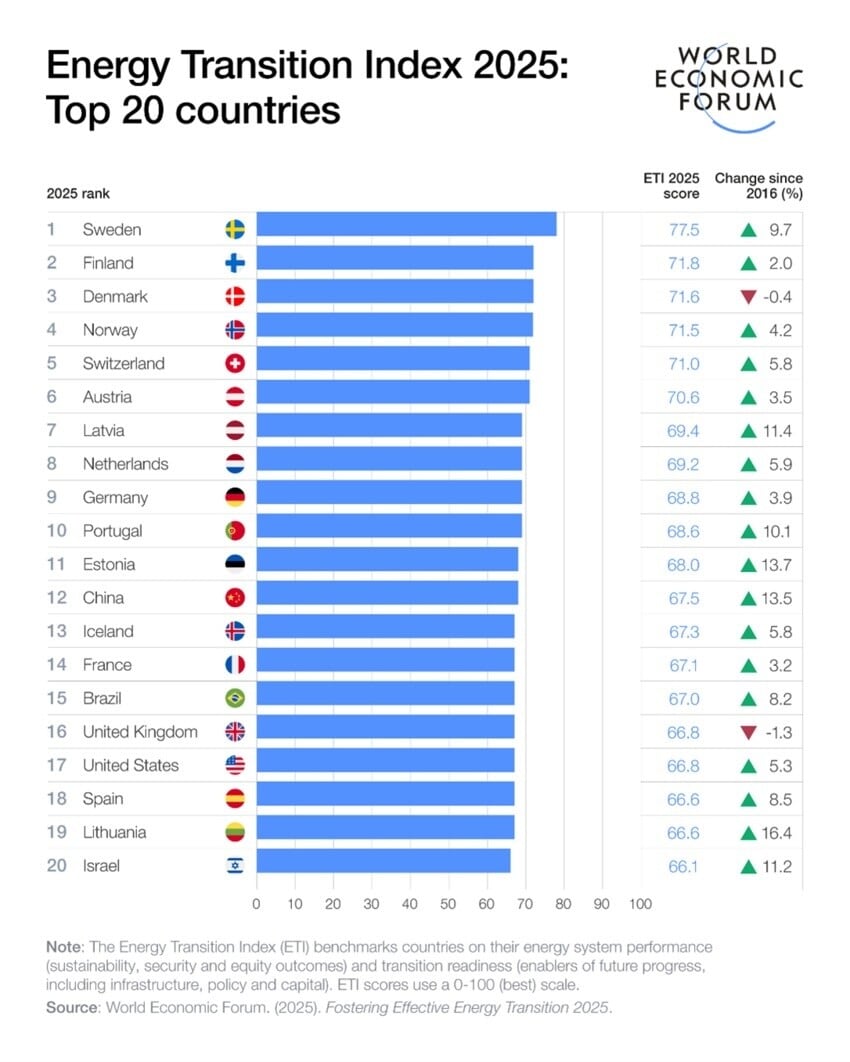
The World Economic Forum reports a significant acceleration in global clean energy progress, the fastest since before the pandemic, with 65% of countries improving their Energy Transition Index scores in 2025. Key findings indicate that Sweden, Finland, and other Northern European nations lead in energy transition due to strong policies and investment, while emerging regions like Europe and Asia show remarkable improvement. However, despite substantial clean-energy investments, energy security remains compromised. The report outlines five strategies for enhancing energy system resilience, including modernizing infrastructure and investing in talent. Additionally, notable developments include increased gas investments in Southeast Asia and a large-scale carbon capture initiative launched in Norway.
Cape Verde, Denmark, Egypt, Estonia, Guinea, India, Indonesia, Malaysia, Netherlands, Norway, Qatar, Serbia, Sweden, Thailand, Tunisia, United Kingdom | Financial services
Clean-energy transition sees a rebound – and more top energy stories
Rural regions house 43% of the global population, significantly contributing to economies, particularly in agriculture. However, they face challenges like poor infrastructure and declining income opportunities, prompting urban migration. Digital technologies can foster rural growth by improving access to essential services, enhancing traditional livelihoods, and diversifying economic activities. For successful integration of these technologies, a diagnostic approach is vital to identify specific needs, assess current livelihoods, and ensure the necessary infrastructure is in place. This tailored strategy can transform rural economies, making them demand drivers and efficiency centers.
Bangladesh, Burkina Faso, Rwanda | Financial services, Health, Education, ICT
Scaling digital technology for rural prosperity

Europe needs to enhance its defense capabilities and assume greater responsibility for its security, independent of the U.S. Amidst changing transatlantic relations and the evolving security landscape, the European Union (EU) initiated several measures in 2025 to strengthen defense cooperation, including the SAFE Regulation, aimed at integrating Ukraine into the defense sector. The EU is expanding partnerships with countries like Canada, Turkey, Japan, and Australia, and has established new frameworks for joint procurement and investment in defense. The aim is to make the EU an attractive partner while solidifying its defense industry and policy cooperation among members.
Estonia, Germany, Hungary, Poland, Sweden, Türkiye, Ukraine
Contours of an EU Partnership and Alliance Strategy

China's rapid economic growth has established it as a global powerhouse, lifting millions out of poverty. According to a McKinsey Global Institute report, key growth arenas like e-commerce, biopharma, and electric vehicles are crucial for future opportunities. With significant advancements in AI and robotics, Chinese companies are well-positioned to compete on a global scale. However, success will require international collaboration, increased investment in fundamental research, and a transformation in workforce education to adapt to a digital economy. These strategies are essential for thriving in emerging markets projected to generate trillions in revenue by 2040.
Angola, Armenia, Australia, Azerbaijan, Bahrain, Bangladesh, Benin, Bolivia, Brunei Darussalam, Bulgaria, Burkina Faso, Cambodia, Chad, Chile, Colombia, Denmark, Ecuador, Egypt, Eswatini, Ethiopia, Finland, Georgia, Germany, Ghana, Guinea, Haiti, Hungary, India, Indonesia, Ireland, Japan, Jordan, Kazakhstan, Kenya, Kuwait, Kyrgyz Republic, Lesotho, Luxembourg, Malawi, Malaysia, Mali, Mongolia, Morocco, Mozambique, Myanmar, Nepal, New Zealand, Nigeria, Oman, Pakistan, Paraguay, Peru, Philippines, Poland, Qatar, Republic of Korea, Russian Federation, Rwanda, Saudi Arabia, Senegal, Serbia, Seychelles, Singapore, South Africa, Spain, Sweden, Switzerland, Taiwan, China, Tajikistan, Tanzania, Thailand, Tunisia, Uganda, Ukraine, United Arab Emirates, United Kingdom, Venezuela, Viet Nam, Yemen, Zambia, Zimbabwe | Financial services, Health, ICT, Education
How China can best position itself for growth in the next big 'arenas of competition'

Artificial intelligence (AI) has the potential to enhance traditional ocean industries and support a sustainable blue economy. The global economy heavily relies on ocean assets, such as offshore energy platforms and shipping fleets, which often contribute to environmental degradation. By utilizing AI, industries can reimagine their existing infrastructure, turning aging oil and gas platforms into renewable energy sites and optimizing shipping routes for efficiency and lower emissions. AI can also improve port operations, reducing congestion and enhancing trade. This transformation aims to create a circular blue economy, balancing economic growth with ecological stewardship.
Using AI to enhance heavy assets and forge a sustainable blue economy

South-East Asia is becoming a leader in combating plastic pollution, showcasing innovative solutions and cross-border cooperation. The Republic of Korea's advanced waste management, including strict recycling policies and producer responsibility, aims for a 50% reduction in plastic waste by 2030. ASEAN has adopted several initiatives, such as the Bangkok Declaration and the ASEAN Blue Economy Framework, to address marine debris collectively. National Plastic Action Partnerships (NPAPs) in countries like Indonesia and Vietnam focus on local ownership, evidence-based strategies, and inclusivity to tackle the plastic crisis effectively. Various initiatives highlight collaborative efforts among governments, businesses, and communities to promote recycling and environmental consciousness.
Singapore
How Asia can be an example in the fight against plastic pollution

Asia-Pacific's role in globalization is transitioning from low-cost manufacturing to leadership in innovation, culture, and investment. The region leverages legacy strengths, such as cost and resources, while embracing innovation through rising R&D investments and cultural exports, contributing significantly to global markets. Companies like Aurobindo Pharma and TSMC exemplify this shift, harnessing operational efficiencies and cutting-edge technology. Simultaneously, APAC's cultural influence has surged, with its exports growing 3.5 times from 2004 to 2019. This transformation positions APAC businesses to emerge as global leaders across various industries.
Afghanistan, Armenia, Australia, Austria, Azerbaijan, Bahrain, Barbados, Bolivia, Cambodia, Chile, Costa Rica, Egypt, Ethiopia, Finland, Georgia, Germany, Ghana, Hungary, India, Indonesia, Japan, Jordan, Kenya, Kyrgyz Republic, Luxembourg, Malaysia, Mongolia, Myanmar, Nepal, New Zealand, Pakistan, Panama, Papua New Guinea, Paraguay, Peru, Philippines, Poland, Republic of Korea, Russian Federation, Rwanda, Senegal, Seychelles, Singapore, South Africa, Sweden, Taiwan, China, Tanzania, Thailand, Uganda, Ukraine, United Arab Emirates, United Kingdom, Viet Nam | Financial services, Health
How Asia-Pacific’s powerhouses are being reshaped

Climate action should prioritize "durability," focusing on how long carbon is stored and managing risks associated with natural climate solutions. These solutions have already sequestered significant carbon and provide additional benefits such as biodiversity and water security. Concerns about permanence, or the potential release of stored carbon, should not delay action; it is more critical to manage these risks effectively. Ecosystems can maintain resilience even amidst individual losses. Current mechanisms, like buffer pools in carbon markets, can address risks and improve project reliability. Immediate action is essential to leverage existing natural storage capabilities, as delaying will have severe ecological and economic consequences.
Durability, not permanence: Why we must act on natural climate solutions now
Now is a critical time to increase investment in climate technology despite geopolitical challenges. Climate tech has the potential to generate returns of up to $19 for every dollar invested and is driving job creation, cost savings, and resilience. Innovations such as artificial reefs and soil-to-soil circularity models demonstrate the economic and environmental benefits. Technologies like AI-powered farming tools enhance yields and revenue for smallholders. Cutting investment could jeopardize progress and innovation, exacerbating climate impacts and related costs, which have already amounted to over $3.6 trillion since 2000.
Nigeria | Financial services, Education
Why now is not the time to stint on climate tech investment

Asia is becoming a global leader in innovation, especially in AI, climate technology, and deep tech, driving sustainable economic growth. With 60% of the global population, the region's innovation ecosystems foster collaboration between governments, organizations, and entrepreneurs. Despite a projected slight economic slowdown, Asia remains crucial for global expansion, with sectors linked to energy transition potentially unlocking $4.3 trillion by 2030. Investment strategies are shifting towards deep and hard tech, supported by strong manufacturing supply chains. Key to success is establishing integrated ecosystems that bridge funding, infrastructure, and market access, particularly in clean energy initiatives across the continent.
Australia, Azerbaijan, Ethiopia, Ghana, India, Indonesia, Japan, Kenya, Kyrgyz Republic, Malaysia, Mongolia, Nigeria, Philippines, Republic of Korea, Rwanda, Senegal, Seychelles, Singapore, Taiwan, China, Thailand, Ukraine, United Arab Emirates, United Kingdom, Viet Nam | Financial services, Health, ICT, Education
How Asia’s innovation economy is driving growth and a global market shift

In 2025, the World Economic Forum recognized 100 innovative companies as Technology Pioneers, marking its 25th anniversary. This cohort showcases advancements in emerging technologies like AI, robotics, and quantum computing, with a focus on addressing global challenges. Significant areas of innovation include circular economy solutions that reduce waste, AI-driven cybersecurity measures, sustainable food and water practices, next-generation energy systems, and breakthroughs in quantum computing hardware and software. The selected start-ups come from 28 countries, reflecting a growing global emphasis on sustainable technology that can positively impact the future.
ICT, Education
Meet the Technology Pioneers driving innovation in 2025

SMEs and mid-sized companies are essential to the global economy and crucial for achieving net-zero goals. Accelerating their sustainability transitions can help meet Paris Agreement targets while creating opportunities for economic growth. A global survey of manufacturing SMEs and mid-sized firms informs a five-stage roadmap for integrating environmental sustainability into operations and strategies, enhancing growth and competitiveness. The paper emphasizes the need for public and private sector support in finance, knowledge, and policy for effective transitions. Ultimately, these companies can become key players in fostering a sustainable and resilient economy.
Estonia, Germany, Indonesia, Japan, Jordan, Republic of Korea, Senegal, Singapore, Slovakia, Sweden, Tanzania, United Kingdom
Sustainability Meets Growth: A Roadmap for SMEs and Mid-Sized Manufacturers

Climate finance is predominantly directed towards mitigation, with only $68 billion allocated for adaptation in 2022 compared to $1.2 trillion for mitigation. This imbalance poses challenges for climate-vulnerable developing nations that require adaptation funding due to high capital costs. Strategies to reduce risks associated with adaptation finance have shown promise, such as the CAFRI II project in India, which linked commercial finance with renewable technologies to bolster agricultural resilience. Similarly, Brazil's GainForest Labs utilized innovative technologies to reduce deforestation, securing farmer participation through financial incentives. These approaches can attract commercial investment and scale adaptation finance effectively.
Indonesia | Financial services
How removing adaptation finance risks can help investments scale
Governments are navigating a complex environment influenced by demographic, environmental, and digital changes, coupled with low public trust and limited fiscal resources. To address these challenges, focus is needed on enhancing citizen dignity in government interactions, restoring security amidst societal shifts, and improving government efficiency to bolster productivity and public finances. The OECD report emphasizes the necessity of leveraging digital tools and data, as current usage remains suboptimal, with only 47% of high-value datasets openly accessible. The governance of the green transition is highlighted as a critical priority.
Albania, Algeria, Angola, Armenia, Austria, Azerbaijan, Bahrain, Bangladesh, Barbados, Belgium, Benin, Bolivia, Botswana, Brunei Darussalam, Bulgaria, Burkina Faso, Cambodia, Cameroon, Cape Verde, Chad, Chile, Costa Rica, Croatia, Cyprus, Czech Republic, Democratic Republic of the Congo, Denmark, Dominican Republic, Ecuador, Egypt, El Salvador, Estonia, Eswatini, Ethiopia, Finland, Gabon, Georgia, Germany, Ghana, Greece, Guatemala, Guinea, Haiti, Honduras, Hungary, Iceland, Indonesia, Ireland, Israel, Jamaica, Japan, Jordan, Kenya, Kuwait, Kyrgyz Republic, Latvia, Lebanon, Lesotho, Lithuania, Luxembourg, Madagascar, Malawi, Malaysia, Mali, Malta, Mauritania, Moldova, Mongolia, Montenegro, Netherlands, New Zealand, Nigeria, Norway, Oman, Panama, Paraguay, Peru, Philippines, Poland, Portugal, Qatar, Republic of Korea, Romania, Russian Federation, Rwanda, Senegal, Serbia, Seychelles, Singapore, Slovakia, Slovenia, Spain, Sweden, Switzerland, Taiwan, China, Tanzania, Thailand, Trinidad and Tobago, Tunisia, Uganda, Ukraine, United Arab Emirates, United Kingdom, Uruguay, Venezuela, Yemen, Zambia, Zimbabwe | Financial services, ICT, Education, Health
Government at a Glance 2025
Innovation is currently driven by technological advances, but this focus has led to unsustainable environmental costs, exemplified by rising carbon emissions and global temperatures. While sectors like robotics and electric vehicles thrive, green innovation struggles to gain momentum. Effective transformation requires a shift towards climate-first technologies, supported by policies, capital, and cultural change. Governments must align regulations with long-term sustainability, while financial backing is essential for scaling clean technologies. Furthermore, building social trust and cultural acceptance is crucial for embracing eco-centric innovation practices.
Nigeria | Financial services, Health, ICT, Education
From tech-first to climate-first: Why we must redefine how innovation is measured

Discussions on the EU's 2040 greenhouse gas mitigation target are increasingly focused on the role of international credits, especially following Germany's proposal to allow up to 3% of the target to be met through these credits. This has reignited debates surrounding their quality and effectiveness, amid concerns of potential conflicts in upcoming legislative processes. The emphasis should be on durable carbon dioxide removal technologies, as international credits could aid in achieving net-negative emissions while addressing residual emissions. The renewed interest in international credits stems from a changing political landscape and the need for comprehensive strategies for meeting climate targets.
Financial services
International Credits in EU Climate Policy: Old Conflicts, New Challenges
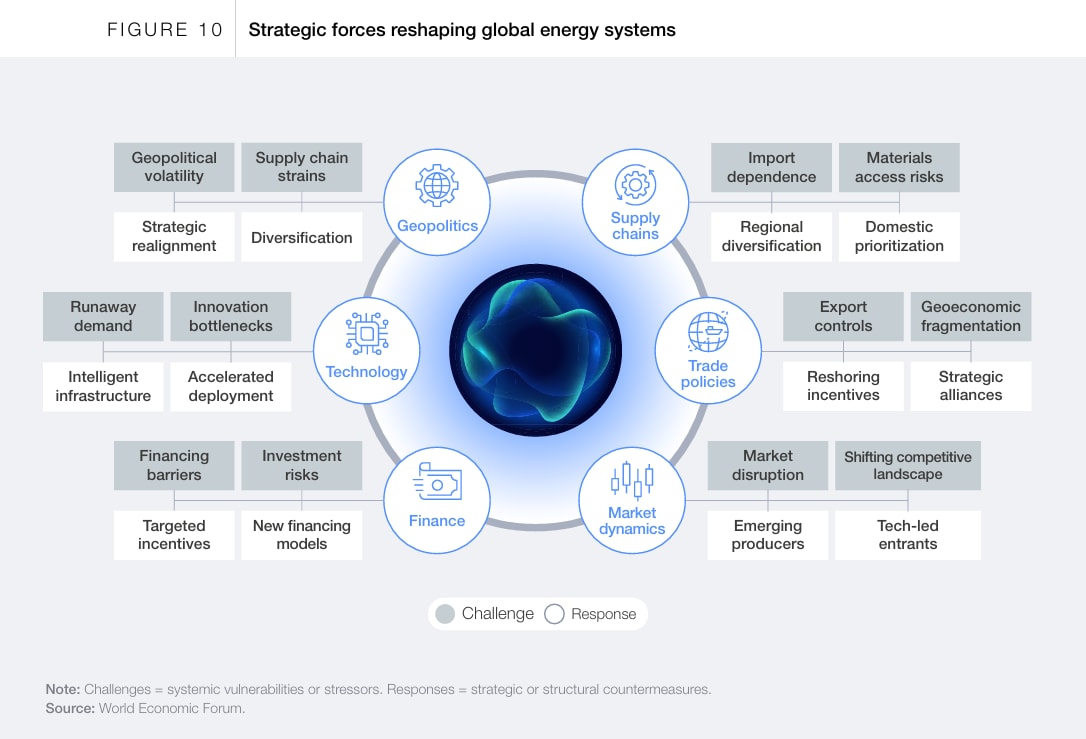
Six structural shifts are reshaping global energy markets as highlighted in the World Economic Forum's Fostering Effective Energy Transition 2025 report. Countries are prioritizing energy security, affordability, and sustainability in response to geopolitical and economic risks. Key developments include the rise of liquefied natural gas (LNG) as both a bridge and destination fuel, a growing momentum for small modular nuclear reactors (SMRs), and advancements in energy efficiency—projected to cut global energy consumption by 31%. Energy storage technologies are also crucial for integrating renewables, while clean energy investments reached $2.1 trillion in 2024, leading the transition.
Egypt, India, Qatar, Russian Federation, Ukraine, United Kingdom | Financial services, Health, ICT, Education
6 shifts reshaping global energy markets

Digital fashion is revolutionizing personal expression and cultural identity through the integration of technology, creativity, and inclusivity. This transformation blurs the lines between physical clothing and digital assets, introducing concepts like NFT wearables and virtual styling. Luxury brands, such as Balenciaga and Nike's partnership with RTFKT, are redefining luxury in the digital age by creating authenticated digital items that hold real value. This new ecosystem promotes sustainability by reducing waste, democratizes design, and encourages collaboration between creators and users. Ultimately, digital fashion reflects broader cultural shifts towards authenticity and environmental responsibility, shaping the future of the industry.
ICT, Education
Digital fashion: Where technology, culture and creativity collide

Private capital is increasingly crucial in emerging markets, as donor funding declines amidst rising global needs. Strategic investments in sectors like healthcare and technology not only promote economic growth but also address social challenges by creating jobs, empowering women, and driving productivity. Unlike philanthropy, these investments provide a sustainable, scalable approach, unlocking innovation and attracting further capital. Emerging markets, rich in opportunity despite perceived risks, are becoming hubs for growth, particularly in manufacturing, fintech, and education. Long-term, managed investments can yield substantial returns and facilitate critical knowledge transfer, fostering lasting societal change.
Burkina Faso, Egypt, Ethiopia, Ghana, Indonesia, Kenya, Philippines, Rwanda, South Africa, Uganda, United Arab Emirates, United Kingdom | ICT, Education, Financial services, Health
How private capital can provide a blueprint for impact when global aid is in decline

ASEAN is experiencing a critical energy transition, being the world’s fourth-largest energy consumer with a 3% annual demand increase. The region requires $200 billion annually in energy investments by 2030, primarily for clean energy. The Energy Transition Meeting highlighted the need for regional collaboration to address energy challenges, including developing financial mechanisms for coal phase-out and fostering innovation. Key initiatives include the ASEAN Power Grid project, aimed at enhancing multilateral energy trade and resilience. Participants emphasized the importance of harmonized regulations and cooperation to achieve a sustainable energy future for Southeast Asia.
Cambodia, Egypt, India, Indonesia, Malaysia, Philippines, Singapore, Tanzania, Thailand | Financial services, ICT
What happened at the Energy Transition Meeting in ASEAN