Publications

INSIGHT REPORT

Pioneering the Future: Space

Technologies Poised to Revolutionize

Exploration and Economy by 2035

September 2026

FACTSHEETS

Pioneering the Future: Space

Technologies Poised to Revolutionize Exploration and Economy by 2035

June 2026

WHITE PAPER

Future of Space Law:

Operationalizing Space Governance

March 2026

REPORT

Clear Orbit, Secure Future:

 A Call to Action on Space Debris

Jan 2026

WHITE PAPER

The Future of Space Law

Insights from the ATS, UNCLOS, and ITU Frameworks

December 2025

WHITE PAPER

The Future of Space Law: 

The Evolving Dynamics of Air and Space Regulation

 September  2025

The Future Of Space Law

News

Centre for Space Futures, Novaspace and SpaceTech Gulf  Sign Agreement to Develop Global Space Capability Mapping Dashboard

Riyadh, Saudi Arabia , 23 Jun 2026|  Press Release

Clear Orbit, Secure Future: A Call to Action on Space Debris

Riyadh, Saudi Arabia, 26 Jan 2026 | Press Release

Centre for Space Futures Holds Workshop with Participation of 40 Global Experts

Riyadh, Saudi Arabia, 05 Dec 2025 | Press Release

Centre for Space Futures Releases White Paper on 'The Future of Space Law'

Riyadh, Saudi Arabia, 12 Sep 2025 | Press Release

The Board of Directors of the Centre for Space Futures Endorses Its Strategic Direction

Riyadh, Saudi Arabia, 26 May 2025 | Press Release

Saudi Space Agency to Launch the Centre for Space Futures with the World Economic Forum

Riyadh, Saudi Arabia, 29 April | Press Release

5 ways we can tackle growing risks from rocket bodies in orbit

Dec 09, 2025 | Economic Growth, Stories

Read More

Forum Agenda

Forum Videos

VIDEO

Press Conference: Centre for Space Futures in Riyadh

The World Economic Forum's Special Meeting, April 29, 2024

VIDEO

The Purpose of Astronauts at Davos 2024

World Economic Forum , March 9, 2024

VIDEO

PortWatch: Monitoring Trade Disruptions from Space

World Economic Forum , Dec 18, 2023

VIDEO

India's Moon Mission Triumph: Ambassador Ruchira Kamboj's Insights

World Economic Forum , Aug 23, 2023

VIDEO

Space Exploration is Back at Davos 2023

World Economic Forum , Feb 16, 2023

Forum Publications

Strategic Intelligence Insights

Data sovereignty is becoming critical for European organizations as 144 countries have enacted data protection laws, prompting businesses to scrutinize cloud data jurisdictions. A recent IDC study indicates 84% of European organizations use or plan to adopt sovereign cloud solutions, aimed at storing data within Europe to enhance control and customer trust while addressing privacy and cybersecurity concerns. With the anticipated 2–3x growth in enterprise cloud data by 2030, the EU's recent regulations and initiatives like Gaia-X are crucial for fostering a secure digital economy. Organizations are urged to evaluate data locations and adopt compliant cloud strategies.
Financial services
Data Sovereignty and Europe’s Cloud Strategy

NBS compiles monthly updates on the latest research in business sustainability, focusing on in-press articles to showcase cutting-edge knowledge from top journals. The April 2025 edition features diverse studies spanning labor law enforcement, climate finance, sustainable business models, and equity in financing. Key topics include responsible management amid capitalism crises, innovation’s role in corporate decarbonization, and the dynamics of entrepreneurial health risks. The compilation emphasizes contributions across various publications to support advancing sustainability practices in business.
ICT, Financial services
Table of Contents: April 2025

The book "Smart Cities to Smart Societies" offers a holistic exploration of smart city governance, emphasizing the need to tailor approaches to each country's unique circumstances for improving urban sustainability and livability. It critiques the prevalent top-down strategies tied to megaprojects and modernism. The work is structured into three parts: the importance of societal factors and human capital, the challenges of technology integration, and current regulatory frameworks for smart cities. It aims to uncover the opportunities and risks associated with urban smart transformations and promote collaboration across various disciplines.
Egypt | Health, Education
Smart Cities to Smart Societies: Moving Beyond Technology
The UK possesses vast amounts of citizen-generated data, crucial for training AI systems and valuable to private companies for targeted advertising and content personalization. Currently, this data's value is not returned to the public, necessitating equitable data stewardship models. Most citizens unknowingly relinquish their data rights through legal agreements, limiting access. The UK government could establish a sovereign data fund to manage and monetize public datasets, allowing licensing of anonymized data to companies. This fund could fund domestic companies and advance national priority projects, ensuring citizen data serves public interests while contributing to economic growth.
United Kingdom
How the UK could monetise ‘citizen data’ and turn it into a national asset

The report examines the global expansion of data centers propelled by AI and cloud computing, addressing their economic benefits alongside significant social and environmental costs. It includes case studies from five countries, analyzing the roles of governments and tech companies in development, community resistance to negative impacts, and the necessary support for effective advocacy.
ICT
Where Cloud Meets Cement
The Trump administration's Golden Dome missile defense system aims to protect the U.S. from a variety of missile threats, including intercontinental ballistic missiles (ICBMs), cruise missiles, and hypersonic weapons. It plans to intercept missiles during all three phases of their flight: boost, midcourse, and terminal. The system faces significant technical challenges, particularly in the boost phase, where only a brief window exists for interception. Successful implementation may require numerous space-based interceptors or directed-energy weapons, but vulnerabilities exist, including potential anti-satellite threats. Past initiatives, like Brilliant Pebbles, provide insight into possible technologies for Golden Dome.
Trump’s proposed Golden Dome missile defence system – an expert explains the technical challenges involved
The UK government aims to leverage citizen data to enhance its position in artificial intelligence (AI) through the AI Opportunities Action Plan, which includes 50 recommendations. A proposed National Data Library (NDL) could transform public datasets into a national asset via a sovereign data fund, ensuring the economic benefits of AI development are equitably distributed. This fund would manage licensing anonymised data for commercial use while supporting public interests such as healthcare and digital inclusion. Ethical safeguards and transparent data governance are essential to maintain public trust and address concerns regarding data misuse.
How the UK could monetise ‘citizen data’ and turn it into a national asset
The re-industrial era is marked by a significant shift towards services amid increasing global protectionism and trade restrictions primarily affecting goods. As countries and companies pivot to services, energy needs for these activities rise, necessitating a balance between old economy resources and new energy sources. Global trade in services is thriving, contributing significantly to job creation, particularly in the U.S. However, the potential emergence of non-tariff barriers and rising brand nationalism poses challenges. Companies must adapt to changing demands, recognizing that the foundation of industrial activity remains crucial for powering service-oriented economies.
Canada, Ethiopia, Germany, Ghana, India, Indonesia, Ireland, Italy, Japan, Jordan, Kenya, Nigeria, Pakistan, Peru, Philippines, Republic of Korea, Russian Federation, Rwanda, South Africa, Tanzania, Ukraine, United Arab Emirates, United Kingdom | Financial services, ICT, Education
The re-industrial era has arrived. Here's what that means — and how your business can thrive
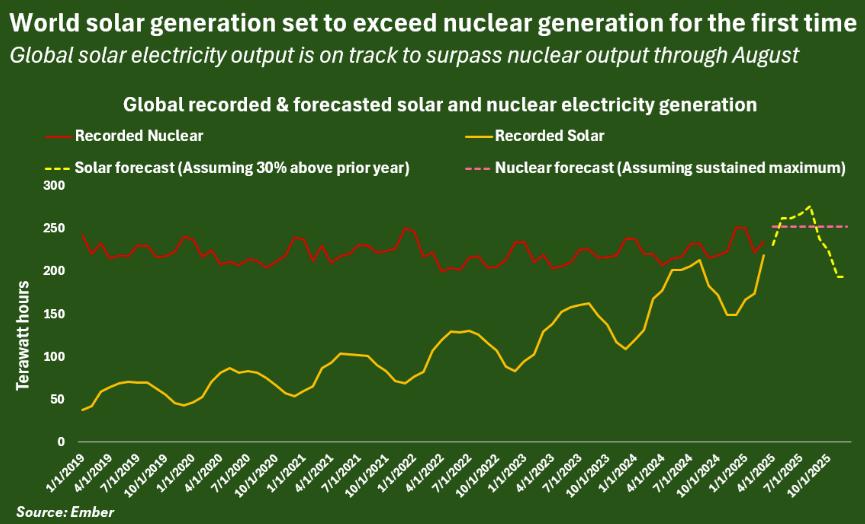
Global solar electricity generation is projected to surpass nuclear output for the first time during summer months, particularly June to August, as solar production peaks. This shift highlights the renewed emphasis on renewable energy balancing. Additionally, the declining costs of lithium iron phosphate (LFP) batteries are propelling energy storage growth, essential for integrating increasing wind and solar capacities. Meanwhile, the International Energy Agency warns of a critical shortfall in copper demand, Turkey may possess significant shale oil reserves, and South Africa seeks a balanced approach to energy transition amid global climate responsibilities.
Global solar power set to surpass nuclear, and more top energy stories

Africa experiences significant annual GDP losses of 2-5% due to climate shocks, with adaptation costs in sub-Saharan Africa projected to reach $50 billion by 2030. Key lessons from Africa’s climate response suggest three shifts are necessary for global improvement: 

1. **Shift from amount to speed**: Timely financial aid is crucial; delays can exacerbate damage.
2. **Shift from coverage to inclusion**: Responses must prioritize vulnerable populations, especially women, to enhance resilience.
3. **Shift from support to local appropriation**: Effective use of aid requires strong local systems and preparedness. 

These changes aim to improve adaptability and resilience in facing climate challenges.
Nigeria | Health, Education, Financial services
What Africa's climate response experience can teach the world

Japan is addressing household food waste to enhance sustainability and reduce economic loss. In 2022, household food waste accounted for approximately 2.36 million tons and resulted in an economic loss of JPY 40 trillion ($277 billion). The country aims for a 50% reduction in household food waste by 2030, building on a successful reduction in the commercial sector. Initiatives involve collaboration among government, academia, and businesses, promoting public awareness and educational campaigns. Innovative projects include AI-equipped smart appliances to help manage food freshness and minimize waste. Generational studies inform targeted interventions to reduce waste effectively.
How Japan is tackling household food waste

Singapore has launched a national utility, Gprnt, enabling companies to automatically convert utilities data into sustainability metrics at no cost. Developed from the central bank, it specifically aids small and medium-sized enterprises (SMEs) in accessing government-held water, gas, and electricity data through the MyInfo business portal. Gprnt's platform focuses on Scope 1 and 2 emissions reporting and has secured $4.62 million in funding from Ant International and MUFG to expand its services in Asia. The tool aims to facilitate easier sustainability reporting, particularly beneficial as SMEs face increasing compliance pressures.
Singapore launches world’s first national ESG utility for Scope 1 and 2 reporting

Over 40% of global urban land is under-utilized or degraded, prompting a need for urban land regeneration through community ownership, circular economy principles, and effective policy. Engaging local residents and fostering participatory governance can transform neglected spaces into vibrant community assets, as demonstrated by a grassroots initiative in Thiruvananthapuram, India. Successful models in cities like Medellín and Freetown showcase the benefits of inclusive planning. Additionally, shifting perceptions of waste as a resource can lead to transformative practices that minimize environmental impact. These local regeneration efforts can initiate broader systemic change in urban development.
Education
The future of land use is local: harnessing community ownership for urban land regeneration

Miguel Angel Lopez Borrego, CEO of Thyssenkrupp, aims to reshape the company by prioritizing sustainability and reducing its steel operations. His strategy involves a comprehensive restructuring of Thyssenkrupp Steel Europe, focusing on capacity adjustments and green production methods. Additionally, he's moving to separate the marine business through a minority spinoff while emphasizing transparency and decisive leadership in negotiations with stakeholders. Lopez highlights the impact of current geopolitical dynamics on strategic decisions, advocating for a competitive steel industry and a more flexible labor market to support future growth.
Germany, India, Ukraine, United Kingdom | Education
Thyssenkrupp CEO sees future as green and marine, less steel

Robert Opp is the Chief Digital Officer of the UNDP, where he spearheads the organization's digital transformation to enhance the Sustainable Development Goals and foster inclusive digital ecosystems in over 120 countries. His leadership emphasizes creating technology foundations, supportive digital policies, and building capacity among civil servants. Opp advocates for developing digital public infrastructure, similar to essential physical infrastructure, to promote innovation and economic participation. He addresses the widening equity gap in digital technology access, highlighting the importance of informed strategies around AI and digital sovereignty for nations seeking to advance their technological capabilities.
Ethiopia, Kenya, Nigeria, Rwanda, South Africa | ICT, Education
Interview Of The Week: Robert Opp, Chief Digital Officer, UNDP
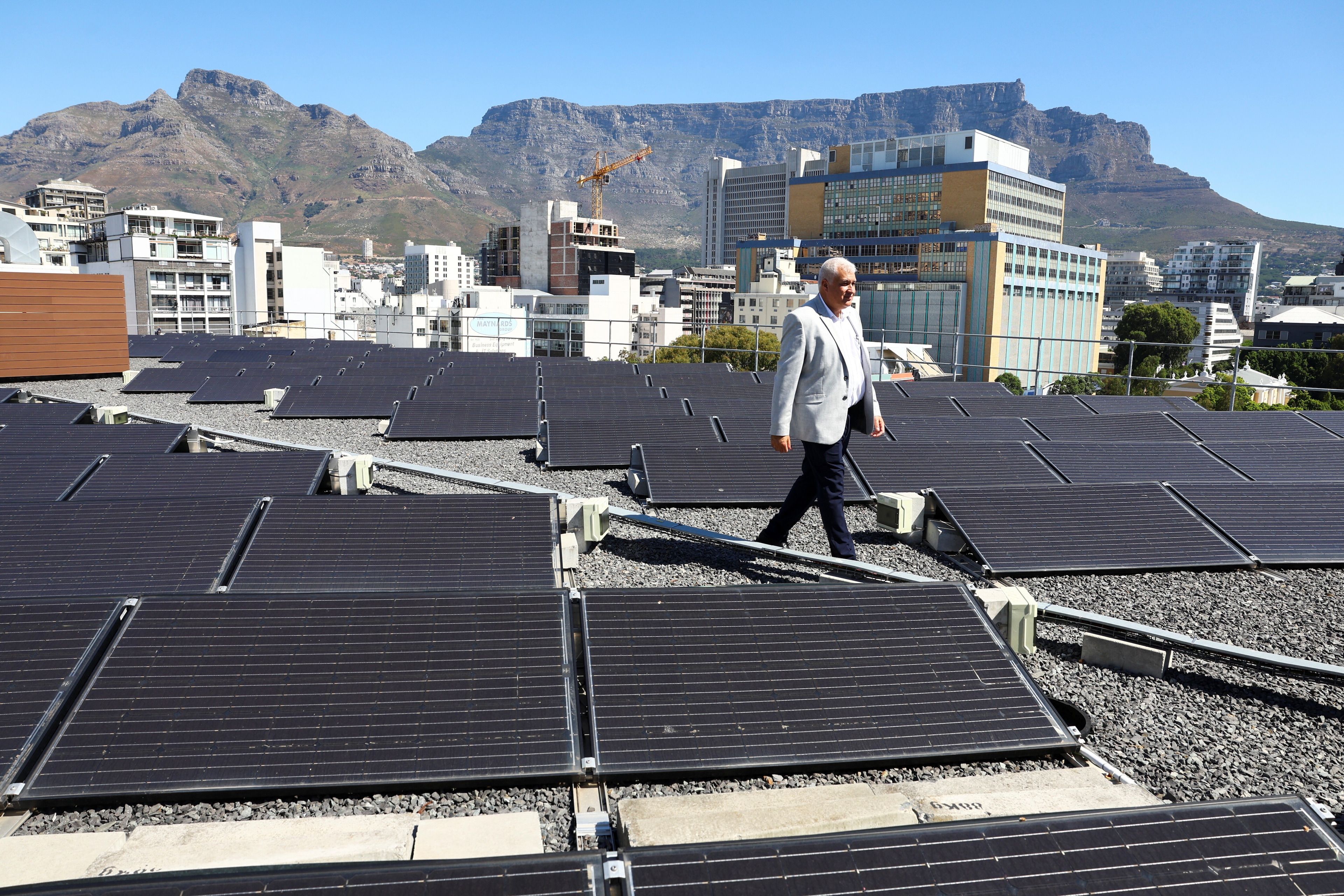
Productive use of renewable energy in Africa emphasizes leveraging energy access to improve livelihoods rather than just providing electricity. Initiatives like Mission 300 aim to connect 300 million Africans to decentralized renewable solutions, transforming energy use in agriculture and small businesses. Examples include solar mini-grids in Nigeria that enhance food security and income for local entrepreneurs. Despite progress, challenges such as financing gaps, bureaucracy, and limited local capacity hinder widespread adoption. Comprehensive partnerships across various community sectors are essential to maximize the practical benefits of renewable energy.
Nigeria
What do we mean by ‘productive use of renewable energy’ – and why is it critical to African prosperity?
The European Space Agency (ESA), celebrating its 50th anniversary, has achieved significant milestones in space exploration, including the launch of cutting-edge spacecraft, collaboration on the Hubble and James Webb telescopes, and successful missions to comets and Mars. Founded in 1975 from earlier organizations, ESA is funded by 23 member states and emphasizes international cooperation. However, it now faces challenges from rising space powers like China and India, needing to adapt to increased competition in the evolving space landscape.
After 50 successful years, the European Space Agency has some big challenges ahead

Inclusive AI requires a foundation of representative data, necessitating improved access, infrastructure, and governance. With billions offline and many languages underrepresented in AI training, existing datasets fail to reflect diverse human experiences. Initiatives like developing regionally trained models and enhancing digital connectivity are crucial. MENA's AI strategies signal a shift needed towards federated data systems that prioritize privacy and compliance. Trust in AI must be built from the beginning, incorporating adaptive governance and strategic partnerships to ensure ethical and inclusive design in AI systems.
Africa | ICT, Education
Designing more inclusive AI starts with the right data architecture
Cities in Eastern Europe and Central Asia face economic stagnation, aging infrastructure, and environmental issues exacerbated by climate change and regional conflicts. Traditional city planning often fails due to its isolated approach, resulting in fragmented solutions that do not address the complexity of urban challenges. Coordinated strategies that link multiple solutions are essential for tackling issues simultaneously and fostering long-term collaboration across sectors. The UNDP has been working with 15 cities to implement innovative, interconnected initiatives, revealing four key lessons for enhancing urban development through more responsive and sustainable planning approaches.
Bangladesh, Egypt, Ethiopia, Germany, Ghana, Indonesia, Japan, Jordan, Nigeria, Pakistan, Paraguay, Republic of Korea, Russian Federation, Senegal, South Africa, Tanzania, Ukraine, United Arab Emirates, United Kingdom | Health, Education, Financial services
Urban Development Needs Systems Thinking

Entrepreneurs in the global south face significant barriers to international recognition and support despite vibrant startup activity. They often struggle against larger global players and a structurally unequal innovation ecosystem. Limited access to capital and inadequate intellectual property protections hinder their growth, as evidenced by a drastic drop in venture capital funding. Patents and legal safeguards are frequently out of reach, leading to exploitation of their ideas without recourse. Even successful innovations, like Kenya's M-Pesa, struggle for global traction. This narrative exclusion perpetuates biases against global south startups, limiting their visibility and opportunities for growth.
Egypt, Ethiopia, Ghana, Kenya, Republic of Korea, Senegal, South Africa | Financial services, Health, Education
Startups in the global south struggle for international recognition