Publications

Pioneering the Future: Space
Technologies Poised to Revolutionize
Exploration and Economy by 2035

INSIGHT REPORT

September 2026

Pioneering the Future: Space
Technologies Poised to Revolutionize Exploration and Economy by 2035

FACTSHEETS

June 2026

Future of Space Law:
Operationalizing Space Governance

WHITE PAPER

March 2026

Clear Orbit, Secure Future:
 A Call to Action on Space Debris

REPORT

Jan 2026

The Future of Space Law
 Insights from the ATS, UNCLOS, and ITU Frameworks

WHITE PAPER

December 2025

The Future of Space Law: 
The Evolving Dynamics of Air and Space Regulation

WHITE PAPER

 September  2025

The Future Of Space Law

News

Centre for Space Futures, Novaspace and SpaceTech Gulf  Sign Agreement to Develop Global Space Capability Mapping Dashboard

Riyadh, Saudi Arabia , 23 Jun 2026|  Press Release

Clear Orbit, Secure Future: A Call to Action on Space Debris

Riyadh, Saudi Arabia, 26 Jan 2026 | Press Release

Centre for Space Futures Holds Workshop with Participation of 40 Global Experts

Riyadh, Saudi Arabia, 05 Dec 2025 | Press Release

Centre for Space Futures Releases White Paper on 'The Future of Space Law'

Riyadh, Saudi Arabia, 12 Sep 2025 | Press Release

The Board of Directors of the Centre for Space Futures Endorses Its Strategic Direction

Riyadh, Saudi Arabia, 26 May 2025 | Press Release

Saudi Space Agency to Launch the Centre for Space Futures with the World Economic Forum

Riyadh, Saudi Arabia, 29 April | Press Release

5 ways we can tackle growing risks from rocket bodies in orbit

Dec 09, 2025 | Economic Growth, Stories

Read More

Forum Agenda

Forum Videos

VIDEO

Press Conference: Centre for Space Futures in Riyadh

The World Economic Forum's Special Meeting, April 29, 2024

VIDEO

The Purpose of Astronauts at Davos 2024

World Economic Forum , March 9, 2024

VIDEO

PortWatch: Monitoring Trade Disruptions from Space

World Economic Forum , Dec 18, 2023

VIDEO

India's Moon Mission Triumph: Ambassador Ruchira Kamboj's Insights

World Economic Forum , Aug 23, 2023

VIDEO

Space Exploration is Back at Davos 2023

World Economic Forum , Feb 16, 2023

Forum Publications

Strategic Intelligence Insights

More than 700 technology leaders across 41 countries indicate a strong shift towards open source AI tools, with 76% expecting increased adoption in the coming years. Key drivers include advancements in privacy-centric Edge applications and reasoning models. Geopolitical factors also play a role, with governments seeking alternatives to centralized AI models, promoting accessibility and reducing digital divides. Initiatives like the Latam GPT project aim to democratize AI access in Latin America. Major tech companies are contributing to open source, recognizing that ecosystem development, rather than market dominance, will drive future innovation.
Why Companies Are Embracing Open Source AI

The maritime industry contributes approximately 3% of global greenhouse gas emissions, necessitating enhanced decarbonization efforts through real-time emissions tracking. This strategic approach enables shipping stakeholders to comply with evolving regulations like the Corporate Sustainability Reporting Directive (CSRD) and the EU Emissions Trading System (EU ETS). Advanced data technologies, such as IoT sensors and satellite tracking, provide precise emissions insights, allowing companies to improve fuel efficiency and operational transparency. As regulations tighten, real-time data has become essential for businesses to optimize operations, demonstrate climate commitment, and secure green financing.
How real-time emissions tracking can help decarbonize the maritime industry

A significant shift is occurring in scholarly research, marked by the collapse of a historically stable funding landscape influenced by Vannevar Bush's vision for science. Academic defunding, driven by changing political priorities, is dismantling the traditional model that supported long-term inquiry and investment in universities. Concurrently, AI-based research tools are rapidly advancing, enhancing efficiency and output in scholarly work. The intersection of decreasing funding and the rise of AI is creating a volatile environment, significantly altering knowledge production within academia.
Entering the Vortex
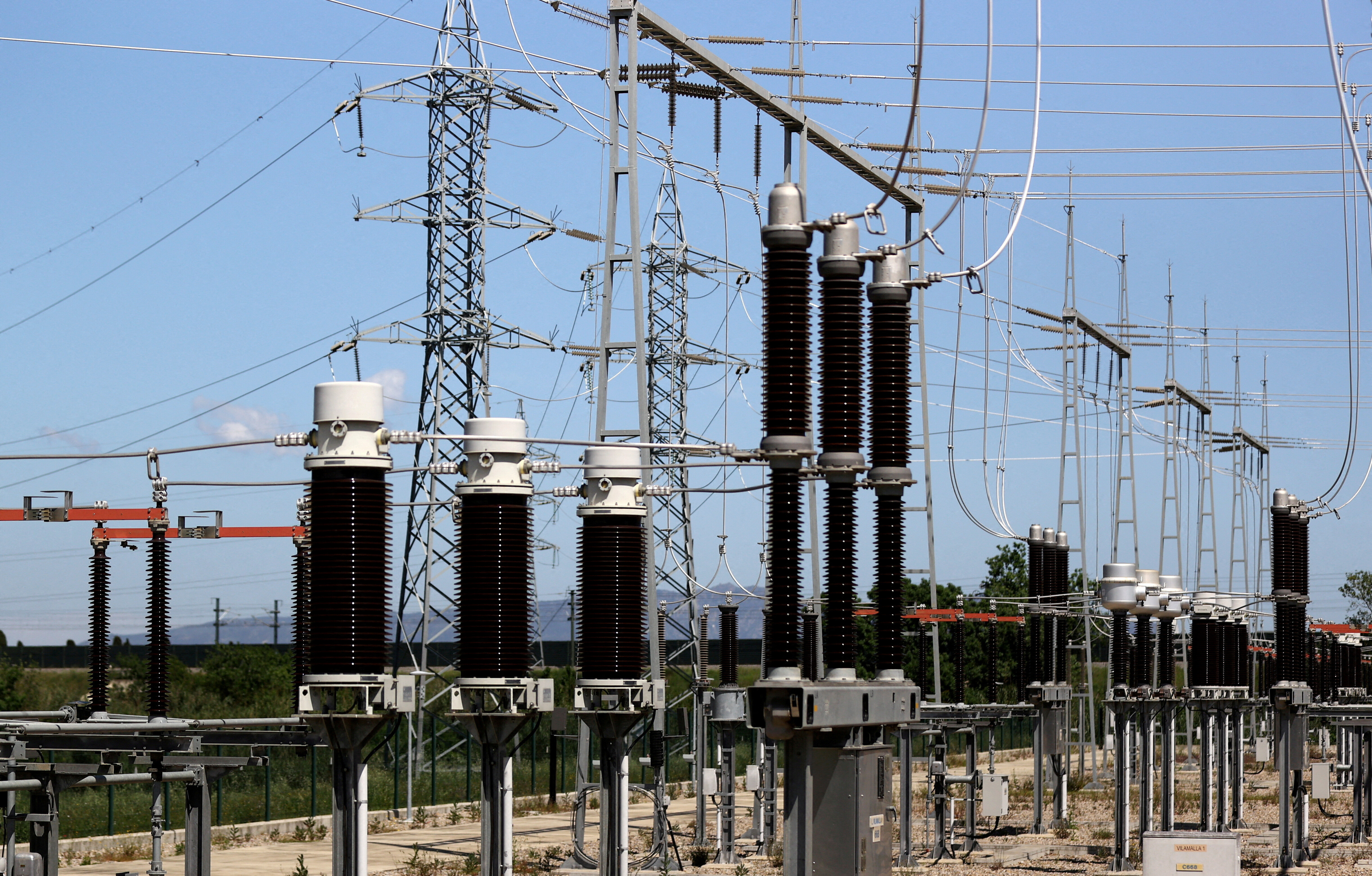
A widespread blackout in the Iberian Peninsula raised initial fears of a cyberattack, but investigations revealed no evidence of such an intrusion. Despite this, the incident highlighted significant vulnerabilities in energy infrastructure. Experts emphasize the need for enhanced cybersecurity measures, international collaboration, and securing critical energy systems against evolving threats. Cybercriminals often target electrical grids, as demonstrated by past incidents like the 2015 Ukraine blackout. The rise of renewable energy also introduces new risks, making cybersecurity integral to the design and operation of modern energy systems.
Financial services, Education, ICT
Iberian blackout: Cyberattack may not be to blame – but the threat to power grids is real. Here's why

A significant 43% of employers in South-Eastern Asia anticipate a disruption in core skills by 2030, exceeding the global average of 39%. The region faces gaps in critical digital skills, heightened by geoeconomic fragmentation and climate change, prompting a push for upskilling and reskilling. With trade in services growing, businesses express concern over skills shortages, as 60% fear these gaps will impede adaptation efforts. Notably, 73% of employers in Thailand worry about slowing economic growth. Organizations must prioritize building workforce resilience and adaptability to navigate upcoming challenges in the job market.
Australia, Cambodia, Indonesia, Philippines, Republic of Korea, Singapore, Thailand, United Kingdom | Financial services, Education, ICT
The Future of Jobs in South-Eastern Asia: upskilling dominates as technology and geoeconomic uncertainty change talent landscape

The Future of Jobs Report 2025 Data Explorer offers an interactive tool for transforming complex workforce data into visual insights for policy-makers, business leaders, and researchers. It addresses the evolving job market driven by technological changes, such as AI and climate change. The tool allows users to explore job trends, compare regions and industries, and identify shifts in skills demands. Key features include an alluvial view for tracking job evolution, a map view for geographic trends, a column view for comparison, and a scatter plot view for analyzing correlations. This resource aids in strategic workforce planning and adaptation.
Algeria, Angola, Australia, Austria, Bahrain, Benin, Bolivia, Burundi, Cambodia, Canada, Chad, Chile, Costa Rica, Croatia, Denmark, Ecuador, Egypt, Ethiopia, Finland, France, Germany, Greece, Guinea, Hungary, India, Indonesia, Ireland, Israel, Japan, Jordan, Kazakhstan, Kenya, Kuwait, Luxembourg, Malawi, Malaysia, Mali, Mauritius, Mexico, Mongolia, Morocco, Namibia, Nepal, Netherlands, Norway, Oman, Panama, Peru, Philippines, Poland, Portugal, Qatar, Republic of Korea, Russian Federation, Singapore, Slovakia, Spain, Sweden, Switzerland, Taiwan, China, Tanzania, Tunisia, Türkiye, Uganda, Ukraine, United Arab Emirates, United Kingdom | Financial services, Health, ICT, Education
From data to action: This tool will help you navigate the future of jobs

The global labor market is undergoing a transformation driven by technology, demographic changes, and economic disruptions. Outdated job-matching systems often overlook candidates' transferable skills and adaptability, resulting in prolonged unemployment and reduced productivity. A report from the World Economic Forum outlines a five-step roadmap for public employment services to utilize technology better, emphasizing the importance of quality data, standardized skills language, blockchain for credential security, personalized learning paths, and improved job matching through AI and machine learning. This approach aims to create more inclusive labor markets by aligning workforce skills with market demand.
ICT, Education
Smart data, better jobs: How technology is transforming labour markets

Africa's private sector significantly bolstered the African Union (AU) Peace Fund, which is crucial for financial autonomy and effective peacemaking across the continent. Established in 1993 but revitalized in 2018, the fund raised $398 million by mid-2024, predominantly from member states. Following a July 2024 meeting, private contributions surged from 2% to 36%, totaling approximately $610 million, with major pledges from entities like Afreximbank. These funds are vital for AU missions, yet significant shortfalls remain in addressing Africa's escalating security challenges, necessitating ongoing efforts to secure further support from both the private sector and citizens.
Africa
Africa’s private sector boosts AU Peace Fund

The global building sector's CO₂ emissions have stabilized, yet significant reductions are still needed to achieve net-zero. Despite not increasing in 2023, buildings are responsible for 34% of global CO₂ emissions, with operational emissions reaching a record 9.8 gigatonnes. A whole building life cycle approach, supported by advanced data and technologies, is essential for reducing emissions across all phases—from design to operation. Key strategies include retrofitting, stricter energy codes, and reducing embodied carbon. Effective implementation relies on real-time data to drive sustainable practices, optimize performance, and ensure long-term accountability in the sector.
Financial services, Education
Why the building sector’s emissions milestone requires data-driven reinforcement

Voter engagement in the lead-up to the 2025 Australian election is at a record high, with 98.2 percent enrollment and significant participation among young voters. Key concerns driving their focus include housing affordability, employment, and climate action, indicating a demand for political inclusivity. Major parties will need to address pressing issues like economic sustainability, climate policies, and international relations effectively to gain voter trust. Current challenges include rising housing costs, skilled labor shortages, and the government's climate targets amidst ongoing tensions over fossil fuel approvals.
Australia | Financial services
Election 2025: Food for Thought as Aussies Head to the Polls
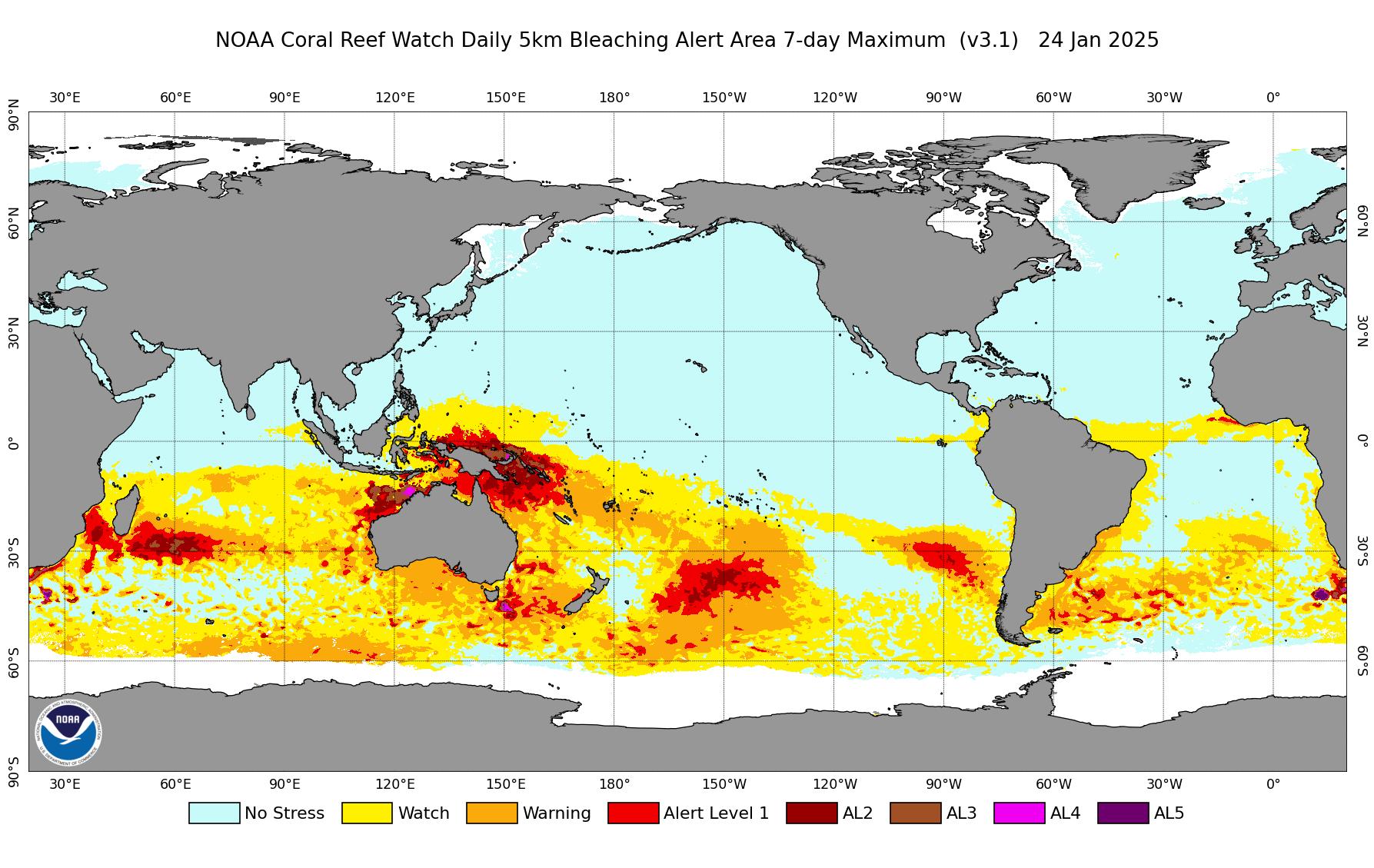
Over 80% of the world's coral reefs have experienced mass bleaching, marking the largest such event on record. This phenomenon, driven by rising ocean temperatures, has affected reefs in 83 countries and territories. Additionally, Earth's landmasses are losing trillions of tonnes of water, primarily due to decreased soil moisture linked to climate change. The International Monetary Fund commits to supporting nations facing climate risks. Environmental concerns also include rising TFA levels in European wines and initiatives aimed at protecting marine areas and endangered species like snow leopards.
Financial services
Over 80% of the world's reefs hit by bleaching event, and other nature and climate news
The rise of AI has heightened geopolitical tensions, exacerbating fragmentation and monopolization of the internet, leading to a potential "Splinternet." Digital Public Infrastructure (DPI) offers a solution by promoting collaboration, reducing monopolistic control, and re-establishing the internet’s foundational ideals. It envisions a rebalanced digital landscape that aligns public interests with private innovation, aiming to cultivate a new digital social contract. This transformation could emerge from nations previously sidelined in global technology discussions.
Financial services, ICT
Digital Public Infrastructure Could Make a Better Internet
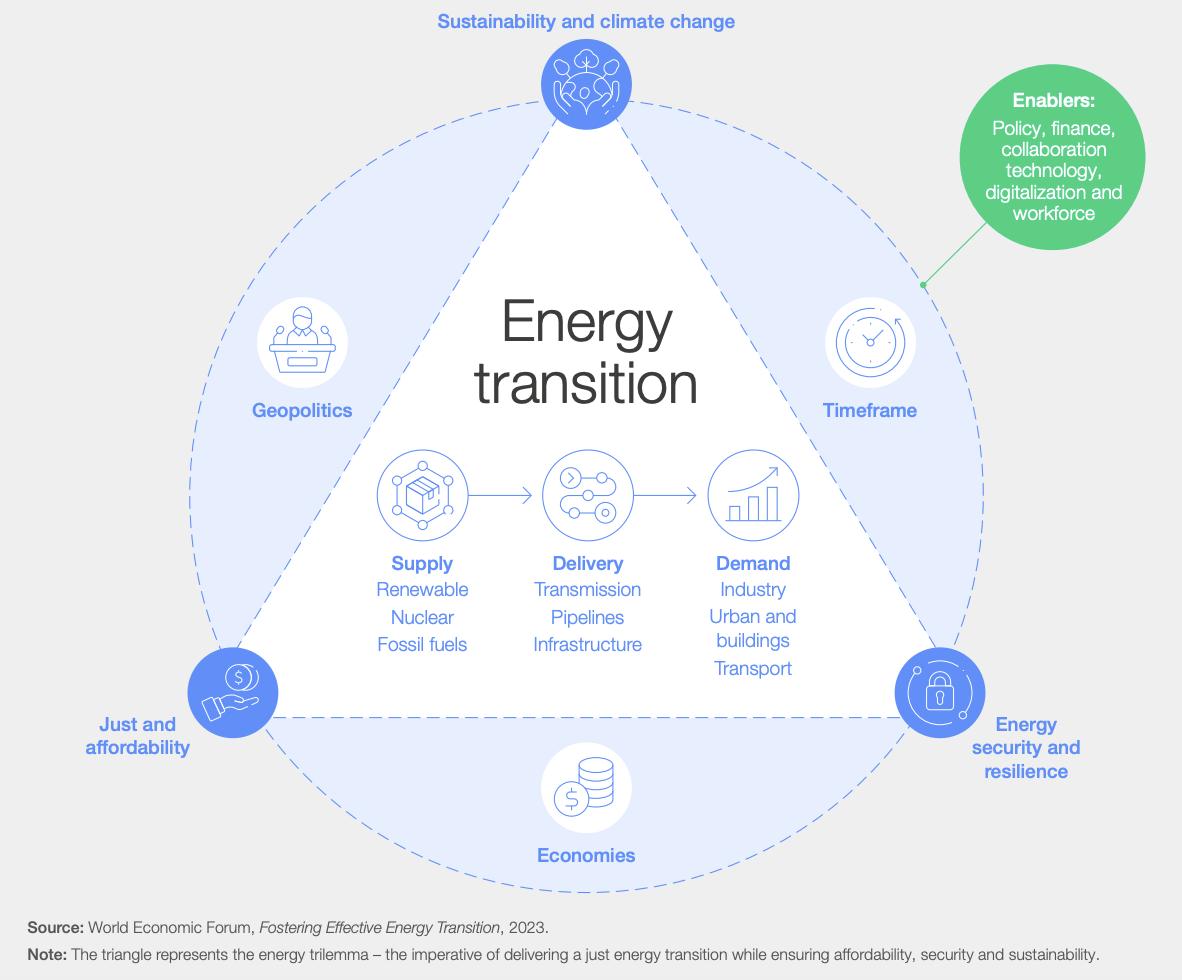
Clean energy is essential for enhancing energy security and resilience in today's volatile landscape influenced by geopolitical tensions and extreme weather. The shift towards resilience as a guiding principle addresses the need for a balanced approach to the energy trilemma: equity, security, and sustainability. Centralized power systems are vulnerable to disruptions, while decentralized solutions like solar and battery technologies can enhance resilience by diversifying energy sources. The integration of renewable energy has proven beneficial, as seen with Germany's response to the energy crisis stemming from reduced gas supplies after the Russian invasion of Ukraine, highlighting renewables' potential in stabilizing energy supply and prices.
Financial services
Why clean energy is key to building a more resilient future in uncertain times
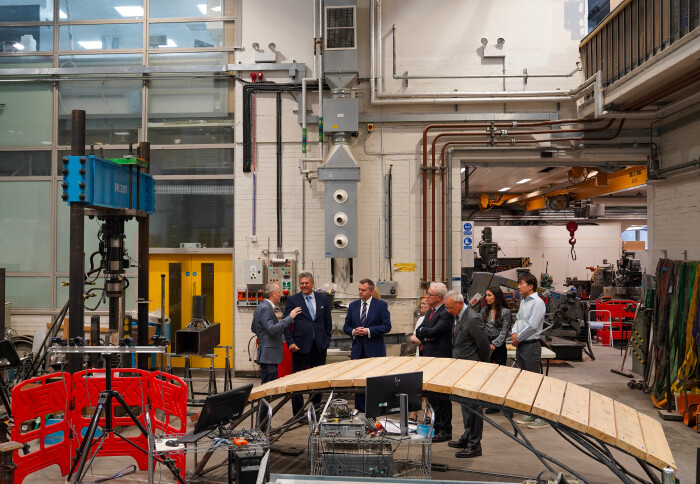
UK Minister for the Constitution and European Union Relations Nick Thomas-Symonds, European Commissioner for Trade Maroš Šefčovič, and EU Ambassador to the UK Pedro Serrano visited Imperial College to explore ongoing collaborations between Imperial researchers and European partners. The visit emphasized the significance of initiatives like Horizon Europe and strategic partnerships, showcasing projects such as brain surgery innovations, wildfire management research, and sustainable steel development. The delegation learned about new funding opportunities for UK researchers and Imperial’s contributions to major EU research projects addressing global challenges, positioning the institution as a leader in future UK-EU research collaboration.
UK's EU Minister and European Commissioner for Trade visit Imperial

Adaptive reuse is a strategy that repurposes existing buildings for new uses, addressing urban challenges while preserving architectural heritage. Cities are increasingly adopting this approach to reduce waste, cut emissions, and support the circular economy amid climate and resource constraints. Successful examples, like the Tate Modern in London and the High Line in New York, show how transformed spaces can revitalize local economies and communities. With significant carbon savings and less construction waste compared to new builds, adaptive reuse offers financial benefits as well, making it an essential tool for sustainable urban development and addressing housing and public service needs.
How adaptive reuse can help reimagine, repurpose and revitalize cities
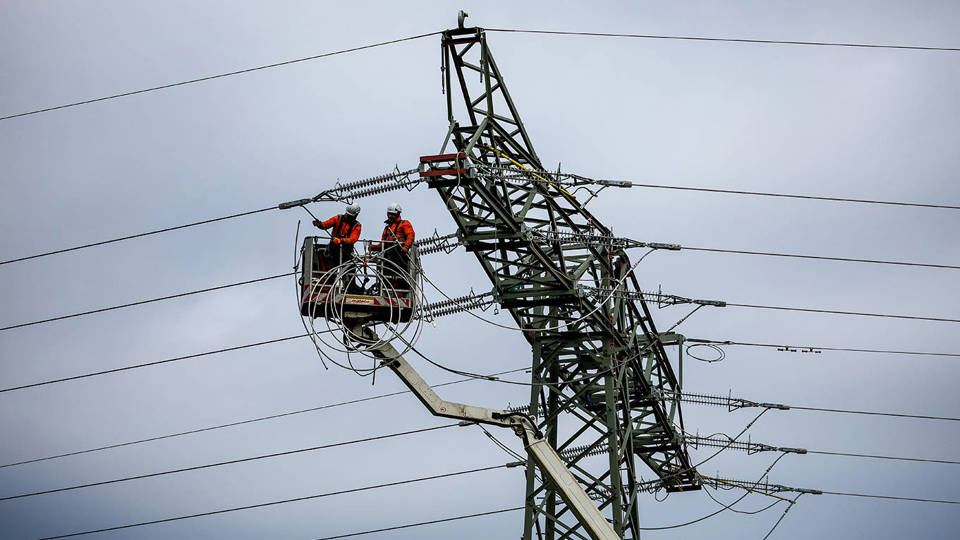
Europe faces a critical challenge in achieving its climate goals due to the aging electricity grid, which struggles to meet rising demand from sectors like electric vehicles and data centers. With nearly half of power generation coming from renewables in 2024, substantial investments of at least €584 billion are necessary to modernize and expand the grid by 2030. Current annual investments of €33 billion need to double to prevent energy bottlenecks and ensure the efficient transmission of renewable energy. Streamlining permitting processes and prioritizing mature projects are essential steps to enhance grid capacity and meet clean-energy targets.
United Kingdom | Financial services, Health, Education
Europe’s Climate Goals Require a Green Power Grid

The global economic landscape is transitioning from convergence to fragmentation, driven by escalating geopolitical rivalries, particularly between the US and China, and the intertwining of national interests with capital flows. Economic governance is now characterized by multipolarity and political alignment, with strategic competition reshaping investment decisions. The EU must proactively pursue institutional reforms, deepen internal market integration, and develop trusted investment corridors to maintain its global influence. Key actions include enhancing internal capital market coherence, simplifying cross-border investments, and promoting a values-based approach to external capital partnerships.
Czech Republic, Germany, Ghana, Greece, Hungary, Ireland, Poland, Portugal, Republic of Korea, Switzerland, Ukraine, United Kingdom | Health, Education, Financial services
The EU must lead in the new geography of capital

Tariffs imposed by the Trump administration threaten the adoption of renewable energy in Asian data centres, crucial for supporting AI demand. Major tech companies like Microsoft have paused some projects due to increased uncertainty. Despite the challenges, firms like AirTrunk and Equinix continue pursuing sustainability-linked loans and renewable energy agreements. Data centres are projected to account for 4.5% of global electricity demand by 2035, emphasizing the need for green energy solutions. Experts suggest a "wait and see" approach as companies navigate the financial landscape amid evolving government policies.
Will Trump’s tariffs stall the greening of Asia’s data centres?

Nuance is essential for effective decision-making in complex business environments. Quick, simplistic responses can hinder strategic solutions. The rise in protectionism, while politically appealing, often results from fear rather than solid strategy, hindering development and innovation. Successful growth resembles mushroom farming: it thrives under optimal conditions rather than through rigid regulation. Value creation hinges on effectively utilizing time, requiring quality education and supportive structures. Economic growth relies on efficiently allocating talent and resources, with markets serving as decentralized mechanisms to optimize this allocation. Addressing inequality remains a collective democratic choice.
Ireland, Luxembourg, Republic of Korea, Spain, Switzerland, United Kingdom | Financial services, Education
Why nuance is the key to better decision-making
Billion-dollar technology modernization failures in government arise from misalignments in incentives, expertise, and decision-making authority, often leading to over-scoped projects that fail to meet user needs and waste taxpayer dollars. To address these issues, public institutions must rethink their approach to technology management and public-private partnerships. Successful strategies include funding technology as ongoing capabilities, embedding experienced technical leadership in procurement processes, and adopting iterative, outcomes-driven project methodologies. Proven examples demonstrate that aligning incentives and investing in internal capacity can lead to faster, cost-effective, and higher-quality service delivery.
Education
How to save a billion dollars