Publications

Pioneering the Future: Space
Technologies Poised to Revolutionize
Exploration and Economy by 2035

INSIGHT REPORT

September 2026

Pioneering the Future: Space
Technologies Poised to Revolutionize Exploration and Economy by 2035

FACTSHEETS

June 2026

Future of Space Law:
Operationalizing Space Governance

WHITE PAPER

March 2026

Clear Orbit, Secure Future:
 A Call to Action on Space Debris

REPORT

Jan 2026

The Future of Space Law
 Insights from the ATS, UNCLOS, and ITU Frameworks

WHITE PAPER

December 2025

The Future of Space Law: 
The Evolving Dynamics of Air and Space Regulation

WHITE PAPER

 September  2025

The Future Of Space Law

News

Centre for Space Futures, Novaspace and SpaceTech Gulf  Sign Agreement to Develop Global Space Capability Mapping Dashboard

Riyadh, Saudi Arabia , 23 Jun 2026|  Press Release

Clear Orbit, Secure Future: A Call to Action on Space Debris

Riyadh, Saudi Arabia, 26 Jan 2026 | Press Release

Centre for Space Futures Holds Workshop with Participation of 40 Global Experts

Riyadh, Saudi Arabia, 05 Dec 2025 | Press Release

Centre for Space Futures Releases White Paper on 'The Future of Space Law'

Riyadh, Saudi Arabia, 12 Sep 2025 | Press Release

The Board of Directors of the Centre for Space Futures Endorses Its Strategic Direction

Riyadh, Saudi Arabia, 26 May 2025 | Press Release

Saudi Space Agency to Launch the Centre for Space Futures with the World Economic Forum

Riyadh, Saudi Arabia, 29 April | Press Release

5 ways we can tackle growing risks from rocket bodies in orbit

Dec 09, 2025 | Economic Growth, Stories

Read More

Forum Agenda

Forum Videos

VIDEO

Press Conference: Centre for Space Futures in Riyadh

The World Economic Forum's Special Meeting, April 29, 2024

VIDEO

The Purpose of Astronauts at Davos 2024

World Economic Forum , March 9, 2024

VIDEO

PortWatch: Monitoring Trade Disruptions from Space

World Economic Forum , Dec 18, 2023

VIDEO

India's Moon Mission Triumph: Ambassador Ruchira Kamboj's Insights

World Economic Forum , Aug 23, 2023

VIDEO

Space Exploration is Back at Davos 2023

World Economic Forum , Feb 16, 2023

Forum Publications

Strategic Intelligence Insights

Building data centres in space is a potential solution to the massive energy consumption and environmental impact of terrestrial data centres. Companies like Lumen Orbit and the EU's Ascend project are working on developing space data centres that can harness continuous solar energy and be naturally cooled by the vacuum of space. However, there are significant challenges, including high costs of launching payloads into space, latency in communication between Earth and space, and the risks of space weather and collisions with debris. Advances in technology and global collaboration will be needed to make space data centres a reality.
Data centres in space: they’re a brilliant idea, but a herculean challenge

The US and China are racing to the Moon to establish long-term research stations. Potential disputes could arise over the location of bases and claims to lunar resources like water ice. However, international space law, such as the Outer Space Treaty, states that space should be free for exploration and use by all countries and prohibits national appropriation of space. There is a potential contradiction in the treaty regarding the jurisdiction of bases on the Moon. Other agreements, such as the Moon Agreement and the US' Artemis Accords, also address resource extraction. Additionally, nations are liable for damage caused by their space hardware and are obligated to prevent contamination of space and celestial bodies. The responsibility for pollution or damage beyond our Solar System is unclear.
As the US and China race to the Moon, these loopholes in space law could cause conflict

2025 will be a turning point for humanity's relationship with the moon as we lay the foundations for a permanent presence and the development of a lunar economy. Private space exploration companies like SpaceX and Blue Origin are leading the charge, with SpaceX's Starship rocket and Blue Origin's Blue Moon lander playing key roles. These vehicles will enable more affordable and efficient moon missions, with Starship's ability to deliver 100 metric tons of payload in a single trip and be reused, while Blue Moon will deliver heavy equipment and infrastructure. NASA's Artemis II mission in late 2025 will mark the first crewed flight beyond low Earth orbit since the Apollo missions. The lunar Gateway, a space station that will orbit the moon, will support long-term lunar exploration. Additionally, fuel production systems on the lunar surface, like Starpath's "gas station" using icy regolith, will provide fuel for the return journey and enable regular, low-cost travel between Earth and the moon. Overall, the moon will become the gateway to humanity's future in space.
Transforming the Moon Into Humanity’s First Space Hub
Last year had record heat and extreme weather, showcasing the profound impact of human activity on the planet, as seen from space. Satellite images from NASA reveal the expansion of farms, growth of cities, effects of climate change such as rising sea levels and melting ice, and the emergence of renewable energy, giving hope amidst the bleak climate news. UN Secretary-General António Guterres emphasizes the need to reduce emissions and transition to a renewable future in order to secure a safer path for the world.
The Growing Human Footprint on Earth, as Seen from Space
Intuitive Machines has expanded its collaboration with NASA, securing new contracts to enhance data transmission and navigation capabilities for lunar and deep space missions. The partnership, which runs until 2034, showcases the long-term strategic commitment between the two entities. The announcement of the new contracts has positively impacted Intuitive Machines' stock performance, with shares experiencing a notable increase of over 4%. The company's strong performance and revenue, coupled with its extended role in space missions, have contributed to investor confidence and potential for further growth.
Intuitive Machines (LUNR) Eyes Long-Term Growth with NASA Partnership Until 2034
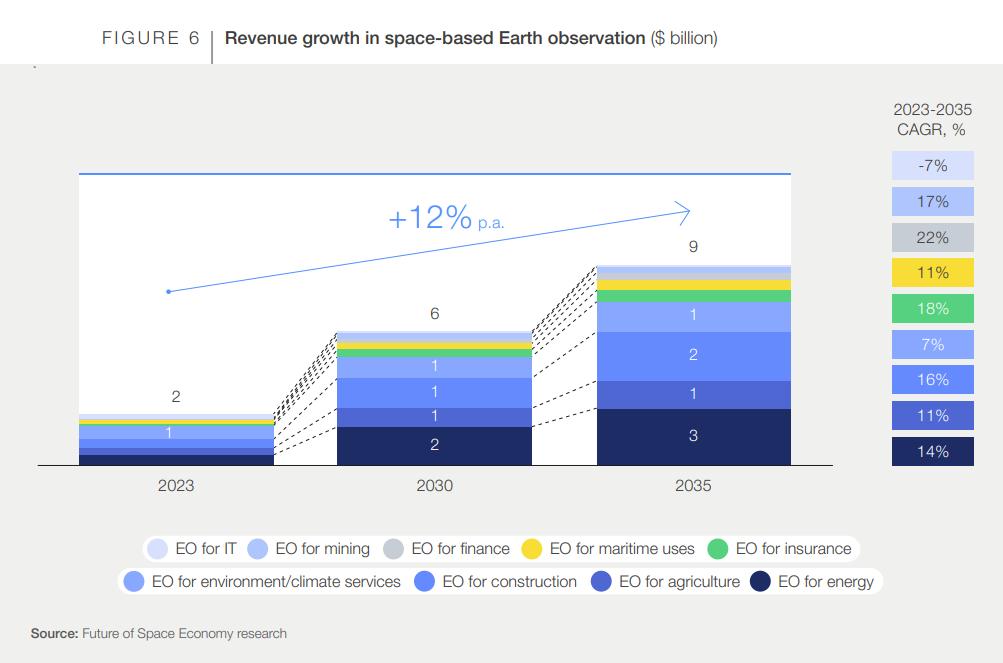
Japan's space industry aims to expand from JPY 4 trillion to JPY 8 trillion by the early 2030s. To achieve this, space applications, data, and services must become more practical and useful to terrestrial businesses. Japan's core strengths and regional partnerships will be crucial in maintaining momentum in the sector. The space economy is expected to reach $1.8 trillion by 2035, creating opportunities for innovation and value creation. The government has launched the Space Strategy Fund, investing JPY 1 trillion over the next 10 years. To reach government targets, there is a need for greater adoption of space technology and awareness of its capabilities. Partnerships, convergence with other technologies, and finding customers and investors from other sectors are also important for growth. Japan's regulations, funding, research, and development, and growing ecosystem position it well in the global space economy. Leveraging these strengths will help sustain and grow Japan's leadership in space.
Japan
How Japan can remain a star player in the space sector
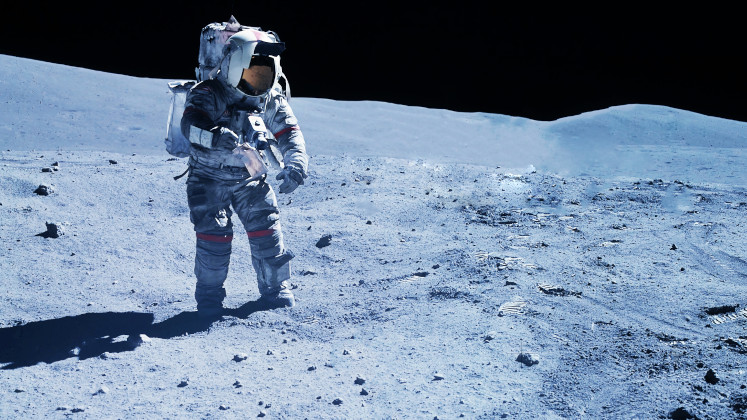
Private companies like SpaceX have invested heavily in space programs, leading to a significant increase in commercial entities operating in space. However, the distinction between public and private in space activities is not as clear-cut as it seems, as private companies often receive funding from governments. International law states that objects in space belong to the launching state, creating complexities for commercial entities. Mining in space is a possibility, particularly for resources such as helium and water on the moon, but the logistics and legal implications need to be sorted out. Balancing commercial interests with scientific exploration is a challenge, as seen with controversial aspects like carrying consumer products and human ashes on space missions.
Interview with Jill Stuart: “I think it’s very likely we’ll see a lunar base in the near future”
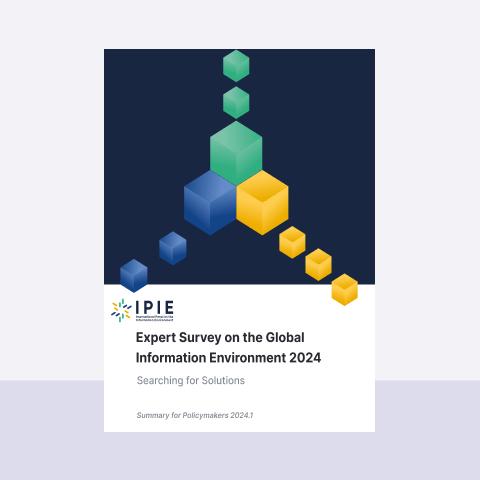
The 2024 IPIE survey of 412 researchers reveals widespread concern about the global information environment, with 63% of experts expecting it to deteriorate. Key threats are seen as social media owners, governments, and political entities. While two-thirds view generative AI as a negative influence, 67% hold hope for its potential in improving content detection and facilitating critical communication. Challenges like data access hinder research efforts, prompting calls for multidisciplinary approaches. Experts advocate for independent media, digital literacy, and fact-checking to enhance the information landscape.
Expert Survey on the Global Information Environment 2024: Searching for Solutions
Humans could potentially establish settlements on Mars in the not-so-distant future. Despite the skepticism surrounding this idea, there are several reasons to be optimistic. Mars is within reach, with travel time ranging from six to eight months, and new engine designs potentially shortening that time to two months. The planet is also abundant in raw materials needed for self-sufficiency, such as carbon, nitrogen, hydrogen, and oxygen. Furthermore, advancements in technology, like the Moxie project, could enable the production of breathable air, rocket fuel, and water on Mars. Additionally, robots could be utilized for 3D printing habitats and other essential structures before human arrival. Overall, settling Mars is a realistic possibility given the right resources and technology.
Human settlement of Mars isn’t as far off as you might think
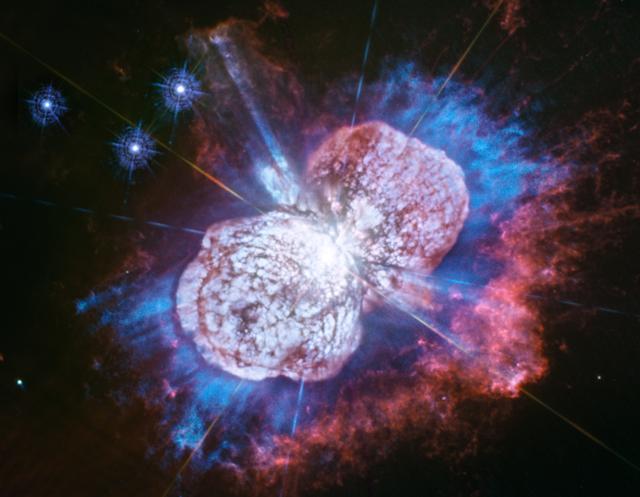
Astronomers have discovered a star in the Virgo Cluster that slowly increased in brightness for over five years before eventually exploding as a supernova. The star's precursor activity provides an opportunity to study the conditions leading up to and following supernova explosions. The cause of this pre-supernova activity remains unclear, but it is believed that interactions between multiple stars, such as mass transfers, may play a role. Observing these changes in brightness so close to a star's demise challenges current theories and sheds light on the mysteries of supernova explosions.
How to catch a supernova explosion before it happens – and what we can learn from it
New research has provided solid observational evidence for the formation of massive elliptical galaxies. The study analyzed data from the Atacama Large Millimeter/submillimeter Array (ALMA) and found that elliptical galaxies can form through intense star formation episodes early in the universe, rather than starting out as rotating discs. The research also suggested that the simultaneous actions of cold gas streams from surrounding galaxies, along with galaxy interactions and mergers, could drive gas and dust into compact, star-forming cores within the galaxies. This study advances our understanding of galaxy formation and evolution.
We’ve found an answer to the puzzle of how the largest galaxies formed

The global consumer spending landscape is increasingly complex as we approach 2025, influenced by economic and geopolitical disruptions. Rapid evolution in digital technologies, AI-enhanced shopping, and sustainability priorities is changing consumer behavior. Insights drawn from a survey of over 15,000 consumers from nine countries indicate potential continued suppression in spending patterns beyond 2024. The report aims to provide business leaders with actionable insights to navigate this dynamic environment.
Financial services
Spending, Disrupted: AlixPartners' 2025 Global Consumer Outlook
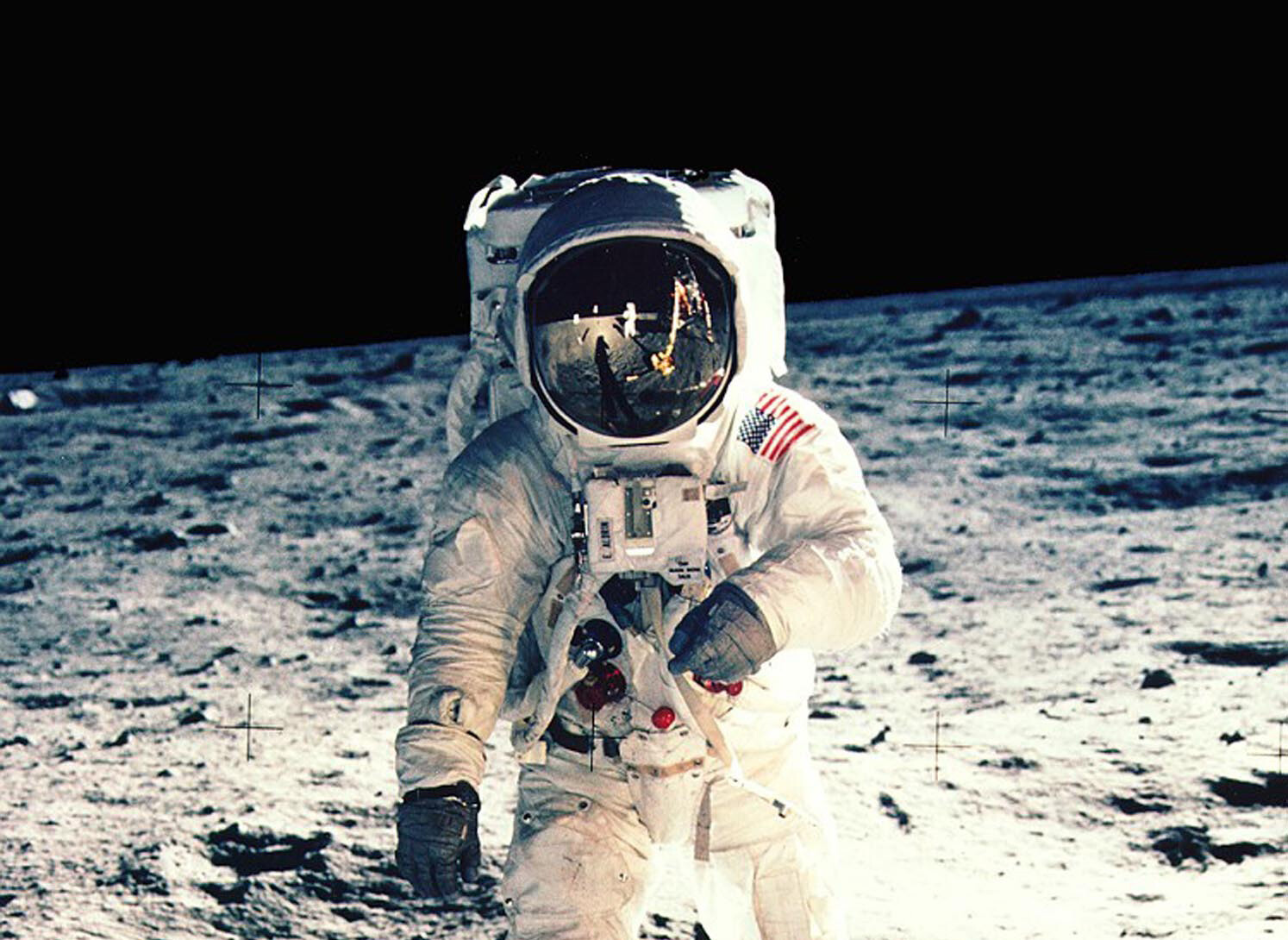
NASA's Artemis lunar exploration program aims to return humans to the Moon and establish a lunar base as a stepping stone to Mars. The program involves international cooperation and partnerships with the private sector, which brings economic benefits and drives technological advancements. Investments in space exploration have led to the development of technology that supports various aspects of everyday life. Additionally, NASA is actively searching for signs of life on Mars, which is a fundamental question that concerns everyone.
Why we're heading back to the Moon - and on to Mars

The future of NASA's Space Launch System (SLS) rocket, crucial to the agency's Artemis program for returning astronauts to the Moon, is uncertain under the Trump administration. Speculation suggests that the SLS could be canceled as part of cost-cutting measures or a shift in focus towards a crewed Mars mission. However, the cancellation of the SLS would raise questions about finding a replacement rocket and could jeopardize US ambitions in space, particularly with China aiming to send astronauts to the lunar surface by 2030. Elon Musk's SpaceX and its Starship vehicle could play a significant role in future lunar missions.
Trump may cancel Nasa’s powerful SLS Moon rocket – here’s what that would mean for Elon Musk and the future of space travel
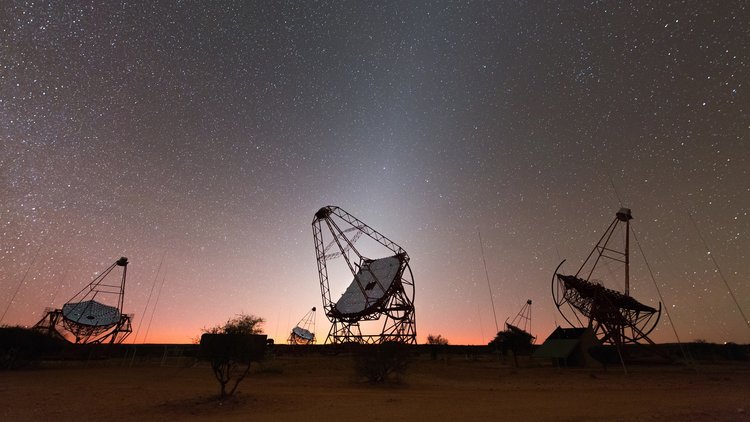
A pulsar within a few thousand light-years of Earth may have accelerated electrons and positrons to record energies, according to researchers from the H.E.S.S. collaboration. Using data from ten years of observations, the scientists detected cosmic electrons and positrons with energies of over ten tera-electronvolts. The exceptional quality of the energy spectrum suggests that a nearby pulsar could be the source of these particles. The findings contribute to understanding the origin of cosmic radiation and the existence of powerful natural particle accelerators in the vicinity of our solar system.
Astronomers measure electrons from space at record energies

The European Coffee Symposium highlighted the coffee sector's resilience and the importance of innovation amid macroeconomic challenges. Key trends include the rise of Ready-to-Drink (RTD) coffee, biodegradable capsules, and health-focused alternatives, catering to changing consumer preferences. However, maintaining execution excellence is crucial as high coffee prices and inflation pressure margins. The sector's complexity necessitates efficient operations and strong partnerships, with successful players investing in facilities and technology to deliver high-quality products. Capital investment remains essential for innovation and growth in this evolving landscape.
Ethiopia | Financial services
Innovation abounds in the coffee sector: Capital access and strategic foresight are key for “black gold” winners
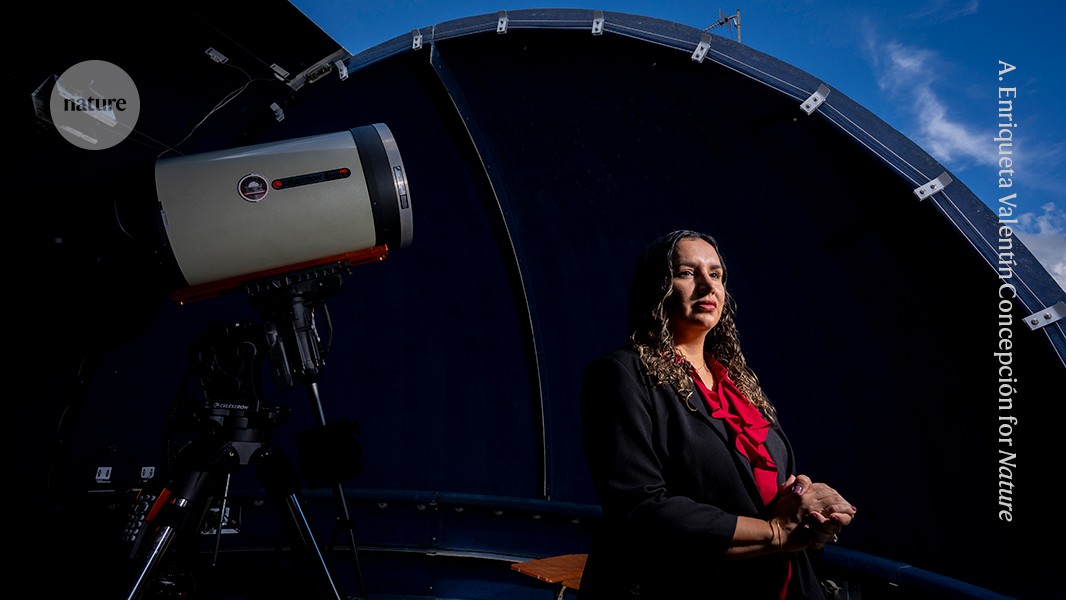
Astronomer Desireé Cotto-Figueora is part of NASA's Near-Earth Object Surveyor mission, which aims to detect and characterize 90% of near-Earth asteroids larger than 140 meters in diameter. There are currently over 36,000 near-Earth asteroids, with at least 2,400 of them considered potentially hazardous. Cotto-Figueora's work involves identifying these asteroids and understanding their fragmentation process in order to design strategies for deflection and disruption if necessary. In addition to her research, Cotto-Figueora is involved in teaching astronomy and organizing outreach events. She is passionate about her work and feels fortunate to be part of a NASA mission.
I defend the planet from asteroid collisions
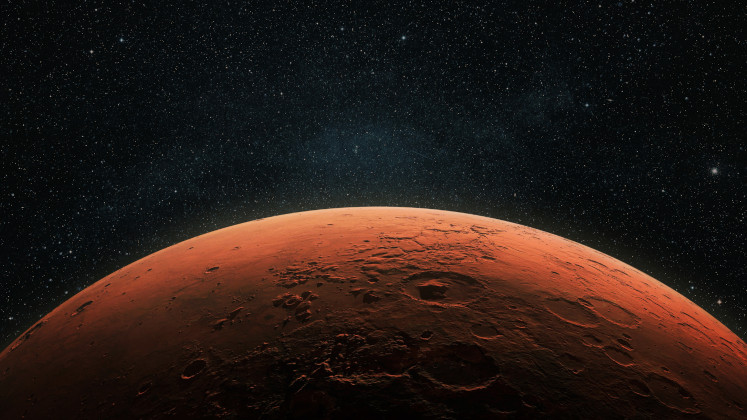
Space is integral to our daily lives and has a significant impact on the economy, climate change, and military capabilities. The United States is the leading power in space exploration, followed by China, with emerging space powers like India also making their mark. The involvement of non-state actors and private entities in space activities is increasing. The recent interest in space exploration is driven by nationalism, as visible space projects serve as indicators of a state's power and prestige. The militarization of space has been present since the beginning of the Space Age and remains a cause for concern.
Interview with Dimitrios Stroikos: “We tend to forget the extent to which space is so integral to our daily lives”
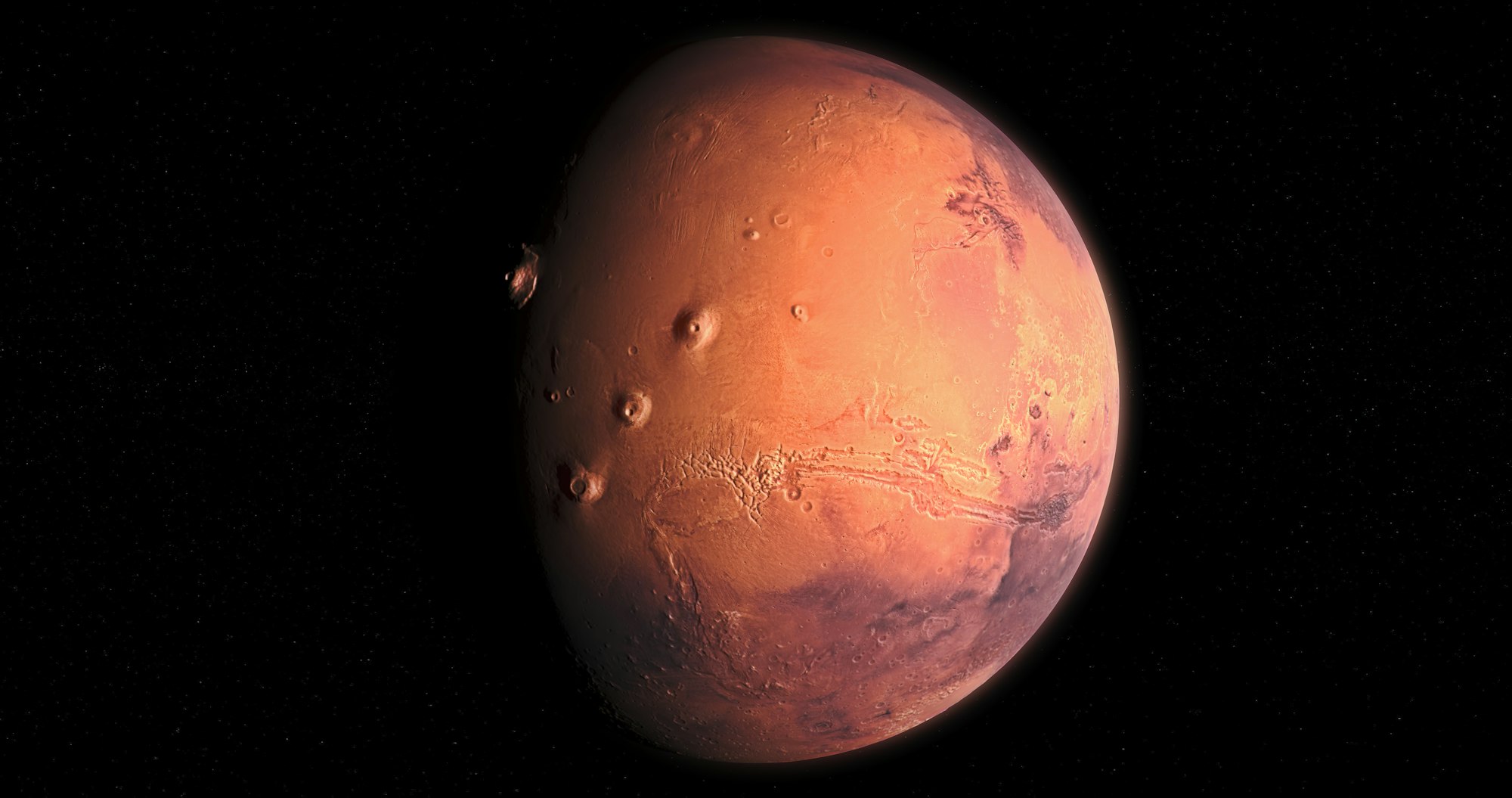
Quantum annealing combined with classical methods can optimize spacecraft trajectories, showing potential for enhancing space mission planning. Hybrid solvers, which combine quantum and classical computational resources, produced trajectory solutions comparable to traditional methods. However, scalable quantum hardware and improvements in embedding techniques and optimization methods are needed for quantum annealing to displace traditional methods in solving optimization problems. The study focused on a low-thrust Earth-to-Mars mission, demonstrating that hybrid solvers outperformed fully quantum solvers in terms of accuracy and robustness. Hybrid solvers also achieved lower final errors and consistently minimized fuel usage, highlighting their superiority in optimizing interplanetary missions. Current quantum annealers have scalability limitations and struggle with high-dimensional and complex problems requiring higher precision.
Taking Quantum Computers to Mars: Researchers Use D-Wave Device to Guide Interplanetary Mission Planning
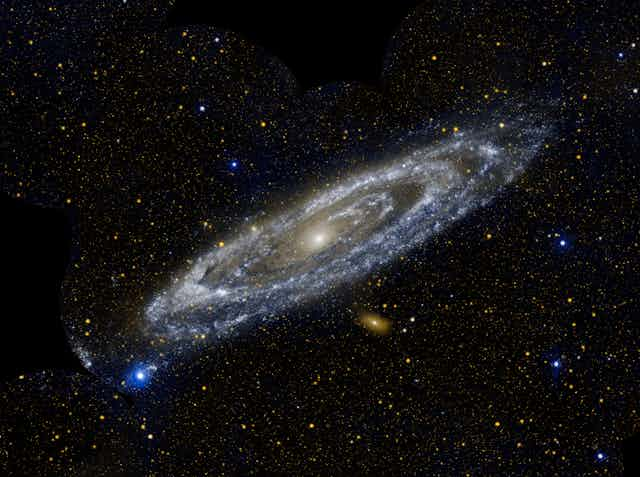
Dr. Edwin Powell Hubble made a groundbreaking discovery 100 years ago when he found that two spiral-shaped nebulae, previously thought to be within the Milky Way, were actually located outside of it, making them the Andromeda and Messier 33 galaxies. This discovery confirmed the existence of galaxies beyond our own and paved the way for the estimation that there are several trillion galaxies in the universe. Hubble's discovery was made possible by the work of Henrietta Swan Leavitt, who established the period-luminosity relationship, which allowed astronomers to calculate distances to stars. Hubble's use of the stellar parallax method and the use of large telescopes further supported his findings.
It’s 100 years since we learned the Milky Way is not the only galaxy